

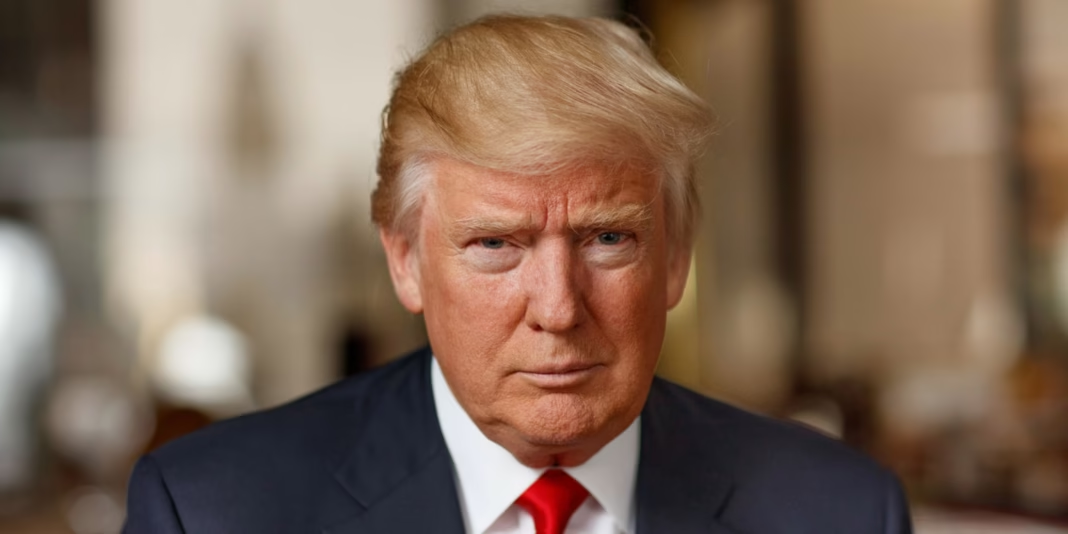

Few modern public figures have shaped political debate, media culture, and global public attention as dramatically as Donald Trump. From real estate branding and television fame to presidential leadership and international influence, his career has consistently generated intense discussion across political, economic, and cultural spheres.
The story of Donald Trump is not limited to politics alone. It also involves entrepreneurship, branding strategy, media dominance, populist campaigning, economic messaging, and a unique communication style that changed how public figures engage audiences in the digital era. His influence extends far beyond the United States, shaping conversations about nationalism, globalization, immigration, and political identity worldwide.
Early Life and Family Background
Donald Trump was born in Queens, New York City, into a family already involved in real estate development. His father, Fred Trump, built a successful property business focused on middle-income housing, creating an environment where business operations and deal-making became familiar at an early age.
He later attended the Wharton School at the University of Pennsylvania, where he studied economics. Supporters often point to this educational and business foundation as a key reason for his aggressive commercial instincts, while critics argue that inherited advantages significantly contributed to his early opportunities and long-term success.
Rise in the Real Estate Industry
Donald Trump gained national attention during the 1970s and 1980s through ambitious real estate projects in Manhattan. He focused heavily on luxury branding, high-profile architecture, and media visibility, helping transform his name into a globally recognized commercial identity.
Major developments such as Trump Tower became symbols of wealth and status. His strategy differed from many traditional developers because he actively promoted himself alongside his properties, turning business expansion into a personal branding campaign that blended celebrity culture with real estate marketing.
Building the Trump Brand
One of the most significant aspects of Donald Trump’s career has been his understanding of branding psychology. Rather than positioning himself solely as a businessman, he marketed the Trump name as a symbol of luxury, exclusivity, and success across multiple industries.
The Trump brand expanded into hotels, golf courses, licensing agreements, books, and entertainment ventures. This diversification demonstrated how modern celebrity branding could become a commercial ecosystem, where public visibility itself functions as a business asset.
Donald Trump and Media Influence
Long before entering politics, Donald Trump understood the value of media exposure. He cultivated relationships with newspapers, television outlets, and entertainment platforms to maintain constant public visibility, even during periods of controversy.
His role on the television show “The Apprentice” further strengthened his public image as a decisive executive leader. The program introduced him to audiences who may not have followed business news, helping create a broad national recognition that later became politically valuable.
Entry Into American Politics
Donald Trump explored political campaigns multiple times before officially running for president in 2015. His campaign quickly attracted widespread attention because of its unconventional communication style, direct rhetoric, and anti-establishment messaging.
He positioned himself as an outsider challenging traditional political elites. This strategy resonated strongly with voters frustrated by economic uncertainty, globalization concerns, and distrust toward established institutions in Washington.
The 2016 Presidential Campaign
The 2016 presidential race dramatically changed modern American politics. Donald Trump focused heavily on border security, trade reform, job creation, and nationalist economic policies, building a coalition that crossed several traditional political boundaries.
His campaign relied extensively on rallies, direct media engagement, and social media communication. Unlike many previous candidates, he frequently bypassed conventional political messaging systems and communicated directly with supporters in real time.
Key Campaign Messages and Strategy
Donald Trump’s political messaging emphasized themes such as “America First,” economic nationalism, manufacturing revival, and immigration reform. These ideas connected strongly with voters in industrial regions experiencing economic transformation and job losses.
Political analysts often note that his communication style relied on repetition, emotionally resonant language, and simplified framing. While critics viewed this approach as polarizing, supporters considered it authentic and easier to understand than traditional political language.
Presidency and Domestic Policies
As president, Donald Trump implemented policies focused on tax reductions, deregulation, energy expansion, and judicial appointments. His administration emphasized business growth and sought to reduce regulatory burdens across several industries.
Supporters argue these policies contributed to economic growth and stock market performance before the COVID-19 pandemic. Critics, however, contend that certain economic gains disproportionately benefited corporations and wealthier Americans while increasing political polarization.
Economic Policies Under Donald Trump
Economic policy became one of the defining pillars of Donald Trump’s presidency. His administration introduced major tax reforms aimed at stimulating investment, increasing corporate competitiveness, and encouraging domestic economic activity.
Trade policy also became a central focus. The administration renegotiated international trade agreements and imposed tariffs on several imported goods, arguing that previous arrangements disadvantaged American workers and manufacturers.
Immigration and Border Security
Immigration policy remained one of the most debated aspects of Donald Trump’s administration. He strongly advocated for stricter border enforcement, expanded immigration controls, and the construction of barriers along portions of the southern border.
Supporters viewed these measures as necessary for national security and labor market stability. Opponents argued that some policies were overly harsh, divisive, and damaging to America’s international image regarding immigration and humanitarian values.
Foreign Policy and Global Relations
Donald Trump’s foreign policy approach differed from many previous administrations. He frequently questioned long-standing international agreements and emphasized bilateral negotiations designed to prioritize American economic and strategic interests.
His administration engaged in significant diplomacy involving North Korea, Middle Eastern normalization agreements, and evolving trade relationships with China. Reactions to these initiatives varied widely among international analysts and political observers.
Relationship With the Media
The relationship between Donald Trump and major media organizations became one of the most defining features of his political career. He frequently criticized news outlets that he believed treated him unfairly or promoted biased reporting.
At the same time, constant media coverage amplified his visibility and public influence. This unusual dynamic created an environment where criticism and publicity often reinforced each other, keeping him continuously central in public discourse.
Social Media and Digital Communication
Donald Trump transformed how political leaders use digital platforms. His direct communication style on social media allowed him to shape news cycles rapidly and maintain constant engagement with supporters.
This approach bypassed traditional communication filters and enabled immediate responses to political developments. Analysts widely consider his digital strategy one of the most influential shifts in modern political communication practices.
Leadership Style and Public Persona
Donald Trump’s leadership style is often described as confrontational, highly competitive, and media-driven. He tends to favor direct negotiation tactics and public messaging strategies designed to dominate public attention.
Supporters see this approach as decisive and energetic, particularly during negotiations and political conflicts. Critics argue that the same style can increase polarization and intensify institutional tensions within government systems.
Donald Trump and Populism
Many scholars classify Donald Trump as a leading figure in modern populist politics. His campaigns frequently framed political debates around ordinary citizens versus entrenched elites, emphasizing national identity and economic frustration.
This populist strategy proved highly effective in mobilizing voters who felt disconnected from traditional political institutions. It also influenced political movements in several other countries facing similar economic and cultural debates.
Business Ventures Beyond Politics
Even during his political career, Donald Trump remained associated with an extensive business network involving hospitality, real estate, golf properties, and licensing agreements. His commercial identity continued to play a major role in public perception.
The connection between his political influence and business visibility created ongoing discussions about ethics, branding, and financial transparency. These debates became a recurring feature throughout his time in public office.
Major Controversies and Criticism
Donald Trump has consistently been one of the most controversial public figures in modern political history. Critics have challenged his rhetoric, business practices, policy decisions, and communication style across multiple phases of his career.
Supporters often argue that many controversies were amplified by political opponents and media organizations. Regardless of perspective, there is little disagreement that he reshaped political debate intensity and public engagement levels.
Legal Challenges and Investigations
Donald Trump has faced numerous legal investigations and court-related challenges connected to business activities, campaign matters, and post-presidency events. These issues have generated extensive media attention and legal debate.
Supporters frequently describe the investigations as politically motivated, while critics view them as accountability measures. The ongoing legal discussions remain deeply intertwined with broader national political divisions.
Public Support and Political Loyalty
One of the most remarkable aspects of Donald Trump’s political career is the durability of his support base. Many supporters view him as a figure willing to confront political establishments and challenge institutional norms.
This loyalty has remained strong despite controversies and legal disputes. Political strategists often study his ability to maintain high voter engagement and emotional connection with supporters across multiple election cycles.
Donald Trump’s Communication Techniques
Donald Trump frequently uses simple, memorable phrases and emotionally direct messaging. This communication strategy helps create strong recall among audiences and increases media amplification through repetition and public debate.
His speaking style often prioritizes emotional resonance over policy complexity. While critics consider this oversimplified, supporters argue that it makes political communication more accessible to everyday voters.
Impact on the Republican Party
Donald Trump significantly reshaped the Republican Party’s identity and strategic direction. Economic nationalism, immigration enforcement, and populist rhetoric became more central within the party’s national messaging framework.
Many Republican candidates later adopted communication methods and policy themes similar to his approach. This transformation influenced both electoral strategies and internal ideological debates within conservative politics.
Donald Trump and Global Political Trends
The rise of Donald Trump reflected broader international trends involving nationalism, economic anxiety, and skepticism toward globalization. Similar political movements emerged across Europe and other regions during the same period.
Political analysts frequently compare these developments to larger structural changes involving technology, trade disruption, cultural polarization, and public distrust toward traditional institutions. Trump became one of the most visible symbols of this global shift.
Public Speaking and Rally Culture
Donald Trump’s rallies became a defining feature of his political identity. These events combined campaign messaging, entertainment elements, audience participation, and direct confrontation with opponents and media narratives.
The rally model created strong emotional engagement and reinforced supporter loyalty. It also demonstrated how political events increasingly function as media spectacles in the digital communication era.
Influence on Conservative Media
Donald Trump’s political rise coincided with major growth in conservative digital media ecosystems. Podcasts, online personalities, streaming platforms, and alternative news outlets gained influence during this period.
This media transformation changed how audiences consume political information. It also contributed to broader discussions about media trust, information fragmentation, and the growing role of digital communities in shaping political identity.
Comparison of Donald Trump’s Business and Political Careers
| Area | Business Career | Political Career |
| Core Identity | Real estate entrepreneur | Populist political leader |
| Primary Audience | Investors and consumers | Voters and political supporters |
| Communication Style | Brand-focused marketing | Direct political messaging |
| Public Image | Luxury and success branding | Anti-establishment leadership |
| Main Platforms | Television and business media | Social media and rallies |
| Major Goal | Commercial expansion | Policy influence and electoral victory |
| Global Recognition | Hospitality and branding | International political impact |
The comparison highlights how Donald Trump used many business-world branding principles within politics. His ability to transfer marketing techniques into electoral campaigns became one of the most studied aspects of his public career.
It also illustrates how celebrity culture increasingly overlaps with political leadership in modern democracies. Trump’s trajectory demonstrated that media visibility itself can become a powerful political resource.
Public Perception Across Generations
Different generations often view Donald Trump through very different lenses. Older voters may prioritize economic or national security issues, while younger audiences frequently focus on cultural debates and digital communication dynamics.
These generational differences help explain why reactions to Trump are often intensely polarized. Public perception is shaped not only by policy preferences but also by broader cultural and media environments.
Donald Trump and American Political Polarization
Political polarization intensified significantly during Donald Trump’s rise. Supporters often saw him as a necessary disruption to entrenched political systems, while opponents viewed him as a threat to democratic norms and institutional stability.
This divide extended into media, workplaces, universities, and social relationships. The Trump era became symbolic of broader ideological conflicts shaping contemporary American society.
The Role of Charisma in Trump’s Success
Charisma has played a major role in Donald Trump’s public influence. His confidence, improvisational speaking style, and willingness to challenge opponents publicly helped distinguish him from more traditional politicians.
“Without passion, you don’t have energy. Without energy, you have nothing.” This frequently cited Donald Trump quote reflects the high-energy public image that became central to both his business and political identities.
Economic Debates Surrounding Donald Trump
Supporters often credit Donald Trump with promoting domestic manufacturing, reducing regulations, and encouraging investment growth. They argue that his economic strategies prioritized national competitiveness and job creation.
Critics counter that some policies increased trade tensions and fiscal deficits while contributing to political uncertainty. These debates continue to shape discussions surrounding his economic legacy and long-term policy influence.
Donald Trump’s International Recognition
Donald Trump became one of the most internationally recognized political figures of the twenty-first century. His speeches, policy announcements, and social media activity regularly generated global headlines and diplomatic reactions.
Even outside the United States, discussions about nationalism, media strategy, and populist leadership frequently referenced his political methods. This global visibility reinforced his role as both a national and international figure.
Cultural Influence Beyond Politics
Donald Trump’s influence extends into entertainment, internet culture, branding studies, and communication strategy analysis. His public image has inspired documentaries, books, academic discussions, and ongoing cultural commentary.
This cultural impact reflects the broader convergence of politics, celebrity identity, and digital media ecosystems. Few modern figures have generated comparable levels of sustained public attention across so many industries.
Future Legacy and Historical Evaluation
Historical evaluations of Donald Trump will likely remain deeply debated for decades. Supporters may remember him as a transformative outsider who challenged political establishments and redefined conservative politics.
Critics may focus on polarization, institutional conflict, and controversy. Regardless of perspective, historians will almost certainly consider Donald Trump one of the most consequential and disruptive political figures of modern American history.
Conclusion
Donald Trump remains one of the most influential, debated, and recognizable figures in global public life. His journey from real estate developer to television personality and president reshaped conversations about leadership, media influence, political communication, and national identity.
Whether viewed through the lens of business innovation, populist politics, media strategy, or global influence, Donald Trump’s impact is undeniable. His legacy continues to evolve as political movements, legal developments, and historical analysis shape how future generations interpret his role in modern history.
FAQ
Who is Donald Trump?
Donald Trump is an American businessman, media personality, and politician who served as the 45th and 47th president of the United States. He became widely known through real estate development, branding ventures, and national politics.
Why is Donald Trump so influential?
Donald Trump gained influence through a combination of media visibility, strong branding, direct communication, and populist political messaging. His ability to dominate news cycles helped shape modern political discourse.
What businesses is Donald Trump associated with?
Donald Trump has been associated with real estate projects, hotels, golf courses, licensing deals, entertainment ventures, and luxury branding businesses connected to the Trump name.
What political party does Donald Trump belong to?
Donald Trump is primarily associated with the Republican Party. His leadership significantly influenced the party’s messaging, priorities, and political strategies in recent years.
What is Donald Trump’s communication style?
Donald Trump is known for direct, emotionally driven communication that often uses short phrases, repetition, and strong audience engagement techniques. His social media strategy also became highly influential.
Why is Donald Trump considered controversial?
Donald Trump is considered controversial because of his rhetoric, policy positions, legal disputes, media conflicts, and highly polarized public image. Supporters and critics often view the same events very differently.
What impact did Donald Trump have on American politics?
Donald Trump reshaped political campaigning, media engagement, and populist messaging in the United States. His influence continues to affect elections, policy debates, and party dynamics across the political landscape.
You May Also Read: The Tracker Cast