

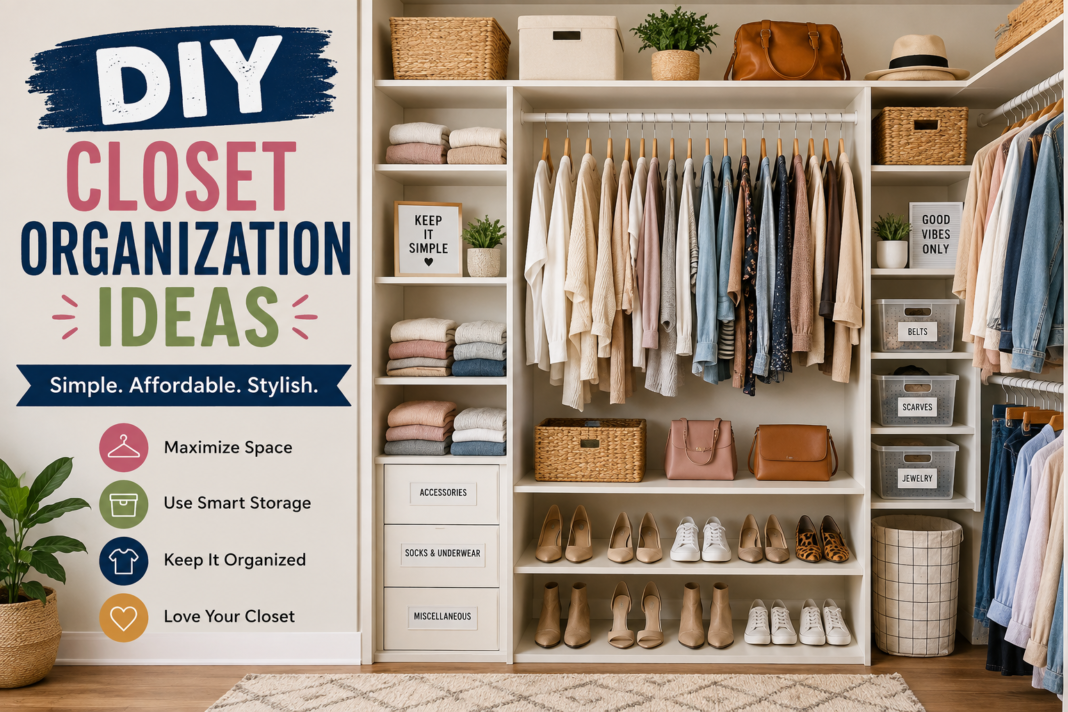

DIY Closet Organization Ideas A closet can look small, awkward, or impossible to manage, but the real problem is often not the amount of space available. It is how that space is being used. Clothes pile up, shelves become crowded, shoes disappear beneath other items, and accessories end up in random corners. The result is a storage area that creates stress instead of making daily routines easier.
The best DIY closet organization ideas do more than make a closet look neat for a few days. They help you understand what you own, create designated homes for different items, and make better use of vertical, horizontal, and hidden space. Whether you have a tiny reach-in closet, a shared wardrobe, a walk-in dressing area, or a basic rental closet, thoughtful improvements can dramatically increase its usefulness.
The good news is that an organized closet does not require an expensive custom installation. A few shelves, hooks, bins, rods, dividers, and simple DIY projects can often solve the biggest problems. The key is to start with function rather than appearance. Once the storage system works, the finished space naturally becomes easier to maintain.
This guide explores practical strategies for planning, building, and maintaining a better closet. From low-cost weekend projects to more advanced storage upgrades, these solutions are designed to help you create a space that fits your clothing, your habits, and your home.
Start by Understanding How Your Closet Actually Works
Before buying organizers or installing new shelves, take a close look at how you currently use the space. Notice which items you reach for every day, which categories create clutter, and which areas remain empty or difficult to access. A closet should be designed around your routine rather than around a generic storage system that looks good but does not match your needs.
For example, someone with mostly dresses and long coats needs more hanging height than someone who owns primarily folded T-shirts and jeans. A person who works from home may need less space for formal clothing but more room for casual wear. The most effective DIY closet organization ideas begin with this simple observation: storage should adapt to the person using it.
Empty the Closet Before You Organize It
It is difficult to improve a storage system while everything is still inside it. Remove clothing, shoes, bags, accessories, boxes, and miscellaneous items so you can see the actual dimensions and condition of the closet. This also makes it easier to clean dust, repair damaged shelves, and identify wasted space.
As you remove items, group them into broad categories such as hanging clothes, folded clothes, shoes, accessories, seasonal items, and donations. You do not need a complicated sorting method at this stage. The goal is simply to understand how much storage each category requires before designing the new layout.
Declutter Before Building More Storage
One of the most common organization mistakes is adding more containers to hold items that are no longer useful. Storage solutions can hide clutter, but they cannot solve the underlying problem of owning more than the available space can comfortably support. Before installing a second clothing rod or buying a collection of baskets, review what you actually wear and use.
Create practical groups for items you want to keep, donate, repair, sell, or recycle. Be realistic rather than overly sentimental. If something has been sitting unused for years, storing it more efficiently may not be the best solution. A smaller collection that is easy to access is often more useful than a perfectly organized closet filled with forgotten belongings.
Measure Every Part of the Closet
Accurate measurements prevent expensive mistakes and make DIY projects much easier. Measure the width, depth, and height of the closet, along with the position of doors, trim, outlets, vents, and existing rods. Record the measurements before purchasing lumber, shelving, drawer units, or storage bins.
Pay attention to vertical space because it is frequently underused. Many standard closets have significant empty room above the existing shelf. That upper area can store luggage, seasonal clothing, extra bedding, or rarely used accessories when supported with properly installed shelving.
Create Storage Zones Based on Frequency of Use
A practical closet works much like a well-designed kitchen. The items you use most should be easiest to reach, while occasional and seasonal belongings can occupy higher or lower areas. This reduces unnecessary searching and keeps the most important storage zones from becoming blocked.
Think of the closet in three general levels. The upper level is ideal for infrequently used items, the middle level should contain everyday clothing, and the lower level can support shoes, baskets, or drawers. This simple zoning strategy makes even basic closets feel more intentional.
Add a Second Hanging Rod
Installing a second rod is one of the simplest ways to increase hanging capacity. Many closets have enough vertical clearance to support two rows of shorter garments, especially shirts, folded-over trousers, skirts, and jackets. Instead of leaving a large empty area beneath a single rod, divide that height into two functional levels.
A double-hang system is especially useful in small closets where every inch matters. Keep longer garments such as dresses and coats on one side or in a separate section. This creates a mixed-height layout that uses the closet more efficiently than forcing every category into the same arrangement.
Use Vertical Space All the Way to the Ceiling
The area above the standard closet shelf is often treated as dead space, but it can become one of the most valuable storage zones. Add a second shelf, adjustable shelving, or sturdy storage boxes for items that are not needed every day. Label containers clearly so you do not have to open several boxes to find one item.
When using high storage, prioritize lightweight belongings such as seasonal clothing, scarves, spare linens, or accessories. Heavy objects should remain lower and easier to handle. A small folding step stool can improve access, but safety and stability should always come before maximizing capacity.
Install Adjustable Shelving
Fixed shelves work well when your storage needs never change, but most households eventually need flexibility. Adjustable shelving allows you to change the height of each level as your wardrobe or storage requirements evolve. This is particularly useful for closets shared by multiple people or used for several categories of belongings.
A DIY adjustable shelving system can be created using shelf standards, brackets, tracks, or modular units. The initial installation may take more planning, but the long-term advantage is significant. Instead of rebuilding the closet when your needs change, you can simply reposition the shelves.
Build Simple Custom Shelves
You do not need advanced woodworking skills to add functional shelving. Basic boards, shelf brackets, screws, and proper wall anchors can create useful storage for folded clothing, shoes, handbags, or bins. The most important step is identifying where the wall can safely support the weight.
Custom shelves are valuable because they can be designed around the exact dimensions of your closet. Store-bought organizers often leave awkward gaps or fail to fit around doors and trim. A simple DIY shelf can turn those difficult spaces into purposeful storage.
Add Shelf Dividers to Keep Stacks Stable
Folded clothing tends to spread outward as items are removed and returned. Shelf dividers create clear boundaries between categories and help stacks remain upright. They are particularly useful for sweaters, jeans, towels, handbags, and purses.
You can buy ready-made dividers or create simple versions from wood, acrylic, or other sturdy materials. The goal is not to create perfect visual symmetry. It is to prevent one stack from collapsing into another and turning a tidy shelf into a pile.
Turn Empty Wall Space Into Storage
Closet walls can hold much more than a clothing rod. Hooks, narrow shelves, pegboards, rails, and small hanging organizers can use side walls that would otherwise remain empty. These areas are ideal for accessories that are easy to lose in drawers.
Consider using wall-mounted storage for belts, hats, scarves, jewelry, bags, or frequently used outerwear. Keep the layout simple and avoid covering every available surface. A few intentional storage points are easier to maintain than a wall crowded with hooks and containers.
Use Hooks for Bags and Accessories
Hooks are inexpensive, versatile, and easy to install. A row of sturdy hooks can provide a designated place for handbags, backpacks, hats, robes, or scarves. When items have an obvious home, they are less likely to end up on the floor or buried beneath clothing.
For a cleaner appearance, group similar accessories together. Heavy bags should be supported by strong hardware installed into an appropriate surface. If you are renting, consider removable hooks where suitable, but always check the weight limits before hanging heavier belongings.
Build a DIY Shoe Rack
Shoes often create the most visible clutter in a closet because they come in different shapes and do not stack naturally. A simple wooden shoe rack can organize pairs while keeping them off the floor. The design can be customized for boots, sneakers, heels, or children’s shoes.
Before building, count the shoes you actually need to store in the closet. A rack with too few spaces creates overflow, while an oversized unit can consume valuable room. Measure the width of your largest shoes and leave enough space for easy removal.
Use Angled Shelves for Easy Shoe Access
Flat shelves can work well, but angled shelves make it easier to see each pair at a glance. This approach is particularly useful for shallow closets because shoes can be displayed with the toes facing outward. A small front lip can prevent pairs from sliding.
Angled storage also works well for people who want a boutique-style appearance without investing in a custom closet system. However, visibility should not come at the expense of capacity. The design should match the number and type of shoes you own.
Store Boots Upright
Tall boots can collapse, crease, and consume more space than necessary when thrown into a pile. Store them upright using boot shapers, rolled paper, pool noodles, or other lightweight supports that help maintain their structure. Keeping pairs together also speeds up the process of getting dressed.
Reserve a taller section of the closet for boots if possible. If floor space is limited, consider storing off-season footwear in labeled containers and keeping only the current season’s pairs easily accessible. Rotation is often more effective than trying to display every shoe at once.
Add Drawers Without Building a Full Cabinet
A closet does not need a built-in dresser to benefit from drawer storage. Freestanding drawer units, stackable fabric drawers, and modular storage cubes can provide contained space for smaller garments. These solutions are especially useful for socks, undergarments, workout clothes, and accessories.
Choose drawer dimensions based on the available space rather than forcing a large unit into the closet. A narrow drawer tower may be more useful than a wide cabinet if it leaves enough room for hanging clothes. Modular pieces also make future rearrangement easier.
Create a Dedicated Accessories Station
Small accessories create visual clutter because they are easy to misplace. A dedicated station can include hooks for necklaces, compartments for watches, trays for sunglasses, and small containers for belts or hair accessories. The exact setup depends on what you use most often.
Keep frequently used accessories visible but controlled. A tray or drawer insert can prevent small objects from migrating throughout the closet. The best organization systems reduce decision fatigue by making it obvious where each item belongs.
Repurpose Household Items as Closet Organizers
Some of the most practical organization tools are already available at home. Small boxes can become drawer dividers, tension rods can hold scarves or cleaning supplies, and magazine holders can organize clutches or folded accessories. Repurposing materials can reduce costs while encouraging creative problem-solving.
The important consideration is durability. A temporary cardboard solution may work during the planning stage, but frequently used storage should be strong enough to survive daily handling. Use inexpensive materials where appropriate, then upgrade the components that receive the most wear.
Make a DIY Pegboard Organization Wall
A pegboard can transform an unused closet wall into flexible storage. Hooks, baskets, small shelves, and containers can be rearranged whenever your needs change. This makes pegboard especially useful for accessories, craft supplies, handbags, or children’s closets.
The system works best when it has a clear purpose. A pegboard covered with unrelated items can become another form of clutter. Choose a few categories, create dedicated zones, and leave enough empty space to make the wall easy to use.
Use Baskets to Create Clear Categories
Baskets are useful because they create visual boundaries without requiring complicated folding systems. One basket can hold workout gear, another can contain scarves, and another can store seasonal accessories. Open baskets make it easy to grab items, while covered containers can hide less attractive belongings.
Labels are particularly helpful when several baskets look similar. Use broad category names instead of overly specific labels that require constant updates. A basket labeled “winter accessories” is easier to maintain than separate containers for every type of glove, hat, and scarf.
Label Storage Containers Clearly
Labels reduce the mental effort required to maintain organization. Without labels, people often open multiple boxes or place items wherever there is an empty space. A clear label turns storage into a repeatable system that other household members can also understand.
Use labels that are easy to read from the position where you normally access the container. For seasonal storage, include the category and, if helpful, the season. Avoid creating overly detailed labeling systems that become outdated whenever your wardrobe changes.
Choose Matching Hangers for Better Space Management
Matching hangers are often recommended for aesthetic reasons, but they can also improve functionality. A consistent hanger size helps clothing hang at similar heights and can create more predictable spacing along the rod. Slim hangers may increase capacity in a crowded closet.
However, matching hangers are not a cure for an overloaded wardrobe. If clothing is packed so tightly that garments are difficult to remove, reducing the quantity or improving the layout will have a greater impact than simply replacing the hangers.
Use Cascading Hangers Carefully
Cascading hanger systems can create additional vertical capacity by allowing multiple garments to hang beneath one another. They are useful for lightweight items and occasional outfits, particularly when horizontal rod space is limited.
The drawback is accessibility. If you need to remove several garments to reach the one you want, the system may create more frustration than convenience. Use cascading methods for categories that are not accessed constantly rather than for your everyday wardrobe.
Add a Pull-Out Laundry Hamper
A laundry basket on the closet floor can take up valuable room and create visual clutter. A pull-out hamper, tilt-out bin, or narrow rolling basket provides a dedicated location for dirty clothes without blocking access to shoes or drawers.
Separate hampers can also simplify laundry routines. For example, one section can hold lights and another can hold darker clothing, depending on your preferred washing process. The system should remain simple enough that everyone using the closet will actually follow it.
Create a Folding Station When Space Allows
A walk-in closet or larger reach-in space may benefit from a small surface for folding clothes, sorting laundry, or preparing outfits. This could be a narrow countertop above drawers, a fold-down wall-mounted table, or even a stable shelf at a comfortable height.
A folding station should not become a permanent dumping ground. Give it a clear purpose and avoid covering it with long-term storage. If the surface regularly collects random items, reconsider its placement or add nearby containers for those categories.
Use the Closet Door as Extra Storage
Closet doors can provide useful storage for shoes, accessories, beauty products, or small items. Over-the-door organizers are easy to install and particularly helpful in rental homes where permanent modifications may not be desirable.
Avoid overloading the door because excessive weight can interfere with opening and closing. Also consider how the door moves. Storage attached to a sliding door may not work the same way as storage on a hinged door.
Build a Door-Mounted Shoe Organizer
A custom shoe organizer can be made from fabric pockets, narrow shelves, or mounted holders depending on the type of door. This keeps footwear visible while freeing up the closet floor for other storage.
Door-mounted storage is best for lightweight shoes such as flats, sandals, and children’s footwear. Heavy boots and bulky shoes may require a stronger floor-based or wall-mounted system to prevent unnecessary strain on the door.
Add Under-Shelf Baskets
The empty space beneath a shelf can sometimes support hanging baskets or slide-on storage containers. These are useful for small items that would otherwise disappear behind stacks of folded clothing. Under-shelf baskets can hold accessories, socks, scarves, or lightweight garments.
This solution works especially well in closets with widely spaced shelves. Before installing, check whether the added basket will interfere with access to the shelf below. Small upgrades should improve convenience rather than making the layout feel cramped.
Use Clear Bins for Seasonal Clothing
Clear containers make it easier to identify stored items without opening every box. They are useful for clothing that rotates throughout the year, such as heavy sweaters, swimwear, winter accessories, or specialty garments.
When storing seasonal clothing, clean and dry everything first. Moisture, food residue, or dirt can create problems during long-term storage. Use containers that fit the available space rather than purchasing oversized bins that waste valuable shelf height.
Store Seasonal Items Outside the Prime Zone
The most accessible part of the closet should be reserved for the current season and frequently used belongings. Off-season clothing can move to upper shelves, under-bed storage, or another designated area. This rotation immediately makes the everyday closet feel less crowded.
At the beginning of each major season, spend a few minutes reviewing what needs to move in or out. This prevents the closet from slowly accumulating every item you own in the same active space. A seasonal reset is often easier than a major annual decluttering project.
Create a Capsule Wardrobe Section
A capsule section contains a smaller collection of versatile clothing that can be mixed easily for everyday wear. It does not require adopting a strict minimalist lifestyle. Instead, it creates a highly accessible area for the clothes you reach for most often.
Place this section in the most convenient location on the rod or shelves. By separating everyday favorites from special-occasion or rarely worn clothing, you can make morning decisions faster and reduce the visual noise inside the closet.
Organize Clothes by Category Before Color
Color coordination can make a closet visually appealing, but category-based organization is usually more functional. Start by grouping shirts, trousers, dresses, jackets, and other similar items. Once categories are established, arrange each group by color if that helps you locate garments faster.
This approach balances appearance and usability. A closet organized only by color may scatter similar clothing across the entire rod, making it harder to compare options. Category first, then color, usually creates a more intuitive system.
Create a Small Donation Zone
A dedicated donation bag or box prevents unwanted clothing from returning to the main wardrobe. When you try on something that no longer fits your lifestyle, place it directly into the donation zone instead of returning it to the closet out of habit.
Review the donation container periodically so it does not become another storage problem. A simple ongoing system makes decluttering easier because you are making small decisions throughout the year rather than facing hundreds of items during one overwhelming session.
Build Storage Around Awkward Closet Shapes
Not every closet has clean, symmetrical dimensions. Sloped ceilings, angled walls, pipes, vents, and narrow corners can make standard organizers difficult to use. Custom DIY solutions are particularly valuable in these spaces because they can be designed around the obstacles.
For a sloped area, low shelves may be more practical than a hanging rod. A narrow gap might fit a rolling cart or slim vertical rack. Instead of treating unusual architecture as wasted space, identify what type of storage naturally fits its dimensions.
Make Use of Narrow Vertical Gaps
A gap that seems too narrow for traditional shelving may still hold belts, ties, scarves, rolled garments, or a vertical shoe rack. Measure these areas carefully and think in terms of the objects that need storage rather than the furniture you expect to install.
Narrow storage works best when categories remain limited. Trying to squeeze too many unrelated items into a small gap can make retrieval difficult. Give the space one clear job and design around that purpose.
Use Rolling Storage for Flexible Closets
Rolling carts, narrow drawer towers, and mobile bins can be useful when closet needs change frequently. They can be pulled out for access, moved during cleaning, or relocated when the layout is adjusted. This flexibility is valuable in rental homes and multipurpose spaces.
Choose wheels and materials that can handle the weight of the stored items. A lightweight cart may be suitable for accessories but not for heavy stacks of shoes. Stability should always be considered alongside mobility.
Add Lighting to Improve Visibility
A poorly lit closet can make even a well-organized system frustrating. Simple lighting improvements can help you see colors, locate items, and use deep shelves more effectively. Battery-powered, rechargeable, or motion-activated options can be convenient where wiring is limited.
Place lighting where it improves visibility without creating glare or shadows. Shelf edges, closet ceilings, and interior side walls can all be useful locations depending on the layout. Better lighting also makes the closet feel more inviting and easier to maintain.
Use a Mirror Strategically
A full-length mirror can improve functionality without requiring a separate dressing area. Depending on the closet layout, it can be mounted on a door, wall, or nearby surface. This is especially useful in smaller bedrooms where floor space is limited.
Make sure the mirror placement does not interfere with door movement or storage access. In a compact space, multifunctional elements are valuable only when they do not create new obstacles.
Create a Jewelry Organization System
Jewelry can become tangled and difficult to find when stored in a single box. Small hooks, drawer inserts, shallow trays, or wall-mounted organizers can separate necklaces, earrings, bracelets, and watches.
Choose a system based on your collection. Someone with a few everyday pieces may need only a small tray, while a larger collection may require divided drawers or a dedicated wall organizer. The goal is easy access without unnecessary complexity.
Build a Belt and Tie Rack
Belts and ties often take up disproportionate drawer space because they are awkward to fold. A simple rack with hooks or pegs keeps them visible and prevents them from becoming tangled.
Install the rack where items can be reached without moving other clothing. A side wall or the inside of a suitable door can work well. Grouping similar accessories together also makes outfit selection faster.
Use Drawer Dividers for Small Clothing Items
Drawers become disorganized quickly when socks, underwear, accessories, and smaller garments share one open space. Dividers create simple boundaries and make it easier to maintain categories.
You can purchase adjustable dividers or create them from wood, cardboard, or lightweight panels. The best option depends on how often the drawer contents change. Flexible dividers are useful when categories need to expand or shrink over time.
Fold Clothes for Visibility Instead of Height
Tall stacks may look tidy immediately after folding, but they make lower garments difficult to access. A file-folding or vertical folding approach can allow you to see more items at once and remove one piece without disturbing the rest.
This method works particularly well for T-shirts, leggings, workout clothes, and smaller garments. It may not suit every fabric, so use the technique where it genuinely improves access rather than applying one folding method to the entire closet.
Consider Open Storage Versus Hidden Storage
Open shelves make it easy to see what you own, while closed drawers and bins can reduce visual clutter. Neither approach is automatically better. The right choice depends on the category being stored and how frequently you access it.
Use open storage for items that benefit from visibility and closed storage for categories that look messy or contain many small pieces. Combining both can create a closet that feels organized without requiring every object to look display-ready.
Compare Popular Closet Storage Solutions
Different storage upgrades solve different problems. The most effective choice depends on your available space, budget, installation skills, and the type of belongings you need to organize.
| Storage Solution | Best For | Space Benefit | DIY Difficulty | Budget Level | Key Consideration |
| Second hanging rod | Shirts, jackets, trousers | High vertical efficiency | Easy | Low | Requires enough hanging height |
| Custom shelves | Folded clothing and bins | Excellent | Moderate | Low to medium | Must be securely supported |
| Adjustable shelving | Changing storage needs | High flexibility | Moderate | Medium | Requires planning and installation |
| DIY shoe rack | Multiple pairs of shoes | Clears floor space | Easy to moderate | Low | Size around actual shoe collection |
| Door organizer | Shoes and accessories | Uses unused door space | Easy | Low | Weight and door movement matter |
| Pegboard wall | Accessories and flexible storage | Uses vertical wall space | Moderate | Low to medium | Needs clear categories |
| Drawer unit | Small garments | Reduces visual clutter | Easy | Medium | Can consume floor space |
| Clear storage bins | Seasonal clothing | Improves high-shelf storage | Easy | Low to medium | Avoid overfilling |
| Rolling cart | Flexible storage | Adaptable | Easy | Low to medium | Choose stable wheels |
| Pull-out hamper | Laundry management | Keeps floor clearer | Moderate | Medium | Needs adequate depth |
A good rule is to choose solutions based on the problem rather than buying organizers because they look appealing. If shoes are the issue, solve shoe storage. If folded clothing collapses, add dividers or drawers. Targeted upgrades usually provide better results than filling every empty area with containers.
Design a Closet System Around Your Daily Routine
A closet should support the way you get dressed rather than forcing you to adapt to a complicated organization method. Think about what happens during a typical morning. Which clothes do you choose first? Where do you put items after laundry? Which accessories do you reach for most often?
Place these categories where your hands naturally go. Frequently used clothing should not require a step stool, and everyday accessories should not be stored behind boxes of seasonal items. A well-designed system reduces unnecessary movement and makes organization feel almost automatic.
Plan for Shared Closet Space
Sharing a closet introduces another layer of complexity because different people may have different wardrobes and organizational habits. Instead of mixing everything together, divide the space into clear zones based on ownership or category.
Each person should have enough accessible storage for everyday items. Shared areas can be used for seasonal storage or household belongings. Clear boundaries reduce confusion and make it easier for everyone to maintain the system without constant rearranging.
Organize a Small Reach-In Closet
Small closets require more intentional planning because floor space is limited. Focus on vertical storage, double hanging, narrow shelves, door organizers, and containers that fit the exact dimensions. Avoid bulky furniture that blocks access.
One of the strongest DIY closet organization ideas for a small reach-in space is to create layers of accessibility. Keep daily clothing in the center, shoes and small bins near the bottom, and seasonal items above. This approach uses the full height of the closet without making everyday items difficult to reach.
Organize a Walk-In Closet Without Overbuilding
A walk-in closet can create a false sense of unlimited storage. Because the room is larger, it is easy to add furniture, racks, and containers until movement becomes difficult. Start by defining functional zones before adding extra pieces.
Reserve clear walking space and avoid filling every wall automatically. A walk-in closet should allow you to move comfortably while accessing clothing. The best layout balances capacity with openness.
Improve a Rental Closet Without Permanent Changes
Renters may not be able to install extensive built-ins, but many improvements can still be made with tension rods, freestanding shelves, over-the-door organizers, removable hooks, and modular drawers. These solutions can create significant storage without permanently altering the property.
Choose pieces that can move with you to another home. Modular and adjustable products are especially useful because the dimensions of your next closet may be different. Temporary does not have to mean ineffective.
Create a Budget-Friendly Closet Makeover
A complete closet transformation does not need to happen in one weekend or require a large budget. Start with decluttering, cleaning, and rearranging what you already own. Then identify the one or two changes that would solve the biggest storage problems.
For example, adding a second rod may provide more value than purchasing decorative baskets. A few strong shelves may outperform an expensive collection of organizers. Prioritize function first and upgrade appearance once the storage system works.
Know When Custom Built-Ins Are Worth It
DIY solutions can solve many closet problems, but custom built-ins may be worthwhile when the space has unusual dimensions or when storage requirements are highly specific. Built-ins can maximize awkward corners and create a more integrated appearance.
Before committing to a permanent design, live with a temporary layout if possible. Test shelf heights, hanging zones, and drawer locations. Discovering a design flaw before installation is much easier than rebuilding a finished system.
Avoid the Most Common Closet Organization Mistakes
One major mistake is organizing without decluttering. Another is using containers that do not fit the available space. People also frequently create systems that are too complicated to maintain, with excessive categories and rigid rules.
The most sustainable setup is simple enough to reset quickly. If putting away clean laundry requires twenty decisions, the system is probably too complicated. Reduce friction by using broad categories and placing storage where it makes sense.
Do Not Organize Only for Appearance
A perfectly color-coordinated closet can still be inefficient if commonly used items are difficult to reach. Social media has popularized highly styled storage spaces, but real-life organization should prioritize accessibility and maintenance.
“Organization is successful when the system makes everyday life easier, not when it merely looks impressive in a photograph.”
Use visual consistency when it supports function, but do not sacrifice practical storage for a showroom appearance. The best closet is one that remains useful on an ordinary busy morning.
Build a System That Is Easy to Reset
Every organization system will eventually become slightly messy. The difference between a successful closet and an unsuccessful one is how easily it can be reset. Clear categories, adequate storage capacity, and simple rules make maintenance much faster.
Try a quick weekly reset instead of waiting for clutter to become overwhelming. Hang stray clothing, return shoes to their designated area, and empty any temporary piles. Small maintenance sessions protect the time you invested in creating the system.
Create a Monthly Closet Review
A monthly review can help you identify problems before they become permanent habits. Check whether certain shelves are always overcrowded, whether a storage container remains unused, or whether a particular category has outgrown its assigned space.
Use these observations to adjust the system rather than blaming yourself for not following it perfectly. Organization should evolve with your wardrobe, lifestyle, work schedule, and seasonal needs.
Use a Seasonal Closet Reset Strategy
Seasonal resets keep the active closet focused on what you can actually wear. Move heavy winter clothing when warmer weather arrives and bring lighter garments forward. Review shoes, outerwear, and accessories at the same time.
This is also an excellent opportunity to identify items that were not worn during the previous season. You do not need to remove everything automatically, but repeated non-use can help you make better decisions about what deserves valuable closet space.
Make the Closet Easier for Children to Use
Children’s closets should be designed around their height and abilities. Low hooks, accessible bins, easy-to-open drawers, and simple categories encourage independence. A complex adult-style system may be difficult for a child to maintain.
Use visual labels where appropriate and avoid storing everyday clothing beyond reach. As the child grows, adjust the shelf and hanging heights rather than rebuilding the entire closet from scratch.
Create Better Storage for Couples
Couples often have different clothing categories, habits, and storage priorities. One person may need more hanging space while another relies heavily on folded storage. Splitting the closet equally by width may not always be the most practical approach.
Instead, divide the available space according to actual needs while ensuring both people have convenient access. A flexible arrangement can reduce daily frustration and prevent one person’s belongings from gradually expanding into the other’s area.
Think Beyond Clothing
Closets frequently store linens, luggage, documents, hobby supplies, exercise equipment, and other household items. These categories should be planned intentionally rather than pushed into leftover gaps.
If the closet serves multiple purposes, create dedicated zones. Keep clothing separate from household storage and use labeled containers for categories that are accessed less frequently. Clear boundaries make a multipurpose closet much easier to manage.
Store Luggage More Efficiently
Luggage is bulky but usually accessed only occasionally, making it a good candidate for upper shelves. Smaller bags can sometimes be stored inside larger suitcases to reduce wasted space.
Before placing luggage away, empty it completely and clean it if necessary. Use the interior space for lightweight travel accessories only if that makes future packing easier. Avoid turning every suitcase into an unmarked storage container.
Organize Bedding and Linens in the Closet
Folded bedding can consume large amounts of shelf space. Store complete sets together when possible, and keep frequently used linens at a convenient height. Less frequently used guest bedding can move to higher shelves.
Use shelf dividers or labeled bins to prevent large stacks from spreading into clothing areas. Separating linens by size or room can also make it easier to find what you need without disturbing the entire shelf.
Add Small Details That Improve the Experience
Once the basic storage system is working, small improvements can make the closet more pleasant to use. Better lighting, matching labels, a small mirror, or a clean shelf surface can improve both appearance and usability.
These details should support the overall system rather than distract from it. The goal is to create a space you naturally want to keep organized, not a decorative project that requires constant perfection.
Use DIY Closet Organization Ideas to Solve Specific Problems
The strongest approach is to treat organization as a problem-solving exercise. Identify the exact issue, such as insufficient hanging space, overflowing shoes, messy accessories, or wasted vertical space. Then choose one targeted solution.
This prevents unnecessary spending and makes improvements easier to evaluate. Effective DIY closet organization ideas are rarely about copying a single perfect layout. They are about adapting simple principles to the dimensions, belongings, and routines of the person using the space.
A Practical Weekend Closet Makeover Plan
Start by emptying and cleaning the closet, then sort belongings into keep, donate, seasonal, and everyday categories. Measure the space and identify the largest sources of clutter before purchasing anything.
Next, install the highest-value improvements, such as additional shelving, a second rod, hooks, or shoe storage. Return only the items that belong in the closet and place them according to frequency of use. Finish with labels and a quick review to ensure every category has a clear home.
A Low-Budget Starter Strategy
If your budget is limited, begin with changes that cost little or nothing. Declutter, regroup clothing by category, reuse containers, and adjust existing shelf arrangements. These steps often reveal storage capacity that was hidden by poor organization.
After that, invest gradually in the improvements that solve persistent problems. A few carefully chosen upgrades are more valuable than buying many organizers without a plan. The goal is a system that improves daily life, not a closet filled with products.
A More Advanced DIY Upgrade Strategy
For homeowners comfortable with basic tools, a larger project may include custom shelving, drawer towers, a double-hang section, integrated shoe storage, lighting, and dedicated accessory zones. Begin with a measured sketch rather than installing components one at a time.
Consider future flexibility as part of the design. Adjustable shelves and modular sections can extend the life of the system as your wardrobe changes. A thoughtful DIY build can offer many of the advantages of a custom installation at a lower cost.
How to Maintain an Organized Closet Long Term
Long-term organization depends less on motivation and more on convenience. Every item should have a logical place that is easy to access and easy to return to. If a storage location is inconvenient, clutter will gradually reappear.
Build short maintenance habits into your routine. Spend a few minutes returning clothing after laundry, rotate seasonal items when needed, and review overcrowded categories before they become unmanageable. Consistency is more effective than occasional large cleanouts.
Conclusion
A better closet does not begin with expensive products or complicated systems. It begins with understanding what you own, how you use it, and where the existing layout creates friction. Once those problems are clear, you can make targeted improvements that increase capacity and simplify everyday routines.
The most successful DIY closet organization ideas combine smart space planning with realistic habits. Use vertical space, create zones based on frequency of use, contain smaller categories, and avoid building a system that is difficult to maintain. Start with the biggest problem, improve one area at a time, and let your closet evolve as your needs change. A functional closet is not one that stays perfectly styled every minute of the day. It is one that makes finding, using, and putting away your belongings easier.
Frequently Asked Questions
What are the best DIY closet organization ideas for a small closet?
The best DIY closet organization ideas for a small closet include adding a second hanging rod, using vertical shelves, installing hooks, organizing shoes vertically, and storing seasonal items in higher areas.
How can I organize my closet on a very small budget?
Start by decluttering, grouping clothing by category, reusing boxes or baskets, and adjusting existing storage. Add low-cost upgrades only after identifying the biggest problem.
Is it better to hang or fold clothes?
It depends on the garment. Structured clothing, dresses, shirts, and delicate items are often better hung, while T-shirts, knitwear, jeans, and casual clothing can be folded to save hanging space.
How do I keep my closet organized after cleaning it?
Give every category a designated home and choose a system that is easy to reset. A few minutes of weekly maintenance can prevent clutter from becoming overwhelming.
How often should I declutter my closet?
A seasonal review works well for most people. You can also maintain a donation bag throughout the year so unwanted clothing leaves the active closet quickly.
What should be stored on the top shelf of a closet?
The top shelf is best for seasonal clothing, luggage, extra bedding, occasional accessories, and other lightweight items that are not needed every day.
Are matching storage containers necessary?
No. Matching containers can improve visual consistency, but functionality, size, durability, and accessibility are more important than appearance.
Can renters use DIY closet organization ideas without damaging walls?
Yes. Tension rods, freestanding shelves, modular drawers, over-the-door organizers, and suitable removable hooks can improve storage while minimizing permanent changes.
How do I organize a closet with no built-in shelves?
Freestanding shelving units, stackable storage cubes, hanging organizers, and simple bracket-mounted shelves can create useful storage zones based on your available dimensions.
You May Also Read: Budget Kitchen Makeover