

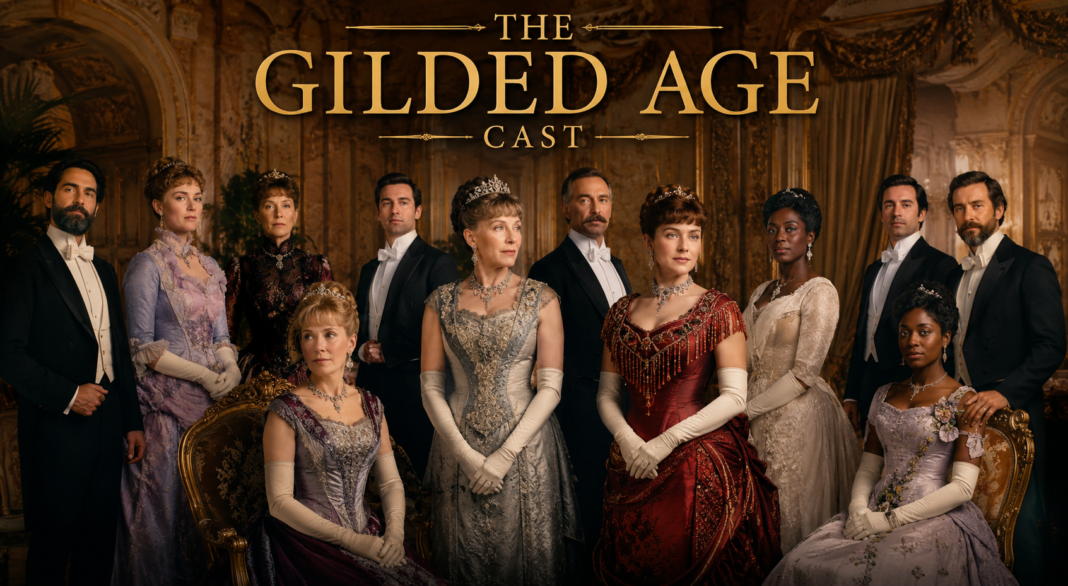

HBO’s The Gilded Age Cast has become one of the most talked-about historical dramas of recent years. Created by Julian Fellowes, the mastermind behind Downton Abbey, the series brings viewers into the lavish world of late nineteenth-century New York society. While the costumes, architecture, and storytelling are remarkable, much of the show’s success comes from the extraordinary performances delivered by the gilded age cast.
From award-winning veterans to rising stars, the ensemble has helped transform historical figures and fictional socialites into compelling, memorable characters. The chemistry among the actors creates a rich portrayal of America’s transformative era, where old money, new wealth, ambition, and tradition collided.
Why The Gilded Age Cast Has Earned Critical Acclaim
One of the biggest strengths of the series is its ensemble approach. Rather than relying on a single protagonist, the story unfolds through multiple interconnected families and social circles, allowing viewers to experience different perspectives on wealth, class, and power.
The performers bring authenticity to every storyline. Whether portraying ambitious railroad tycoons, established social elites, or individuals navigating societal expectations, the actors create emotional depth that makes historical events feel immediate and relevant to modern audiences.
The Historical Setting Behind the Series
The Gilded Age Cast refers to the period roughly between the 1870s and early 1900s in American history. It was an era marked by rapid industrial growth, technological innovation, immense fortunes, and significant social change.
The show’s cast plays characters inspired by both real historical figures and fictional creations. This combination allows the series to maintain historical authenticity while exploring personal stories that resonate with contemporary viewers.
Main Cast Overview
The central ensemble includes some of television, theater, and film’s most accomplished performers. Their collective experience contributes to the production’s prestige and credibility.
The following table highlights key members of the gilded age cast, their characters, and their roles within the story.
| Actor | Character | Role in the Story |
| Carrie Coon | Bertha Russell | Ambitious social climber seeking elite acceptance |
| Morgan Spector | George Russell | Wealthy railroad magnate and businessman |
| Louisa Jacobson | Marian Brook | Young woman adapting to New York society |
| Christine Baranski | Agnes van Rhijn | Traditional old-money matriarch |
| Cynthia Nixon | Ada Brook | Agnes’s compassionate sister |
| Denée Benton | Peggy Scott | Aspiring writer and social observer |
| Taissa Farmiga | Gladys Russell | Daughter of the Russell family |
| Harry Richardson | Larry Russell | Russell heir navigating adulthood |
| Blake Ritson | Oscar van Rhijn | Agnes’s ambitious son |
| Simon Jones | Bannister | Household butler and advisor |
Carrie Coon as Bertha Russell
The Gilded Age Cast Carrie Coon delivers one of the series’ most celebrated performances as Bertha Russell. Determined to secure her family’s place among New York’s elite, Bertha embodies ambition, intelligence, and resilience.
Coon’s portrayal balances strength and vulnerability. While Bertha often appears relentless in her pursuit of social acceptance, viewers also witness the emotional challenges she faces while attempting to reshape societal expectations.
Morgan Spector as George Russell
Morgan Spector plays George Russell, a powerful railroad businessman whose immense wealth places him at the center of New York’s economic transformation. George represents the rise of new money during The Gilded Age Cast.
Unlike many historical industrialists depicted in period dramas, George is portrayed as a devoted husband and father. Spector’s performance adds complexity to a character who could otherwise be viewed solely through the lens of wealth and influence.
Louisa Jacobson as Marian Brook
The Gilded Age Cast Marian Brook serves as one of the audience’s primary entry points into the world of the series. After experiencing financial hardship, she relocates to New York and encounters a social environment filled with unwritten rules and expectations.
Louisa Jacobson brings warmth and relatability to Marian. Her character often challenges traditional norms, providing a fresh perspective amid the rigid structures of high society.
Christine Baranski as Agnes van Rhijn
Christine Baranski’s portrayal of Agnes van Rhijn has become one of the defining elements of the gilded age cast. Agnes represents established old-money society and fiercely defends the traditions she believes preserve social order.
Baranski’s sharp wit, commanding presence, and impeccable timing make Agnes both intimidating and entertaining. Her interactions with newer members of society frequently generate some of the show’s most memorable moments.
Cynthia Nixon as Ada Brook
Ada Brook offers a gentler contrast to her sister Agnes. While Agnes often prioritizes tradition, Ada demonstrates compassion, empathy, and emotional openness.
Cynthia Nixon brings nuance to the role, creating a character who quietly influences those around her. Her performance illustrates how kindness can be just as powerful as authority within complex family dynamics.
Denée Benton as Peggy Scott
Peggy Scott’s storyline expands the series beyond elite social circles. As an aspiring writer and ambitious young woman, Peggy provides insight into opportunities and barriers faced by African Americans during the era.
Denée Benton delivers a thoughtful and layered performance. Through Peggy’s experiences, viewers gain a broader understanding of the social and cultural realities that shaped the period.
Taissa Farmiga as Gladys Russell
Gladys Russell is the daughter of Bertha and George Russell. As a young woman coming of age within one of New York’s wealthiest families, she faces expectations from both society and her ambitious mother.
Taissa Farmiga portrays Gladys with sensitivity and authenticity. Her character’s journey reflects the tension between personal freedom and family obligation that many young women experienced during the period.
Harry Richardson as Larry Russell
Larry Russell serves as a bridge between traditional expectations and emerging modern values. As the son of George and Bertha Russell, he enjoys immense privilege while seeking his own identity.
Harry Richardson’s performance captures Larry’s curiosity, ambition, and desire for independence. His character often brings a fresh perspective to family and societal conflicts.
Blake Ritson as Oscar van Rhijn
The Gilded Age Cast Oscar van Rhijn is one of the series’ most intriguing characters. Navigating personal ambitions while maintaining appearances in a highly judgmental society creates numerous challenges for him.
Blake Ritson delivers a sophisticated performance filled with subtle emotional complexity. His character highlights the limitations imposed by social conventions during the era.
Simon Jones as Bannister
Every grand household requires capable staff, and Bannister plays a vital role in maintaining the van Rhijn residence. His professionalism and loyalty make him an important presence within the household.
Simon Jones brings dignity and charm to the character. His portrayal reminds viewers that domestic staff were essential participants in the functioning of elite society.
Supporting Cast Members Who Strengthen the Series
A major reason for the success of the gilded age cast is the depth of its supporting ensemble. Numerous actors contribute memorable performances that enrich the narrative landscape.
Characters from neighboring households, business circles, social clubs, and family networks create a fully realized world. Their stories often intersect in surprising ways, enhancing the show’s complexity and realism.
The Importance of Ensemble Storytelling
Unlike many television dramas that focus heavily on a single lead, The Gilded Age Cast thrives because of its collaborative storytelling structure. Every major character contributes a unique viewpoint to the broader narrative.
This approach allows the cast to shine collectively. Viewers become invested in multiple storylines simultaneously, creating deeper engagement and stronger emotional connections throughout the series.
How Theater Experience Influences the Performances
Many members of the gilded age cast have extensive theater backgrounds. Their stage experience contributes to the show’s polished dialogue delivery and emotional precision.
Theatrical training is particularly valuable in period dramas, where language, posture, and social etiquette play important roles. The cast’s expertise helps maintain authenticity while keeping performances engaging for modern audiences.
The Chemistry Between Carrie Coon and Morgan Spector
One of the most praised aspects of the series is the relationship between Bertha and George Russell. Their partnership stands out because it combines romantic affection with strategic collaboration.
Carrie Coon and Morgan Spector create a believable marriage built on mutual respect. Their chemistry elevates many scenes and provides emotional grounding amid the broader social conflicts.
Old Money Versus New Money Through the Cast
The central conflict between established elites and newly wealthy families is embodied by the performances themselves. Actors portraying old-money characters emphasize tradition, restraint, and social hierarchy.
Meanwhile, performers representing new-money families bring energy, ambition, and innovation. This contrast creates dramatic tension that drives much of the series’ narrative momentum.
Character Development Across Multiple Seasons
As the series progresses, many cast members are given opportunities to explore significant character growth. Relationships evolve, ambitions shift, and personal challenges reshape perspectives.
These developments prevent characters from becoming static archetypes. Instead, viewers witness complex individuals adapting to changing circumstances within a rapidly evolving society.
Costume Design and Performance Synergy
The elaborate costumes worn by the gilded age cast contribute significantly to character development. Clothing serves as a visual expression of status, personality, and ambition.
Actors frequently use wardrobe elements to enhance their performances. The result is a seamless blend of visual storytelling and dramatic interpretation that strengthens audience immersion.
Historical Accuracy and Character Interpretation
Although many characters are fictional, the performers draw inspiration from historical realities. Their portrayals reflect documented attitudes, social customs, and power structures of the late nineteenth century.
This balance between fact and fiction allows the cast to create believable characters while maintaining dramatic flexibility. The approach appeals to both history enthusiasts and general audiences.
Audience Reactions to the Cast
Fans consistently praise the performances across social media, entertainment publications, and television reviews. Many viewers cite the ensemble as their primary reason for watching the show.
The emotional authenticity of the performances helps audiences connect with characters despite the historical setting. Strong acting bridges the gap between modern viewers and nineteenth-century society.
Awards Recognition and Industry Praise
Several cast members have received recognition from critics and industry organizations. Their performances are frequently highlighted in discussions about outstanding television acting.
Industry praise reflects not only individual achievements but also the collective strength of the ensemble. The show’s casting choices have proven instrumental to its overall success.
The Role of Diversity in the Cast
The series incorporates a broader range of perspectives than many traditional period dramas. Through characters such as Peggy Scott and her family, viewers gain insight into communities often underrepresented in historical storytelling.
This inclusivity enriches the narrative and provides a more comprehensive portrayal of American society during the Gilded Age. The cast’s performances help bring these important stories to life.
Behind-the-Scenes Collaboration
Successful ensemble productions depend on collaboration, and interviews with cast members frequently emphasize teamwork. Actors support one another in creating cohesive scenes and believable relationships.
That collaborative spirit is visible on screen. Whether portraying rivals, friends, family members, or colleagues, the performers create interactions that feel natural and emotionally grounded.
What Makes The Gilded Age Cast Unique
Many television dramas feature talented actors, but few assemble such a diverse mix of stage veterans, film stars, and emerging talent. This blend creates a dynamic viewing experience.
Experienced performers provide stability and gravitas, while younger actors bring fresh energy and perspective. Together, they create a balanced ensemble capable of handling both intimate drama and grand historical spectacle.
Lessons Modern Viewers Can Take From the Characters
Despite its historical setting, the series explores themes that remain relevant today. Ambition, family loyalty, social mobility, personal identity, and resilience continue to shape modern life.
The cast’s performances make these themes accessible and relatable. By grounding historical conflicts in human emotions, they help viewers draw meaningful connections between past and present.
The Future of The Gilded Age Cast
As the series continues, audiences remain eager to see how characters evolve and how new additions to the ensemble may influence future storylines. The show’s strong foundation provides countless opportunities for growth.
The continued success of the gilded age cast will likely remain central to the series’ appeal. Their ability to balance historical authenticity with emotional resonance has become one of the defining characteristics of the production.
Memorable Performances That Define the Series
Every successful ensemble features standout moments, and The Gilded Age is filled with scenes that showcase exceptional acting. Emotional confrontations, strategic negotiations, and family discussions often become highlights because of the performers involved.
As viewers revisit episodes, these performances continue to reveal new layers of character motivation and emotional complexity. That depth is a hallmark of high-quality television drama.
Why Viewers Continue to Connect With the Cast
A common misconception about period dramas is that they appeal only to history enthusiasts. In reality, audiences connect with compelling characters regardless of setting or era.
The performers succeed because they portray recognizable human experiences. Love, ambition, fear, hope, and determination remain universal emotions, making the characters feel remarkably contemporary despite their historical context.
A Quote That Captures the Show’s Spirit
As creator Julian Fellowes has often emphasized through his storytelling philosophy:
“History is made by people.”
This idea perfectly reflects the strength of the gilded age cast. Rather than presenting history as a collection of dates and events, the series explores the personal choices, relationships, and ambitions that shape entire eras.
Conclusion
The enduring popularity of The Gilded Age owes much to its exceptional ensemble. From Carrie Coon’s ambitious Bertha Russell and Morgan Spector’s powerful George Russell to Christine Baranski’s formidable Agnes van Rhijn and Denée Benton’s inspiring Peggy Scott, every performer contributes meaningfully to the story.
What makes the gilded age cast truly remarkable is its ability to transform historical themes into deeply human experiences. Through nuanced performances, strong chemistry, and a commitment to authenticity, the ensemble has elevated the series into one of television’s most compelling period dramas. Whether you are a longtime fan or a newcomer discovering the show for the first time, the cast remains one of its greatest strengths and a major reason for its continued success.
FAQ
Who are the main actors in the The Gilded Age cast?
The main members of the gilded age cast include Carrie Coon, Morgan Spector, Christine Baranski, Cynthia Nixon, Louisa Jacobson, Denée Benton, Taissa Farmiga, Harry Richardson, and Blake Ritson.
Who plays Bertha Russell in The Gilded Age?
Carrie Coon portrays Bertha Russell, one of the most influential characters in the gilded age cast, known for her ambition and determination to enter elite society.
Is The Gilded Age based on real people?
Many characters are fictional, though the series draws inspiration from real historical figures, events, and social dynamics of nineteenth-century New York.
Why is the cast of The Gilded Age so highly praised?
Critics and audiences frequently praise the gilded age cast for its strong ensemble chemistry, emotional depth, historical authenticity, and outstanding performances.
Who created The Gilded Age?
The series was created by Julian Fellowes, the acclaimed writer and producer best known for creating Downton Abbey.
Does The Gilded Age feature theater actors?
Yes. A significant portion of the gilded age cast comes from prestigious theater backgrounds, including Broadway and major stage productions.
What makes The Gilded Age cast different from other period dramas?
The ensemble combines veteran award-winning actors with emerging talent, creating a balanced and dynamic group capable of delivering nuanced historical storytelling.
Which character is the audience’s point of view in the series?
Marian Brook, played by Louisa Jacobson, often serves as the audience’s entry point into the social world portrayed by the gilded age cast.
You May Also Read Tuesday Blessings