

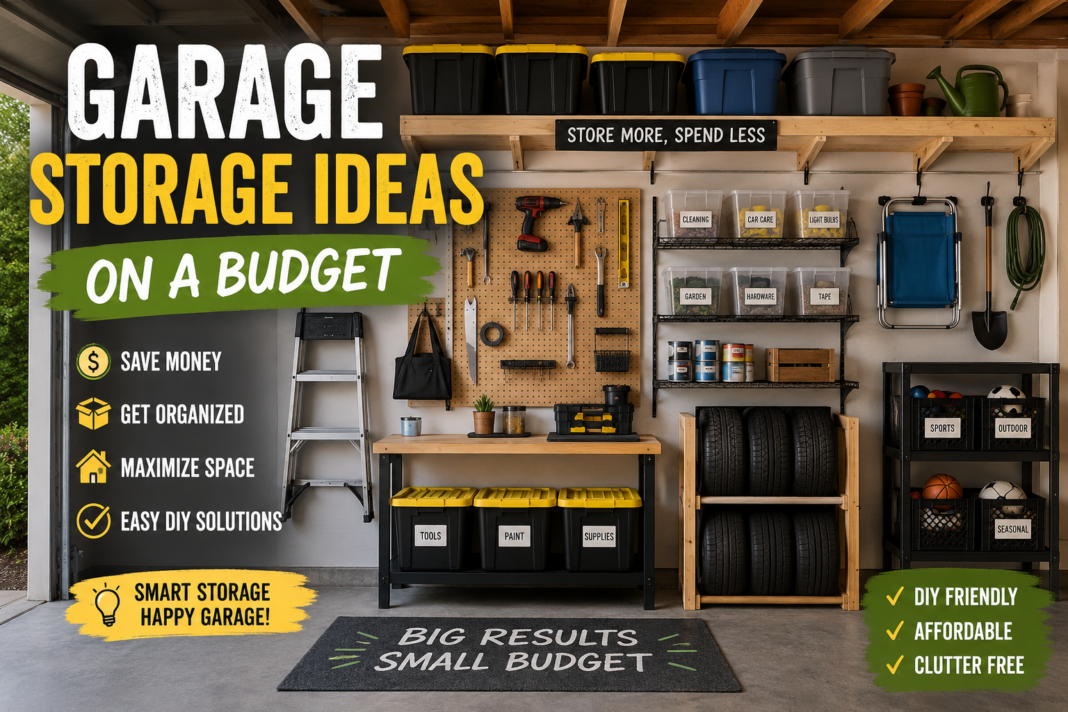

A Garage Storage Ideas on a Budget can become the hardest-working room in a home—or the place where useful things disappear beneath piles of boxes, tools, sports equipment, seasonal decorations, and forgotten household items. The good news is that creating a functional garage does not require an expensive renovation, custom cabinetry, or a professional organizer. With thoughtful planning and a few inexpensive materials, you can turn wasted walls, corners, ceilings, and floor space into practical storage.
The best garage storage ideas on a budget focus on using the space you already have more intelligently. Instead of buying storage products first and figuring out where they belong later, start by understanding what you own, how often you use it, and which parts of the garage are currently being wasted. This approach can produce a cleaner, safer, and more flexible garage while keeping spending under control.
Start by Understanding Your Garage Storage Problem
Before purchasing shelves, bins, hooks, or cabinets, take an honest look at what is making your garage difficult to use. A cluttered garage usually has more than one problem: items may not have assigned homes, frequently used equipment may be buried behind rarely used belongings, and vertical space may be almost completely empty. Photographing the garage from several angles can help you see the situation more objectively. Measure the walls, ceiling height, available floor area, door clearance, windows, electrical panels, and any obstacles that could affect storage installation. The goal is not simply to make the room look tidy; it is to create a system that makes finding and returning items easy.
One of the most practical garage storage ideas on a budget is to divide belongings according to how they are actually used. Create broad categories such as hand tools, power tools, gardening equipment, automotive supplies, sports gear, holiday decorations, household overflow, and outdoor equipment. Then separate everyday items from occasional-use possessions. A screwdriver, bicycle helmet, lawn tool, or frequently used extension cord should not be stored in the same inaccessible location as decorations used once a year. Good organization reduces unnecessary movement, protects belongings, and makes the entire garage easier to maintain.
Declutter Before You Spend Money
Buying storage containers for things you no longer need is one of the fastest ways to waste money. Start with a complete decluttering session before designing your storage system. Remove everything from the most problematic areas and group similar items together. Keep possessions that are useful, meaningful, or genuinely needed; identify items that can be donated or sold; and safely dispose of broken or obsolete objects according to local requirements. This process often reveals that the garage has more usable capacity than expected. A partially empty garage with a sensible storage system is far more useful than a completely packed garage with expensive organizers.
Try not to make decluttering decisions based solely on how much you originally paid for something. An unused appliance, damaged sports equipment, duplicate tool, or box of unidentified cables occupies the same physical space whether it cost five dollars or five hundred. If an item has not been used for years and there is no realistic reason to keep it, it may be preventing you from using the garage efficiently. Once unnecessary possessions are removed, measure the remaining categories and build storage around real needs rather than imagined ones.
Use Vertical Wall Space Instead of More Floor Space
Garage walls are often the most valuable storage surface because they allow you to keep belongings organized without sacrificing parking or walking space. Basic wall-mounted shelves, pegboards, hooks, rails, and simple brackets can transform a blank wall into a functional storage zone. Even a narrow strip of wall can hold hand tools, cleaning equipment, extension cords, gardening supplies, or small containers. When planning wall storage, keep frequently used objects between comfortable waist and shoulder height while placing lightweight seasonal belongings higher up.
A strong vertical-storage strategy can make inexpensive materials perform like a much more elaborate system. For example, a sturdy sheet of plywood attached securely to appropriate wall framing can become the foundation for shelves, hooks, and tool holders. Wooden strips can help create mounting points, while inexpensive utility hooks can keep long-handled tools upright. The important principle is to match the mounting method to the wall construction and expected load. Storage should never be improvised in a way that compromises structural safety.
Build an Affordable Pegboard Tool Wall
Pegboard remains popular because it offers flexibility without requiring a complicated cabinet system. A basic pegboard panel can turn a small section of wall into an organized workshop where hammers, pliers, screwdrivers, measuring tools, and other frequently used equipment remain visible. Hooks and accessories can be rearranged as your tool collection changes, which makes pegboard particularly useful for homeowners who are still developing their workshop setup. A simple outline or label beside frequently used tools can also make it obvious when something has not been returned.
The key to making pegboard storage effective is avoiding the temptation to fill every available inch. Leave some breathing room between tools so they can be removed without knocking neighboring items loose. Keep the tools you reach for most often near the center and position specialized equipment farther out. If your collection is small, one modest panel may be enough. Expanding the system only when you actually need more capacity keeps the project aligned with a limited budget.
Make Simple DIY Shelves From Affordable Materials
DIY shelving can provide substantial storage capacity without the price of prebuilt garage cabinetry. Basic lumber, plywood, brackets, and screws can be used to create shelves sized specifically for your garage. Building shelves yourself also allows you to accommodate unusual wall dimensions, narrow corners, or spaces above workbenches. Before construction, determine the expected weight of each shelf and choose appropriate materials and supports. Heavy paint cans, automotive supplies, power tools, and dense storage boxes require substantially stronger construction than lightweight seasonal decorations.
One of the most useful garage storage ideas on a budget is building storage around standard containers rather than designing shelves randomly. If you use plastic bins of a particular size, measure them first and leave enough clearance to slide them in and out comfortably. This creates a repeatable system in which every container has a predictable location. Label the front rather than the top whenever possible, because labels remain visible when bins are stacked or stored on high shelves. The result is a storage wall that looks organized while remaining highly practical.
Turn Reclaimed Wood Into Useful Storage
Reclaimed lumber can be an economical material for garage organization when it is structurally sound and appropriate for the intended project. Old boards can become simple shelves, tool racks, wall rails, brackets, or storage ledges. Even leftover construction materials from previous home projects may have useful second lives. Before using reclaimed wood, inspect it carefully for rot, splitting, insects, exposed nails, excessive warping, or other damage. Sand rough surfaces where necessary and select fasteners suitable for the material and load.
The appeal of reclaimed-material storage is not just financial. Custom-built pieces can fit spaces that standard products cannot, such as the narrow wall beside a garage door or an awkward corner beneath a window. A short shelf can hold lubricants and cleaning products, while a longer rail can organize outdoor tools. When finished carefully, inexpensive wood can look intentional rather than temporary. The objective is not to make every storage component match perfectly but to make each one serve a clear purpose.
Choose Storage Bins Strategically
Storage bins are useful because they contain loose objects, protect belongings from dust, and make categories easier to manage. However, buying dozens of different container sizes can create another organizational problem. Whenever practical, standardize on a few compatible bin sizes that stack securely and fit your shelving. Clear bins can be helpful when visibility matters, while opaque containers may be preferable for items that need protection from light or simply look cleaner when stored together. Strong lids are especially valuable for seasonal and infrequently accessed possessions.
Avoid treating every possession as something that must be placed inside a box. Frequently used tools, bicycles, ladders, garden equipment, and cleaning implements are often easier to access when stored openly on hooks or racks. Containers work best when they solve a specific problem, such as grouping small parts, protecting holiday decorations, or containing seasonal clothing. The right combination of open and enclosed storage is usually more functional than a garage filled entirely with identical plastic boxes.
Create Dedicated Zones for Different Activities
A garage becomes easier to manage when storage follows the way the space is used. Instead of distributing similar items randomly across the room, create zones for major activities. A workshop zone might contain a workbench, tools, fasteners, and task lighting. A gardening zone could hold soil, pots, hand tools, gloves, and watering equipment. An automotive zone might contain vehicle-care products and emergency supplies. A sports zone could accommodate balls, helmets, bicycles, and protective equipment. Zoning reduces the time spent searching and helps family members understand where items belong.
Good zoning also protects the garage from gradual clutter migration. When an object does not have a logical home, it tends to end up wherever there is an empty surface. Assigning a clear location gives every category a destination. Leave enough open space around work areas for comfortable movement, and avoid placing frequently accessed items behind parked vehicles or heavy equipment. A successful garage is not merely full of storage; it has a layout that supports everyday routines.
Use the Space Around the Garage Door
The area around the garage door is easy to overlook because movement and hardware require clearance. Nevertheless, side walls and nearby vertical areas can often provide useful storage opportunities. Narrow shelving may hold cleaning products, small bins, or household supplies, while hooks can accommodate lightweight tools and equipment. Before installing anything near the door mechanism, carefully consider the path of moving components and ensure that stored objects cannot interfere with safe operation.
The same principle applies to the wall beside a side entrance. This can be an excellent location for items you carry between the garage and the house, such as reusable shopping bags, pet supplies, shoes, umbrellas, or outdoor accessories. A small rack or series of hooks can prevent these objects from accumulating on the floor. Storage near entrances should prioritize convenience because the easier it is to return an item to its home, the more likely the system is to remain organized.
Take Advantage of Ceiling Storage
Ceiling storage can reclaim space that would otherwise remain unused, especially in garages with high ceilings. Overhead racks are particularly useful for lightweight seasonal belongings, empty luggage, camping equipment, or decorations that are accessed only occasionally. However, overhead storage requires more caution than ordinary shelves because improperly installed racks can become dangerous. Use products and mounting methods rated for the expected load, attach them to appropriate structural members, and maintain safe clearance for vehicles, garage doors, lights, and walking areas.
When considering garage storage ideas on a budget, homeowners sometimes overlook the value of storing low-priority items overhead. The purpose is not to put everything above your head but to move infrequently needed possessions away from prime storage areas. Label overhead bins clearly and keep a simple inventory if the contents are difficult to see. Lightweight items should generally be favored for elevated storage, while dense or heavy objects are better positioned lower where they are easier and safer to handle.
Build a Simple Overhead Platform
A carefully designed overhead platform can provide a substantial amount of storage without taking valuable wall or floor space. Depending on the garage structure and local requirements, a platform may be constructed using appropriate framing and decking materials, but structural considerations should come first. The garage ceiling, framing, fire separation, utilities, lighting, and door mechanism all need to be evaluated before building. If there is uncertainty about load-bearing capacity or structural changes, professional advice is worthwhile.
A platform works best when it serves a clearly defined purpose. Large seasonal storage bins, camping equipment, luggage, and seldom-used household items can be good candidates. Avoid turning the platform into a dumping ground by grouping contents into labeled containers. Leave access pathways where needed and ensure that items can be removed without creating unstable piles. A well-planned overhead platform can dramatically increase capacity while preserving the usable floor area below.
Repurpose Everyday Household Items
Some of the most effective low-cost storage solutions come from objects that already exist in your home. Old jars can hold screws, nails, washers, and small hardware. Unused curtain rods can sometimes organize lightweight rolls or cords when properly mounted. Shoe organizers can hold small accessories, cleaning supplies, or craft materials. Old cabinets can become garage storage if they are structurally sound and suitable for the environment. Repurposing does not mean using random objects everywhere; it means identifying items that naturally solve a storage problem.
Look for objects based on their function rather than their original purpose. A sturdy basket can become a sports-equipment container. A retired kitchen cabinet may provide enclosed storage for paint supplies or household chemicals if its construction and condition are appropriate. A wall-mounted rail can organize tools that previously leaned against a corner. The best repurposing projects feel natural because the object performs its new role safely and conveniently rather than simply being reused for the sake of saving money.
Organize Long-Handled Tools
Rakes, brooms, shovels, mops, garden forks, and similar equipment are notorious for consuming floor space. Leaving them in a corner creates a messy visual pile and makes individual tools difficult to retrieve. Wall-mounted hooks, clips, rails, or purpose-built holders can keep long-handled tools vertical and accessible. Store them where they can be removed without disturbing the rest of the collection. A narrow wall section can often hold an impressive number of tools when they are arranged vertically rather than leaned together.
For garage storage ideas on a budget, long-handled tools are an ideal category to address early because the improvement can be immediate and inexpensive. A small number of durable hooks may eliminate an entire floor-level pile. Group similar tools together and place the ones used most often at convenient heights. If tools are wet or dirty after outdoor use, consider how they will dry before placing them into an enclosed cabinet. Storage should support the condition of the equipment as well as its organization.
Store Bicycles Without Sacrificing Parking Space
Bicycles can consume a surprising amount of garage floor area, especially when several are stored together. Wall-mounted bicycle hooks can move bikes upward while keeping them accessible. Depending on the garage layout, bikes may also be stored vertically or on specialized stands. The chosen system should make it possible to remove one bicycle without moving everything else. If children regularly use their bikes, placing them too high may defeat the purpose of the storage system, so accessibility matters as much as space efficiency.
Create a small cycling zone that includes helmets, pumps, locks, lights, and maintenance supplies. Keeping related accessories together prevents the common problem of finding the bicycle but not its helmet or lock. A basket or small wall-mounted organizer can hold these loose items. If bicycles are stored on hooks, check the mounting system and weight rating regularly, especially if the wall is made from a material that requires specific anchors.
Make Sports Equipment Easier to Find
Sports equipment tends to spread across a garage because different items have different shapes. Balls roll under vehicles, bats lean against walls, helmets end up on shelves, and protective equipment gets buried in bins. A dedicated sports station can solve much of this chaos. Use open baskets, wall racks, hooks, or mesh containers to group equipment by activity. Keep frequently used gear at accessible heights and reserve higher storage for seasonal equipment.
A simple rule can make the system easier for children and adults alike: every activity gets a home. Basketballs, soccer balls, baseball equipment, rackets, helmets, and protective gear should each have a recognizable location. Open storage often works better than tightly packed containers because equipment can be returned quickly after use. If children can understand the system without asking where something belongs, the organization has been designed successfully.
Create a Small Workshop Without Buying a Full Cabinet System
A functional workshop does not require an expensive professional tool chest. A sturdy work surface combined with a pegboard, open shelves, small parts containers, and a few drawers can provide most of what a homeowner needs. The workbench should have enough clear surface area for common projects, while tools used frequently should remain within easy reach. Less frequently used equipment can occupy shelves nearby. Good lighting is equally important because poor visibility makes even a well-organized workshop frustrating to use.
For homeowners searching for garage storage ideas on a budget, the workshop should be designed around actual projects rather than an imagined professional setup. If you primarily perform basic repairs, assembling furniture, gardening maintenance, and bicycle work, you may not need specialized industrial storage. Start with the tools you already own and expand only when a real need appears. This prevents spending money on elaborate systems that provide little practical benefit.
Use Magnetic Storage for Small Metal Tools
Magnetic strips can be useful for lightweight metal tools and accessories when installed correctly. They can keep screwdrivers, small wrenches, scissors, measuring accessories, and similar items visible and easy to reach. Magnetic storage is particularly helpful on small walls where a full pegboard would be unnecessary. Because the tools remain exposed, it is easy to see what is available and identify missing items.
Use magnets only for objects compatible with the system and follow the manufacturer’s load recommendations. Avoid assuming that every magnetic strip can safely hold heavy tools. Small metal parts can also be stored in magnetic containers when appropriate, but they should not be positioned where they could fall onto vehicles, walkways, or sensitive equipment. The goal is convenient access, not maximum density.
Make Better Use of Corners
Corners often become accidental dumping zones because standard shelving does not fit neatly into them. Corner shelves, triangular platforms, narrow vertical racks, or custom-built units can turn these areas into useful storage. Corners are particularly appropriate for objects that are not used every day, such as seasonal decorations, spare materials, or specialized equipment. A custom corner shelf can sometimes be built from leftover plywood and a few brackets, making it an inexpensive project with a noticeable impact.
Do not automatically fill every corner. Some areas need to remain accessible for movement, utilities, drainage, or maintenance. A storage system that technically uses every square foot can make the garage feel smaller and harder to navigate. Good organization balances capacity with accessibility. Leave enough open space to retrieve objects comfortably and inspect the surrounding area when necessary.
Install a Simple French Cleat System
A French cleat system can provide flexible wall storage for cabinets, shelves, tool holders, and other removable components. It is particularly useful for homeowners who want a modular setup that can change over time. Cleats distribute loads across a broader mounting area and can support a variety of custom-built storage pieces when properly constructed and secured. The exact materials and installation method should be selected based on wall construction and expected loads.
The major advantage is adaptability. Instead of permanently deciding that a particular tool holder must remain in one position, you can move compatible storage components as your needs change. This is valuable in a garage because hobbies, equipment collections, and household requirements evolve. A modular wall also makes it easier to upgrade one component without rebuilding the entire organization system.
Use PVC Pipe for Small Tool and Material Storage
PVC pipe can become a surprisingly useful organizer for long, narrow objects. Short sections can hold handles, extension accessories, craft materials, tubes, or other appropriately sized items. Mounted vertically or horizontally, pipe organizers can create dedicated compartments without requiring large shelves. Smooth interior surfaces also make it easy to retrieve many lightweight objects.
The best projects use pipe according to the actual dimensions of the items being stored. Measure the tools first rather than assuming a standard diameter will work. Secure each section appropriately and avoid storing objects that are too heavy for the mounting system. This kind of low-cost organizer is especially useful for workshop areas where small groups of similar materials tend to become tangled or scattered.
Improve Extension Cord and Hose Storage
Cords, hoses, and cables are much easier to manage when they have dedicated hanging locations. Coiling them neatly after use and placing them on sturdy hooks can prevent knots and floor clutter. Larger hoses may require specialized reels or supports, while lightweight cords can often be managed with simple wall hooks or loops. Labeling similar cords can save time when several look nearly identical.
Keep cords and hoses away from sharp edges and areas where vehicles or doors could damage them. Avoid storing wet hoses in enclosed locations where moisture can create problems. The storage solution should make returning the item easier than leaving it on the floor. If putting away a cord takes several minutes, people are more likely to abandon it after use, so convenience is a critical part of the design.
Use Labels to Create a Self-Maintaining System
Labels are a simple but powerful organizational tool because they reduce uncertainty. A bin labeled “Holiday Lights” is much more useful than an identical bin containing an unknown mixture of seasonal items. Labels should be specific enough to guide decisions without becoming unnecessarily detailed. For example, “Garden Hand Tools” is generally more useful than “Garden Stuff.” Consistent labeling also helps other household members participate in maintaining the system.
Place labels where they can be seen without moving containers. Front-facing labels work well for shelves, while top labels may be sufficient for bins stored individually. Consider using large, readable text rather than decorative designs that sacrifice clarity. The purpose of labeling is retrieval speed. If someone can locate an item without opening five containers, the label has done its job.
Choose Between Open Shelving and Closed Cabinets
Open shelving provides quick visibility and easy access, making it ideal for frequently used tools, gardening equipment, bins, and household supplies. Closed cabinets offer a cleaner appearance and can protect certain belongings from dust, light, or accidental contact. Neither option is universally better. The appropriate choice depends on the objects being stored, how frequently they are accessed, and how much visual simplicity you want in the garage.
A mixed system is often the strongest solution. Use open storage for everyday equipment and closed storage for visually distracting or sensitive items. If budget is the main constraint, prioritize shelving first and add cabinets gradually. A garage does not need to look like a showroom to function exceptionally well. Accessibility, durability, safety, and logical placement matter more than matching finishes.
Compare Low-Cost Garage Storage Options
Different storage approaches solve different problems, so comparing them before spending money can prevent unnecessary purchases. The table below summarizes common options and the situations in which each tends to provide the greatest value.
| Storage option | Typical cost level | Best for | Main advantage | Main limitation |
| Pegboard | Low | Hand tools | Flexible and visible | Limited heavy-load capacity |
| Wall hooks | Very low | Long tools, cords, small equipment | Simple installation | Requires suitable mounting |
| DIY wood shelves | Low to moderate | Bins and general storage | Custom dimensions | Requires basic construction |
| Plastic bins | Low to moderate | Seasonal and loose items | Protects and groups belongings | Can consume space if oversized |
| Reclaimed shelves | Very low | Light to medium storage | Reuses available materials | Material condition varies |
| Overhead racks | Moderate | Seasonal items | Frees floor space | Requires careful installation |
| Magnetic strips | Low | Small metal tools | Excellent visibility | Limited weight capacity |
| PVC organizers | Very low | Narrow tools and materials | Highly customizable | Not suitable for heavy items |
| French cleats | Low to moderate | Modular wall storage | Flexible and adaptable | Requires accurate installation |
| Used cabinets | Low to moderate | Enclosed storage | Large capacity | May need repair or modification |
The smartest purchase is not necessarily the cheapest product. A low-cost organizer that breaks quickly or cannot accommodate your belongings can become more expensive than a durable solution purchased once. Evaluate storage by cost per useful capacity, expected lifespan, accessibility, and installation requirements. A well-built shelf used for ten years may deliver far greater value than a series of inexpensive products replaced every year.
Protect the Garage From Moisture and Dust
Organization should never ignore the garage environment. Dust, humidity, temperature changes, leaks, and pests can damage stored belongings over time. Cardboard boxes are particularly vulnerable to moisture and can become weak, dirty, or attractive to pests. Plastic containers with secure lids can offer better protection for seasonal possessions. However, containers should not be treated as a substitute for addressing the underlying source of moisture.
Keep stored belongings elevated from potentially damp floors when appropriate, especially in areas vulnerable to water intrusion. Inspect the garage periodically for leaks, condensation, damaged weather seals, and drainage problems. If a storage system hides walls or corners completely, make sure you can still inspect those areas. Good organization should make maintenance easier rather than creating new blind spots.
Store Chemicals and Hazardous Products Responsibly
Garages often contain paints, solvents, automotive fluids, pesticides, cleaners, fuels, and other products that require careful storage. These materials should remain in their original containers when possible and should be stored according to their labels and applicable safety guidance. Keep incompatible substances separated and prevent children or pets from accessing them. Avoid placing chemical products on unstable shelves or directly above areas where leaks could damage electrical equipment.
An organized garage makes hazardous-material management easier because products are visible and grouped appropriately. Do not transfer chemicals into unmarked containers simply to make the shelf look cleaner. Labels, ventilation requirements, temperature considerations, and disposal instructions matter more than aesthetics. If a product is expired, damaged, leaking, or no longer needed, follow local disposal guidance rather than keeping it indefinitely.
Keep Heavy Items Low
A common organizational mistake is placing heavy objects on the highest shelves simply because those shelves are available. Large boxes, dense tools, automotive supplies, and other heavy possessions should generally remain lower and easier to handle. This reduces the risk associated with lifting and retrieving them. Higher shelves are better suited to lightweight items that are used infrequently.
Think of storage as a hierarchy. The lowest and most accessible areas should contain heavy or frequently used objects. Middle shelves can hold everyday bins and equipment. Upper shelves can accommodate lightweight seasonal belongings. This simple principle improves both ergonomics and safety while making the garage easier to navigate.
Make the Garage Safer With Better Organization
A cluttered garage can create trip hazards, blocked exits, unstable piles, and difficult access to essential equipment. Organization therefore has a safety dimension that goes beyond appearance. Keep walkways clear, maintain access to electrical panels and utility shutoffs, and ensure that doors can open fully. Tools and equipment should be secured so they cannot easily fall into paths or onto vehicles.
Do not let storage gradually creep into every open area. Establish boundaries for parking, walking, working, and storage. If an item repeatedly ends up in a walkway, that is useful information: its current storage location may be inconvenient. Rather than repeatedly moving it out of the way, redesign the system so returning the item becomes simple.
Design Storage Around How Often You Use Things
Frequency of use should influence storage height and accessibility. Everyday objects deserve convenient locations, while seasonal possessions can occupy higher shelves or less accessible corners. If you use a ladder weekly, it should not be buried behind boxes. If you use holiday decorations once a year, they do not need prime wall space. This approach prevents the garage from becoming an obstacle course.
One of the strongest garage storage ideas on a budget is simply changing the location of items before buying anything new. Moving frequently used equipment closer to the entrance or workbench can make the existing storage system feel dramatically better. Organization is partly about physical capacity, but it is equally about reducing the effort required to retrieve and return possessions.
Create a Family-Friendly Storage System
A garage organization system is unlikely to remain successful if only one person understands it. Storage should be intuitive enough that other household members can find and return common items. Open baskets, large labels, color-free category signs, and clearly separated zones can help. Children who use sports equipment should have storage at an appropriate height, while adults can manage higher or heavier storage areas.
Avoid creating a system so precise that normal household activity becomes difficult. If everyone must perfectly align every item to keep the garage organized, the system may be too complicated. A good design tolerates ordinary mess and makes recovery easy. The best organization systems are not those that never become untidy; they are those that can be reset quickly.
Use Seasonal Rotation to Recover Space
Seasonal rotation can significantly improve garage capacity. Winter equipment, summer recreation gear, holiday decorations, gardening supplies, and weather-specific accessories do not all need to occupy the most accessible locations simultaneously. When a season changes, move the relevant category toward prime storage positions and shift the previous season’s items upward or toward less accessible areas.
Keep seasonal categories together whenever possible. This makes rotation faster and reduces the chance of scattering related possessions across multiple shelves. Clearly labeled containers can make the process almost automatic. Over time, seasonal rotation also provides an opportunity to identify possessions that are never used and may no longer justify storage space.
Turn Empty Doors Into Storage Opportunities
The interior surfaces of suitable garage doors can sometimes provide additional storage, but door movement and weight limitations must be considered carefully. A lightweight organizer may hold small accessories, cleaning supplies, or other appropriate items if the door system supports it. Never attach storage in a way that interferes with the door’s operation or alters its balance. Garage doors contain moving components that should not be obstructed or overloaded.
A more straightforward alternative is using the wall beside a pedestrian door. Hooks and narrow shelves can create a compact entry station for items that are frequently carried in and out. The goal is to use otherwise overlooked surfaces without compromising the garage’s primary functions.
Make a Compact Cleaning Station
Brooms, dustpans, brushes, buckets, microfiber cloths, and cleaning solutions often become scattered throughout the garage. A small cleaning station can consolidate these items into one location. Wall hooks can hold long-handled tools while a shelf or cabinet stores smaller supplies. A narrow rolling cart may also work well when the garage layout requires flexibility.
Keep the cleaning zone close to the area where cleaning equipment is most often needed. If a bucket is used for washing vehicles, storing it near automotive supplies may make more sense than placing it on the opposite wall. Functional proximity is a major part of effective organization. The fewer unnecessary steps required to use an item, the more likely the system is to stay practical.
Build a Rolling Storage Cart
A rolling cart can be useful when garage activities change frequently. It can hold gardening supplies during outdoor projects, workshop tools during repairs, or cleaning equipment during maintenance. The cart can then be moved against a wall when the work is finished. This flexibility is especially valuable in garages that also need to accommodate vehicles.
A basic cart does not have to be expensive. A sturdy secondhand utility cart or a simple DIY wooden frame with appropriate casters may provide enough functionality. The most important considerations are stability, load capacity, wheel quality, and safe movement. Avoid overloading the cart simply because it can roll; heavy items should still be positioned carefully.
Use Narrow Storage in Tight Spaces
Not every garage has wide walls available for shelving. Narrow strips between doors, windows, corners, and cabinets can still provide useful storage. A slim vertical rack can hold cleaning tools, sports accessories, or small bins without extending far into the garage. Custom-width shelves are especially valuable in awkward areas where standard products leave unusable gaps.
Before installing narrow storage, check how much clearance is actually available. A shelf that extends several inches too far may interfere with a vehicle door, walkway, or equipment. In tight garages, every inch matters, but accessibility still takes priority. The ideal narrow organizer adds capacity without making the surrounding space harder to use.
Avoid Common Garage Organization Mistakes
One common mistake is purchasing storage based on appearance rather than function. A beautiful cabinet does little good if its doors cannot open because a vehicle is parked nearby. Another mistake is storing everything according to category without considering frequency of use. A perfectly categorized system can still be frustrating if the items you need every day are hidden behind seasonal belongings. Good organization combines categories, frequency, accessibility, and available space.
Another frequent problem is creating too much storage without establishing rules for what enters the garage. New shelves eventually fill unless household members understand what belongs there. Set simple boundaries: incoming items should have a category, broken items should not remain indefinitely, and possessions without a realistic purpose should be reconsidered. Storage is most effective when paired with controlled accumulation.
Make Small Improvements Instead of Renovating Everything
You do not need to complete the entire garage in one weekend. In fact, tackling everything at once can lead to unnecessary purchases and organizational decisions made too quickly. Start with the area causing the most frustration. If tools are always scattered, build a tool station. If seasonal boxes occupy the floor, create an elevated storage zone. If bicycles block parking, solve the bicycle problem first.
This gradual approach is central to practical garage storage ideas on a budget because it lets each improvement inform the next one. After installing a shelf, you may discover that fewer bins are necessary. After mounting tools on a wall, you may realize that an old cabinet can be removed. Small changes can reveal hidden capacity and prevent you from spending money on problems that no longer exist.
Create a Simple Garage Maintenance Routine
Even an excellent organization system needs occasional maintenance. Set aside a short period every few months to return misplaced items, inspect shelves, remove unnecessary belongings, and check hardware. Seasonal transitions are especially useful opportunities because storage categories naturally change. A brief reset prevents small amounts of clutter from becoming another major project.
Maintenance should be easier than the original organization. If putting something away requires several complicated steps, modify its storage location. The best system is one that naturally supports good habits. As organizational expert Marie Kondo has observed, “The goal of storage is not to hide things.” The deeper lesson is that storage should make useful possessions accessible and intentional rather than simply concealing clutter.
Think About Long-Term Value Before Buying Storage Products
A low purchase price is only one part of the value equation. Consider durability, capacity, installation, adaptability, and how long you expect to use the system. A cheap shelf that bends under normal loads can become a safety issue and an unnecessary replacement expense. Conversely, an inexpensive but well-built wall hook can remain useful for years. Spend more where strength and durability matter, and save money where simple materials are entirely adequate.
For garage storage ideas on a budget, prioritize investments that solve recurring problems. A durable shelving unit, sturdy tool rack, or well-installed bicycle hanger can provide value every day. Decorative accessories should come later. When money is limited, function should lead the decision-making process, while appearance follows naturally from consistency and reduced clutter.
Build a Storage Plan That Can Grow
Your garage will probably change over time. You may acquire new tools, start a hobby, purchase bicycles, add gardening equipment, or change the way the space is used. A rigid organization system can become obsolete quickly. Modular shelves, adjustable pegboard accessories, movable carts, and flexible wall hooks make it easier to adapt without starting from scratch.
Leave some expansion capacity when possible. If every shelf is packed to the last inch, even a small new purchase can destabilize the system. A little unused space is not wasted space; it is room for future needs. Designing for growth is one of the easiest ways to make a low-cost organization project remain useful for years.
Use a Practical Budget for the Whole Project
A garage organization budget should include more than the visible storage products. Consider fasteners, brackets, anchors, lumber, labels, bins, protective equipment, tools you may need to purchase, and possible repairs to the garage itself. Creating a rough spending plan before shopping helps prevent small purchases from quietly becoming an expensive renovation.
Prioritize projects according to impact. Wall hooks and decluttering may provide an immediate improvement for very little money. Shelving may be the next priority if floor space is limited. Specialized racks and cabinets can come later. A staged budget allows you to improve the garage progressively while learning which solutions work best for your household.
Know When DIY Is the Right Choice
DIY storage is attractive because it can reduce costs and produce custom solutions, but it is not automatically the best choice for every project. Simple shelves, pegboards, tool holders, and basic organizers may be appropriate for confident homeowners with the necessary tools and knowledge. More complicated structural modifications, electrical work, or projects involving significant loads may require professional expertise.
The smartest approach is to match the project to your skill level. Saving money is not worthwhile if an installation fails or creates a safety problem. Research appropriate materials, understand the structure you are mounting into, follow manufacturer instructions, and stop when a project exceeds your experience. Budget organization should never mean compromising safety.
Keep Parking Space as a Priority
For many households, the garage’s primary purpose is vehicle storage. It is easy to become so focused on organization that shelving, bins, and equipment gradually consume parking clearance. Before installing major storage, mark the approximate footprint required for vehicles and walking paths. Open car doors, access the trunk, and consider how much room is needed to move around safely.
Wall and ceiling storage are valuable precisely because they preserve floor space. If a storage project makes parking difficult, reconsider its placement. A garage that looks organized but can no longer perform its main function is not truly optimized. The best system supports storage without sacrificing the reasons the garage exists in the first place.
Measure Twice Before Installing Anything
Measurement errors can create expensive and frustrating problems. Check wall dimensions, ceiling height, door movement, vehicle clearance, shelf depth, and container dimensions before buying materials. A shelf that fits on the wall may still prevent a garage door from operating correctly. Likewise, a storage bin that technically fits on a shelf may be impossible to remove once the space is loaded.
Mark proposed storage locations with painter’s tape before installation. This simple step can help you visualize whether shelves will interfere with vehicles or walkways. Stand in the space and imagine opening doors, carrying boxes, and retrieving equipment. A few minutes of planning can prevent hours of rework.
Consider the Psychology of an Organized Garage
Organization is partly physical and partly behavioral. People naturally return objects to locations that are convenient, visible, and logical. When storage requires too much effort, clutter tends to accumulate. This is why a simple hook near the garage entrance can sometimes outperform a large cabinet located across the room.
Design around real behavior rather than ideal behavior. If family members drop sports equipment near the entrance, create a sports drop zone there. If tools are usually used at a workbench, store them nearby. If seasonal boxes are opened only once a year, put them somewhere less accessible. A successful garage reflects how people actually live rather than forcing everyone to follow an unrealistic routine.
Use Visual Simplicity to Make the Garage Feel Larger
A garage can contain a significant amount of equipment without looking chaotic when storage has consistent patterns. Grouping similar containers, aligning shelves, keeping walkways clear, and limiting loose objects on the floor can make the room feel dramatically larger. Visual simplicity also makes it easier to identify something that is out of place.
You do not need expensive matching products to achieve this effect. Consistent labels and logical grouping often matter more than color or brand. Use the materials you already have strategically, and replace mismatched items only when they stop serving their purpose. A functional garage does not need to look like a showroom; it needs to feel easy to understand.
Turn Clutter Into an Information Problem
When a garage becomes overwhelmed, it is tempting to think the problem is simply too many possessions. Sometimes the deeper issue is that the owner does not know what is there. Unlabeled boxes, duplicate supplies, and forgotten purchases create uncertainty. People often buy replacements because they cannot find existing items, which then increases clutter further.
A clear inventory can interrupt this cycle. You do not need to catalog every screw, but important categories such as power tools, seasonal decorations, camping equipment, automotive supplies, and household backup items can benefit from simple records. Knowing what you own reduces duplicate purchasing and helps you make better decisions about what deserves storage space.
Make the Most of Existing Cabinets
Before replacing an old cabinet, examine whether it can be improved. Adjustable shelves, labeled bins, drawer organizers, and simple hooks inside doors can increase capacity significantly. A cabinet that previously contained a random collection of objects can become a highly efficient storage center once categories are separated.
Avoid placing heavy items on cabinet doors or modifying the structure without considering its strength. Use internal organizers according to their intended loads, and repair damaged hinges or shelves before relying on the cabinet. Existing furniture can often deliver substantial storage value with a few inexpensive improvements.
Organize Small Hardware With Drawers and Containers
Nails, screws, bolts, washers, anchors, hooks, and other small hardware become nearly useless when mixed together. Small drawers, compartment organizers, reused jars, or labeled containers can keep these items separated. Transparent containers are particularly useful because they allow you to identify contents without opening every compartment.
Arrange hardware according to the way you search for it. You might group screws by size and type, while nails can be separated by length. Avoid creating so many tiny categories that maintaining the system becomes difficult. The right level of detail should make a project faster rather than turn hardware management into a project of its own.
Give Every High-Value Tool a Specific Home
Expensive or frequently used tools deserve particularly clear storage locations. A designated space reduces the chance of misplacing them and makes missing equipment obvious. Tool outlines, labels, pegboard positions, drawer inserts, or dedicated hooks can all work. The system should make it immediately apparent when a tool has not been returned.
This principle also applies to items that are important during emergencies. Flashlights, basic repair tools, vehicle emergency supplies, shutoff tools, and other critical equipment should be easy to locate. In stressful situations, searching through boxes is exactly what you want to avoid. Organization can therefore improve preparedness as well as everyday convenience.
Think Beyond Traditional Shelving
Shelves are useful, but they are not the only answer to garage organization. Rails, hooks, pegboards, racks, cabinets, carts, magnetic strips, hanging baskets, and overhead systems can all serve different functions. Combining several storage types allows each category to be stored according to its shape and frequency of use.
A long ladder needs a different solution from a box of screws. A bicycle needs a different solution from a collection of paint cans. The mistake is expecting one storage product to solve every problem. A thoughtful mix of simple systems usually delivers better capacity, accessibility, and value.
Build a Garage That Is Easy to Reset
A garage should not require an entire Saturday to recover from a busy week. Design storage so that ordinary cleanup can happen quickly. Hooks should be easy to reach, bins should have clear labels, and frequently used equipment should not require complicated rearrangement. If five minutes is enough to return the garage to normal after a project, the system is doing its job.
This is the real measure of successful organization. A garage may look perfect immediately after a major cleanup, but long-term performance depends on what happens afterward. Storage should support the routines of everyday life. When returning something takes only a few seconds, organization becomes a habit rather than a chore.
Create a Before-and-After Strategy
Taking photographs before beginning can help you evaluate progress objectively. The first goal should be functional improvement, such as reclaiming a walkway or parking area. The next goal can be category organization, followed by labeling and refinement. Comparing photographs over time can reveal which changes produced the greatest benefit.
For homeowners exploring garage storage ideas on a budget, this approach also prevents unnecessary spending. You can identify improvements that cost almost nothing before moving toward larger projects. A simple before-and-after process keeps attention focused on results rather than products.
Conclusion
A better garage does not begin with an expensive shopping trip. It begins with a clear understanding of what you own, how you use the space, and which storage problems are costing you the most time. Once unnecessary clutter is removed, walls, corners, ceilings, doors, shelves, and existing cabinets can all become part of a coordinated system.
The goal is not to make every garage look identical. It is to create a space where tools are easy to find, seasonal belongings are protected, equipment can be returned quickly, and vehicles and walkways remain accessible. With smart planning, selective DIY projects, and disciplined organization, even a limited budget can produce a garage that feels cleaner, larger, safer, and considerably easier to use.
Frequently Asked Questions
What are the best garage storage ideas on a budget for a small garage?
The best garage storage ideas on a budget for a small garage usually focus on vertical walls, narrow shelving, hooks, pegboards, and overhead storage. These options preserve valuable floor space while keeping frequently used belongings accessible.
How can I organize my garage without spending much money?
Start by decluttering, grouping similar items, and using storage materials you already have. Reclaimed wood, reused containers, jars, hooks, and simple wall organizers can provide inexpensive solutions before you invest in larger storage products.
Is DIY garage shelving cheaper than buying shelves?
DIY shelving can be cheaper when you already have basic tools and can purchase materials efficiently. It also lets you customize shelf dimensions, but professionally manufactured shelves may provide better convenience or durability for certain applications.
How do I maximize garage storage without losing parking space?
Use wall-mounted and ceiling-level storage instead of expanding storage across the floor. Keep heavy objects lower, move seasonal belongings higher, and maintain clear vehicle and walking zones so storage does not interfere with normal garage use.
What should I store on high garage shelves?
High shelves are generally best for lightweight, infrequently used possessions such as seasonal decorations, empty luggage, camping equipment, and similar belongings. Avoid placing heavy objects overhead where lifting them down could create unnecessary risk.
How do I keep my garage organized after cleaning it?
Give every category a specific home, label containers, and make frequently used items easy to return. A short seasonal or monthly reset can prevent small amounts of misplaced equipment from becoming another major clutter problem.
Are plastic storage bins good for garage organization?
Plastic bins can be excellent for seasonal belongings, small collections, and items that benefit from dust or moisture protection. Choose durable containers that stack securely and avoid buying more sizes than your shelving can accommodate efficiently.
What is the cheapest way to add garage wall storage?
Simple hooks, reclaimed wood shelves, basic brackets, and pegboard can provide substantial wall storage for relatively little money. The most economical solution depends on the wall construction, the items being stored, and the required load capacity.
You May Also Read: DIY Closet Organization Ideas