

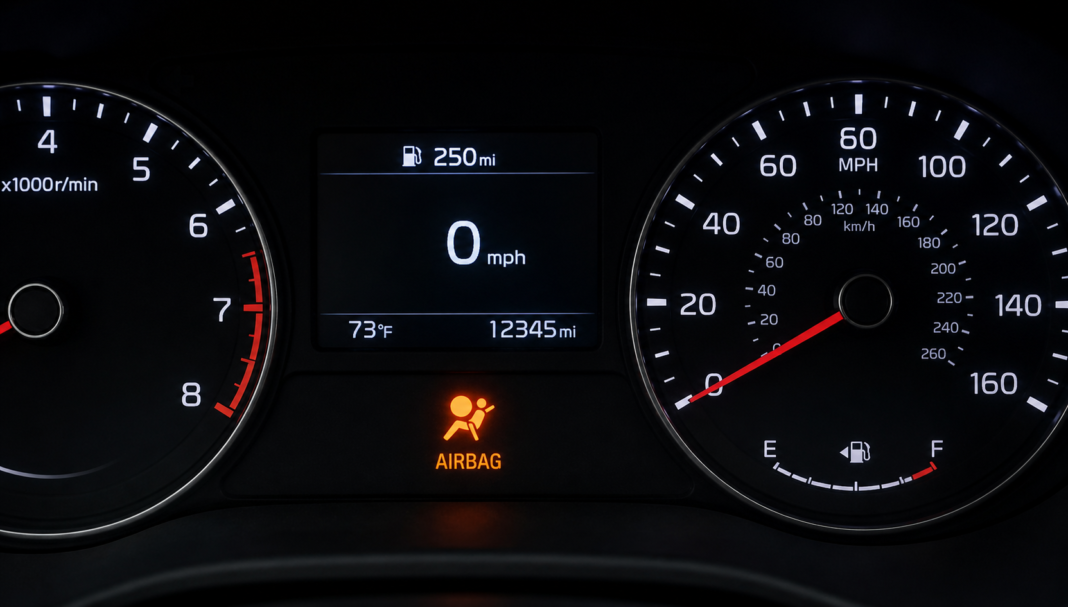

The airbag system is one of the most important safety features in modern vehicles. When everything works correctly, it can significantly reduce injuries during a collision. However, when the airbag light on dash illuminates, it signals that something within the Supplemental Restraint System (SRS) requires attention.
Many drivers ignore dashboard warning lights, assuming they’re minor electrical glitches. That can be a costly mistake. An illuminated airbag warning light may indicate that the system cannot deploy properly during an accident, potentially compromising passenger safety. Understanding what causes this warning, how serious it is, and what steps to take can help protect both your vehicle and everyone inside it.
Understanding What the Airbag Warning Light Means
The airbag warning light is part of your vehicle’s Supplemental Restraint System, commonly known as the SRS. This system works alongside seat belts to provide additional protection during collisions by deploying airbags at precisely calculated moments.
When the airbag light on dash remains illuminated after startup, the vehicle’s onboard computer has detected a fault somewhere in the safety system. The issue may involve sensors, wiring, seat belt components, airbags themselves, or the control module responsible for coordinating deployment.
How the Airbag System Works
Modern airbag systems rely on a network of sensors positioned throughout the vehicle. These sensors continuously monitor acceleration, impact forces, seat occupancy, and other critical data that helps determine when airbags should deploy.
The information gathered by these components is processed by the airbag control module. If a malfunction occurs anywhere within the system, the module stores a diagnostic trouble code and activates the warning light to alert the driver.
Why You Should Never Ignore the Warning
An active airbag warning light does more than notify you about a technical problem. It indicates that the system’s ability to protect occupants may be reduced or disabled entirely.
In some vehicles, airbags may fail to deploy during a collision when a fault is present. In others, unexpected deployment risks may increase. Either scenario creates a serious safety concern that deserves immediate attention.
Common Causes of an Airbag Light
Several issues can trigger an airbag warning indicator. Some are relatively simple and inexpensive to fix, while others require professional diagnostics and specialized repairs.
The most common causes include faulty crash sensors, damaged wiring, seat belt pretensioner failures, battery-related voltage issues, defective clock springs, and problems within the airbag control module itself.
Faulty Seat Belt Components
Modern vehicles integrate seat belt systems closely with airbag technology. Seat belt pretensioners and buckle sensors communicate with the SRS module to coordinate occupant protection during accidents.
If a seat belt sensor becomes damaged or disconnected, the airbag light on dash may appear. This is particularly common in older vehicles where connectors beneath seats experience years of movement and wear.
Problems With Seat Sensors
Many vehicles use occupancy sensors to determine whether a passenger is present and whether airbags should deploy. These sensors are typically located within the seats themselves.
Over time, seat sensors can fail due to age, pressure damage, moisture exposure, or wiring deterioration. A faulty sensor often triggers warning lights and may prevent proper airbag operation.
Loose or Damaged Wiring Connections
Electrical connections are among the most frequent causes of airbag system warnings. Connectors beneath front seats are especially vulnerable because seats move forward and backward regularly.
Repeated seat movement can stretch wiring harnesses, loosen connectors, or create intermittent electrical faults. Even minor connection problems can activate the warning light and store fault codes in the system.
Clock Spring Failures
The clock spring is a spiral-wound electrical connector located inside the steering wheel assembly. It maintains electrical communication between the steering wheel and various vehicle systems while allowing the wheel to rotate.
When a clock spring fails, communication with the driver’s airbag can be interrupted. Drivers may also notice steering wheel button failures, cruise control problems, or horn malfunctions alongside the airbag warning.
Low Battery Voltage and Electrical Issues
Vehicle electronics depend on stable voltage levels for proper operation. A weak battery, failing alternator, or recent battery replacement can sometimes trigger temporary airbag system faults.
Although some voltage-related warnings disappear after driving, persistent alerts should be diagnosed professionally. Electrical instability can create misleading symptoms that resemble more serious airbag system failures.
Airbag Module Malfunctions
The airbag control module serves as the system’s central computer. It receives data from sensors, evaluates collision severity, and determines deployment timing.
When the module develops internal faults, communication errors, or software issues, warning lights frequently appear. These problems often require advanced diagnostic equipment to identify accurately.
Previous Accident Damage
Even relatively minor collisions can affect airbag system components. Crash sensors, wiring harnesses, and modules may sustain damage that isn’t immediately obvious after repairs are completed.
Vehicles with accident histories sometimes experience recurring SRS faults because hidden damage remains within the safety system. Thorough inspections are critical after any collision-related repair work.
Water Damage and Moisture Intrusion
Water exposure can cause extensive damage to sensitive electronic components. Flooded vehicles, leaking sunroofs, clogged drainage channels, or interior water leaks can all affect airbag systems.
Moisture can corrode connectors, damage modules, and create unpredictable electrical behavior. In severe cases, extensive wiring replacement may be necessary to restore safe operation.
Airbag Recall-Related Issues
Manufacturers periodically issue recalls involving airbag components, sensors, inflators, or control modules. Some warning lights may appear because of defects already recognized by the manufacturer.
Drivers should regularly check for outstanding recalls using their vehicle identification number. Recall repairs are typically performed at no cost through authorized dealerships.
Airbag Light Colors and Their Meaning
Dashboard warning indicators use colors to communicate urgency. Airbag warnings are usually displayed in red or amber, depending on vehicle manufacturer design choices.
Regardless of color, a persistent airbag warning should never be ignored. While it may not indicate an immediate mechanical breakdown, it does suggest that a critical safety system requires inspection.
What Happens During Vehicle Startup
When you start your vehicle, the airbag system performs a self-diagnostic check. During this process, the warning light usually illuminates briefly before turning off once all components pass inspection.
If the light remains on, flashes repeatedly, or reappears while driving, the system has detected a fault. This behavior helps technicians identify whether the problem is constant or intermittent.
Symptoms That Often Accompany the Warning Light
Many airbag-related faults produce additional symptoms beyond the illuminated dashboard indicator. Recognizing these clues can help narrow down potential causes before professional diagnosis.
Drivers may notice steering wheel control issues, malfunctioning horns, seat belt warnings, intermittent electrical behavior, or communication errors between vehicle systems.
Airbag Diagnostic Process
Professional diagnosis begins with scanning the vehicle’s onboard computer for stored fault codes. These codes provide valuable information about the location and nature of the detected problem.
Technicians then perform targeted inspections of sensors, wiring, connectors, modules, and related components. Accurate diagnosis is essential because replacing parts without confirming the root cause can become expensive quickly.
Airbag Warning Light Cause Comparison
| Cause | Typical Symptoms | Repair Complexity | Estimated Cost Range |
| Loose wiring | Intermittent warning light | Low | $50–$200 |
| Seat sensor failure | Passenger occupancy errors | Medium | $150–$600 |
| Clock spring failure | Horn or steering controls fail | Medium | $200–$800 |
| Crash sensor issue | Persistent warning light | Medium | $150–$700 |
| Battery voltage problem | Multiple dashboard warnings | Low | $100–$400 |
| Airbag module fault | Constant SRS warning | High | $300–$1,500+ |
| Water damage | Multiple electrical issues | High | $500–$3,000+ |
| Seat belt pretensioner issue | Seat belt warning activation | Medium | $200–$900 |
Can You Drive With the Airbag Light On?
Most vehicles remain mechanically drivable when the airbag warning light is illuminated. The engine, transmission, brakes, and steering typically continue functioning normally.
However, driving with the airbag light on dash means accepting increased safety risks. In the event of a collision, airbags may not deploy as intended, reducing occupant protection during a critical moment.
Can the Airbag Light Reset Itself?
Some warning lights disappear after temporary electrical issues resolve themselves. For example, a low battery condition may trigger a fault that clears once proper voltage is restored.
Persistent warnings usually indicate genuine faults that require diagnosis and repair. Simply disconnecting the battery rarely fixes the underlying problem and may complicate diagnostics.
DIY Checks Drivers Can Perform
Vehicle owners can perform a few basic inspections before scheduling professional service. Checking battery condition, ensuring seat connectors remain secure, and verifying recall status are reasonable first steps.
Drivers should avoid tampering with airbags, modules, or deployment circuits. Airbag systems contain explosive components and should only be serviced according to manufacturer procedures.
Professional Repairs and Safety Considerations
Certified technicians have access to specialized diagnostic equipment designed specifically for airbag systems. This equipment enables safe testing without risking accidental deployment.
Professional repair also ensures compliance with manufacturer safety standards. Proper calibration and verification procedures are essential whenever airbag components are replaced.
The Cost of Ignoring the Problem
Delaying repairs may seem like a way to save money, but unresolved airbag issues can become more expensive over time. Electrical faults often spread, affecting additional components and increasing repair complexity.
More importantly, ignoring the warning could compromise passenger safety during an accident. The financial cost of repairs is minor compared to the potential consequences of a nonfunctional safety system.
How Vehicle Technology Has Changed Airbag Systems
Earlier airbag systems relied on relatively simple impact detection mechanisms. Modern vehicles use sophisticated networks of sensors, modules, and software algorithms to tailor deployment decisions.
These advancements improve occupant protection but also increase diagnostic complexity. As technology evolves, professional expertise becomes increasingly important when troubleshooting SRS-related faults.
Common Misconceptions About Airbag Warning Lights
Many drivers assume the warning light simply indicates an airbag replacement is needed. In reality, most faults involve sensors, wiring, connectors, or communication problems rather than deployed airbags.
Another misconception is that the system remains fully operational despite the warning. Depending on the vehicle and fault type, the system may disable portions of its protective functionality.
Safety Experts Emphasize Prompt Repairs
Automotive safety professionals consistently stress the importance of addressing airbag warnings quickly rather than postponing service appointments.
“A warning light is the vehicle’s way of telling you a safety system may not function as designed.”
Treating the warning seriously helps ensure the system remains ready when it is needed most.
Preventing Future Airbag System Problems
Routine vehicle maintenance can reduce the likelihood of airbag-related issues. Maintaining battery health, addressing water leaks promptly, and avoiding unnecessary electrical modifications are all beneficial practices.
Careful attention after collision repairs is equally important. Ensuring all safety systems are properly restored helps preserve the vehicle’s original level of occupant protection.
Conclusion
An illuminated airbag light on dash is never something drivers should ignore. While the cause may be as simple as a loose connector or temporary voltage issue, it can also indicate serious problems affecting one of the vehicle’s most important safety systems.
Understanding the common causes, warning signs, repair options, and associated risks helps vehicle owners make informed decisions. Prompt diagnosis and professional repair ensure the Supplemental Restraint System remains ready to perform its life-saving role when it matters most. Whether the issue stems from wiring, sensors, seat belt components, or control modules, addressing the warning quickly is the safest and most responsible course of action.
FAQ
Why is my airbag light on but everything seems normal?
A persistent airbag light on dash often indicates a fault within the SRS system even when no other symptoms are visible. Many issues affect safety components without impacting normal driving performance.
Can a weak battery cause the airbag warning light?
Yes. Low voltage can interfere with electronic systems and trigger the airbag light on dash. If the battery is the cause, the warning may disappear once proper voltage is restored.
Is it expensive to fix an airbag warning light?
Repair costs vary significantly depending on the underlying problem. Simple wiring repairs may cost under $200, while module replacements can exceed $1,000.
Will airbags deploy if the warning light is on?
In some cases they may not. An illuminated airbag light on dash often indicates the system cannot guarantee normal operation during a collision.
Can I reset the airbag light myself?
Resetting the light without repairing the fault usually provides only a temporary solution. The warning generally returns until the underlying issue is corrected.
How long can I drive with the airbag warning light on?
While the vehicle may remain drivable, it is best to schedule diagnosis as soon as possible. Delaying repairs increases the risk of reduced occupant protection during an accident.
Does an airbag warning light mean the airbags need replacement?
Not necessarily. Many cases involve sensors, wiring, seat belt pretensioners, or electronic modules rather than the airbags themselves. Proper diagnostics are required to identify the exact cause.
You May Also Read: GM Silverado Sierra Airbag Recall