

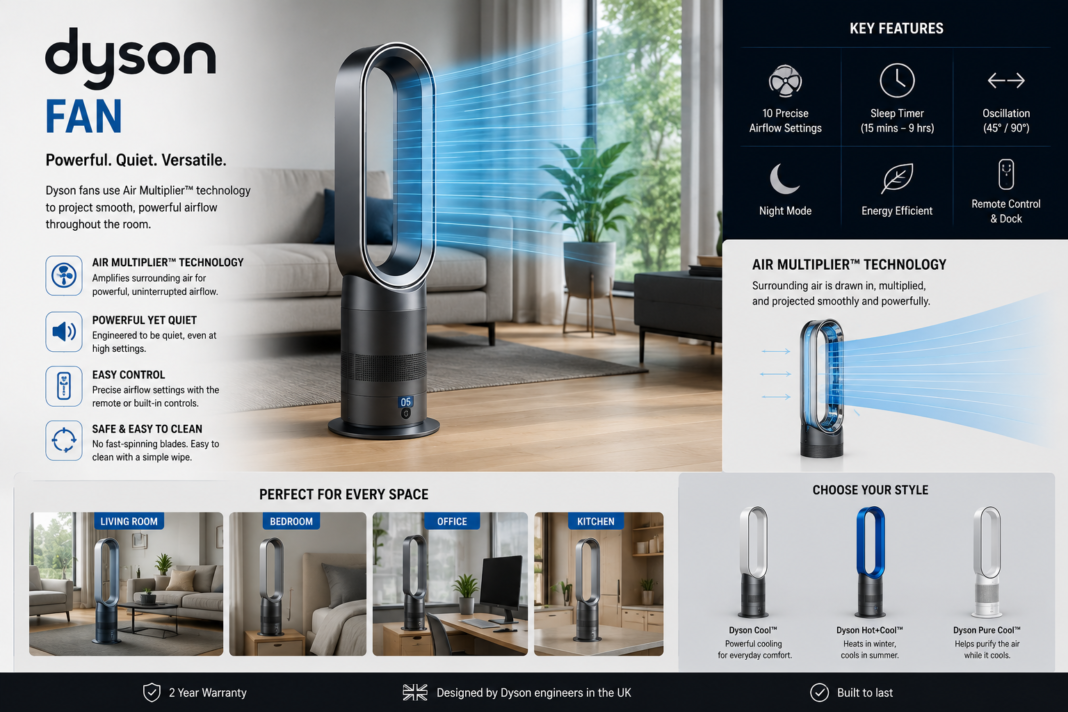

A Dyson fan has become one of the most recognizable innovations in modern home comfort. Unlike traditional fans that rely on exposed blades, Dyson’s distinctive air-multiplier technology created a new category of cooling devices that combine airflow, design, filtration, and smart functionality.
Consumers often encounter a Dyson fan while searching for quieter cooling solutions, premium air circulation, air purification, or aesthetically pleasing home appliances. Yet many people still wonder whether the technology truly delivers superior performance or whether the premium pricing is justified.
This comprehensive guide explores everything you need to know about Dyson fans, from their engineering principles and advantages to model comparisons, maintenance requirements, energy considerations, and buying recommendations. Whether you’re considering your first purchase or comparing options for different rooms, this resource provides the depth and clarity needed to make an informed decision.
Understanding What a Dyson Fan Is
A Dyson fan is an advanced air circulation device that uses Air Multiplier technology instead of visible rotating blades. Air is drawn into the base, accelerated through an internal motor system, and projected through a specially engineered loop that amplifies airflow.
The result is a smooth, continuous stream of air rather than the choppy airflow commonly associated with conventional fans. Many models also incorporate air purification, heating capabilities, smart controls, and environmental sensors, transforming the device into a multifunctional home climate solution rather than a simple cooling appliance.
The Evolution of Dyson’s Fan Technology
When Dyson introduced its bladeless fan concept, it challenged decades of traditional fan design. Most manufacturers focused on improving blade efficiency, while Dyson pursued an entirely different engineering approach centered on airflow amplification.
Over time, the company expanded beyond cooling devices into integrated climate-management products. Modern models can cool, purify, heat, monitor air quality, and connect to smart-home ecosystems, reflecting the growing demand for all-in-one environmental comfort systems.
How Air Multiplier Technology Works
The defining feature of a Dyson fan is Air Multiplier technology. Air enters through hidden intake vents and is accelerated through a ring-shaped aperture that creates a focused stream of airflow.
As the air exits, surrounding air is drawn into the flow through a process known as entrainment. This amplification effect increases the total volume of air moved through the room, creating powerful circulation without visible blades and contributing to the signature smooth airflow experience.
Why Bladeless Design Changed Consumer Expectations
Traditional fans expose spinning blades that can present safety concerns for households with children or pets. Dyson’s bladeless design addressed these concerns while introducing a sleek and futuristic appearance.
The innovation also simplified cleaning because users no longer need to wipe individual blades or remove protective grilles. This convenience became one of the strongest selling points and helped redefine what consumers expect from premium cooling appliances.
Key Benefits of Using a Dyson Fan
Many homeowners choose Dyson products because they combine cooling performance with comfort-enhancing features. The airflow tends to feel more consistent and less turbulent than that produced by conventional fans.
Additional benefits often include quieter operation, modern aesthetics, improved safety, advanced filtration systems, remote control functionality, and integration with smart-home platforms. These combined advantages contribute to the brand’s strong reputation in the premium appliance market.
Airflow Performance and Cooling Experience
One common misconception is that fans lower room temperature. In reality, a fan primarily improves perceived comfort by increasing air movement across the skin, accelerating evaporation and heat dissipation.
A Dyson fan excels in this role because it generates a steady, uninterrupted stream of air. Users frequently describe the airflow as more natural and comfortable, particularly during extended use in bedrooms, offices, and living spaces.
Comparing Dyson Fans to Traditional Fans
Traditional fans often cost significantly less and can provide strong airflow for basic cooling needs. However, they generally focus on a single function and may produce more mechanical noise and turbulence.
Dyson models aim to provide a premium user experience by combining multiple technologies in one device. The decision often comes down to whether a buyer values advanced functionality, design, air purification, and convenience alongside airflow performance.
Dyson Fan Models and Product Categories
Dyson’s lineup includes desk fans, tower fans, purifier fans, heater-fan combinations, and multifunction climate systems. Each category addresses different room sizes and environmental requirements.
Some models prioritize cooling and circulation, while others emphasize year-round air management through purification and heating. Understanding these distinctions helps consumers avoid paying for features they may not actually need.
Popular Dyson Fan Product Types
The company’s range typically includes Cool models designed primarily for airflow, Purifier Cool models that combine filtration and cooling, and Hot+Cool systems that provide both heating and cooling functions.
More advanced units often feature particle detection sensors, LCD displays, app connectivity, and automatic environmental monitoring. These additions transform the device from a fan into a comprehensive indoor air management solution.
Dyson Fan Features at a Glance
The following table highlights common features found across various Dyson product categories.
| Feature | Basic Cool Models | Purifier Cool Models | Hot+Cool Models |
| Air Multiplier Technology | Yes | Yes | Yes |
| Bladeless Design | Yes | Yes | Yes |
| Air Purification | No | Yes | Yes |
| Heating Capability | No | No | Yes |
| Oscillation | Yes | Yes | Yes |
| Remote Control | Yes | Yes | Yes |
| Smart App Connectivity | Limited | Often Included | Often Included |
| Air Quality Monitoring | No | Yes | Yes |
| HEPA Filtration | No | Yes | Yes |
| Year-Round Use | Seasonal | Extended | All Seasons |
This comparison illustrates why pricing varies significantly between models. Additional sensors, filtration systems, and heating capabilities increase functionality and overall value for specific use cases.
Air Purification Capabilities Explained
Many modern Dyson units incorporate advanced filtration systems capable of capturing fine particles such as dust, pollen, and other airborne contaminants. Some models also include activated carbon filters designed to reduce odors and certain gases.
This functionality appeals particularly to allergy sufferers, urban residents, pet owners, and households concerned about indoor air quality. The ability to purify and circulate air simultaneously creates a compelling value proposition compared with standalone fans.
HEPA Filtration and Indoor Air Quality
HEPA filtration has become increasingly important as consumers focus more attention on indoor environments. Effective filtration systems can capture microscopic particles that contribute to respiratory discomfort and allergies.
When combined with continuous air circulation, filtration becomes more effective because more room air passes through the filters over time. This dual-action approach is one reason many consumers choose advanced Dyson models over standard cooling appliances.
Smart Features and Connected Living
Smart-home integration has become a major differentiator in premium appliance categories. Many Dyson devices can connect to mobile apps, allowing users to adjust settings remotely and monitor air-quality metrics.
These digital features support greater convenience and automation. Users can schedule operation, receive filter replacement reminders, and review historical air-quality trends without directly interacting with the unit.
Voice Assistant Compatibility
Modern smart-home users often appreciate hands-free operation. Many advanced Dyson systems support integration with popular voice assistants and connected ecosystems.
This capability allows users to control airflow, temperature settings, oscillation modes, and purification functions through simple voice commands. The result is a more seamless and intuitive user experience.
Energy Efficiency Considerations
Energy efficiency remains an important consideration when evaluating any climate-control appliance. Although power consumption varies between models, fans generally consume far less electricity than air conditioners.
A Dyson fan can help users feel cooler while reducing reliance on more energy-intensive cooling systems. Strategic use alongside air conditioning may contribute to lower energy consumption while maintaining comfortable indoor conditions.
Noise Levels and Acoustic Performance
Noise can significantly affect comfort, especially in bedrooms, offices, and study areas. Traditional fans often generate mechanical sounds associated with blade movement and motor vibration.
Dyson invests heavily in aerodynamic engineering and acoustic refinement. Many models are designed to minimize turbulence and unwanted noise, helping create a calmer environment for sleep, concentration, and relaxation.
Design and Aesthetic Appeal
Design has always been central to Dyson’s brand identity. The company’s products frequently serve as both functional appliances and visual design elements within modern interiors.
Their minimalist appearance complements a wide range of décor styles, from contemporary apartments to professional office environments. For many buyers, aesthetic value plays an important role alongside performance considerations.
Safety Advantages for Families
Households with young children often prioritize safety when selecting home appliances. Exposed blades can create risks, particularly in high-traffic living spaces where curious children may interact with devices.
The bladeless architecture significantly reduces these concerns. Parents and pet owners frequently cite safety as one of the strongest reasons for investing in Dyson’s cooling and air-management products.
Dyson Fan Placement Strategies
Placement affects airflow effectiveness regardless of fan type. Positioning a unit where air can move freely throughout the room generally produces better circulation results.
Users often achieve optimal performance by placing the fan near seating areas, workspaces, or locations that encourage airflow across the room. Strategic positioning can enhance comfort without increasing operating speed.
Best Rooms for a Dyson Fan
Living rooms benefit from improved air circulation during gatherings, while bedrooms gain advantages from quieter operation and consistent airflow. Home offices can also experience greater comfort during long work sessions.
Larger purifier-equipped models are particularly useful in open-plan spaces where both air movement and filtration are important. Room size should always influence model selection.
Seasonal Uses Beyond Summer
Many consumers initially associate fans exclusively with summer cooling. However, airflow management remains useful throughout the year.
A Dyson fan equipped with heating and purification functions can support comfort during colder months, while airflow circulation helps distribute warm air more evenly across indoor spaces. This versatility increases long-term value.
Airflow Patterns and Room Circulation
Effective room circulation involves more than directing air at a single person. Proper airflow can reduce stagnant air pockets and create a more balanced indoor environment.
Dyson’s oscillation and projection capabilities help distribute airflow across wider areas. This broader coverage contributes to a more consistent comfort experience throughout the room.
Maintenance Requirements and Care
Maintenance is relatively straightforward compared with many traditional fans. The absence of exposed blades simplifies routine cleaning and reduces dust accumulation in difficult-to-reach areas.
Regular maintenance primarily involves wiping external surfaces and replacing filters in purifier-equipped models. Following manufacturer recommendations helps maintain performance and longevity.
Filter Replacement Expectations
Air-purifying models require periodic filter replacement to sustain filtration effectiveness. Replacement intervals vary depending on usage patterns, environmental conditions, and air-quality levels.
Many smart-enabled units track filter life automatically and notify users when replacement is needed. This monitoring helps ensure consistent performance while simplifying maintenance management.
Longevity and Durability
Consumers purchasing premium appliances often expect extended product life. Dyson products are generally engineered with durability and long-term performance in mind.
Proper maintenance, appropriate use, and timely filter replacements can contribute significantly to operational longevity. Many owners view durability as an important factor that offsets the higher initial purchase price.
Is a Dyson Fan Worth the Price?
This question remains one of the most common among prospective buyers. The answer depends largely on individual priorities, expectations, and intended usage.
For users seeking only basic airflow at the lowest possible cost, traditional fans may represent better value. For those who appreciate advanced features, air purification, premium design, and smart functionality, the investment may be easier to justify.
Common Misconceptions About Dyson Fans
One widespread misconception is that Dyson products somehow create cold air. Like conventional fans, they primarily move existing air rather than lowering ambient temperature.
Another misunderstanding involves airflow strength. While airflow feels smoother than that of many traditional fans, performance varies by model and should be evaluated based on room size and intended use.
Dyson Fans and Allergy Management
Airborne allergens can significantly impact indoor comfort. Purifier-equipped Dyson systems are frequently considered by households seeking to reduce exposure to dust, pollen, and pet dander.
Although no appliance can eliminate all allergens, continuous filtration and circulation may contribute to a cleaner indoor environment. This capability is particularly relevant during allergy seasons.
The Role of Dyson Fans in Modern Homes
Homeowners increasingly seek appliances that serve multiple purposes while minimizing clutter. Multifunction products align well with contemporary preferences for efficiency and simplicity.
A Dyson fan reflects this trend by combining cooling, purification, heating, monitoring, and connectivity within a single device. This consolidation can reduce the need for multiple standalone appliances.
Choosing the Right Dyson Fan for Your Needs
The best model depends on room size, climate conditions, air-quality concerns, and budget. Buyers should identify which functions matter most before comparing specifications.
Someone focused on air purification may prioritize filtration capabilities, while another consumer may value heating functions for year-round use. Matching features to actual needs improves satisfaction and purchasing confidence.
What Experts Often Say About Air Circulation
Industry professionals frequently emphasize the importance of airflow in maintaining indoor comfort and environmental quality. Effective circulation supports both thermal comfort and air distribution.
As one commonly cited principle states, “Comfort isn’t just about temperature—it’s about how air moves through a space.” This perspective helps explain why airflow-focused technologies continue to evolve and gain consumer attention.
Trends Shaping the Future of Dyson Fans
The broader home appliance industry continues moving toward automation, sustainability, and environmental monitoring. Consumers increasingly expect devices to provide actionable insights rather than simply perform a single function.
Future innovations are likely to include smarter sensors, enhanced energy optimization, improved filtration technologies, and deeper integration with connected-home ecosystems. These developments will further blur the line between fans and comprehensive environmental management systems.
Conclusion
The Dyson fan represents far more than a modern reinterpretation of a traditional cooling appliance. Through bladeless engineering, Air Multiplier technology, advanced filtration systems, smart connectivity, and sophisticated design, Dyson has created a product category that addresses multiple aspects of indoor comfort.
While the premium price may not suit every budget, the combination of airflow performance, safety, convenience, aesthetics, and multifunctionality continues to attract consumers worldwide. Whether you’re seeking improved cooling, cleaner indoor air, quieter operation, or year-round climate management, understanding the strengths and limitations of Dyson’s lineup is essential for making a confident purchase decision.
FAQ
What makes a Dyson fan different from a regular fan?
A Dyson fan uses bladeless Air Multiplier technology to create smooth airflow while often offering advanced features such as purification, smart controls, and enhanced safety.
Does a Dyson fan actually cool a room?
A Dyson fan improves perceived comfort through air circulation but does not directly lower room temperature like an air conditioner.
Are Dyson fans energy efficient?
Yes, a Dyson fan generally consumes less energy than air conditioning systems and can help improve comfort while reducing cooling demands.
How often should Dyson fan filters be replaced?
Filter replacement schedules depend on usage and environmental conditions, but many Dyson fan models provide automatic notifications when replacement is needed.
Is a Dyson fan good for allergies?
Many Dyson fan models include HEPA filtration that can help capture airborne particles such as dust, pollen, and pet dander.
Can a Dyson fan be used year-round?
Yes, certain Dyson fan models include heating and purification functions, making them suitable for use throughout all seasons.
Are Dyson fans quiet?
Most Dyson fan models are engineered for low-noise operation and are commonly used in bedrooms, offices, and living spaces where quieter performance is valued.
You May Also Read Short Throw Projector