

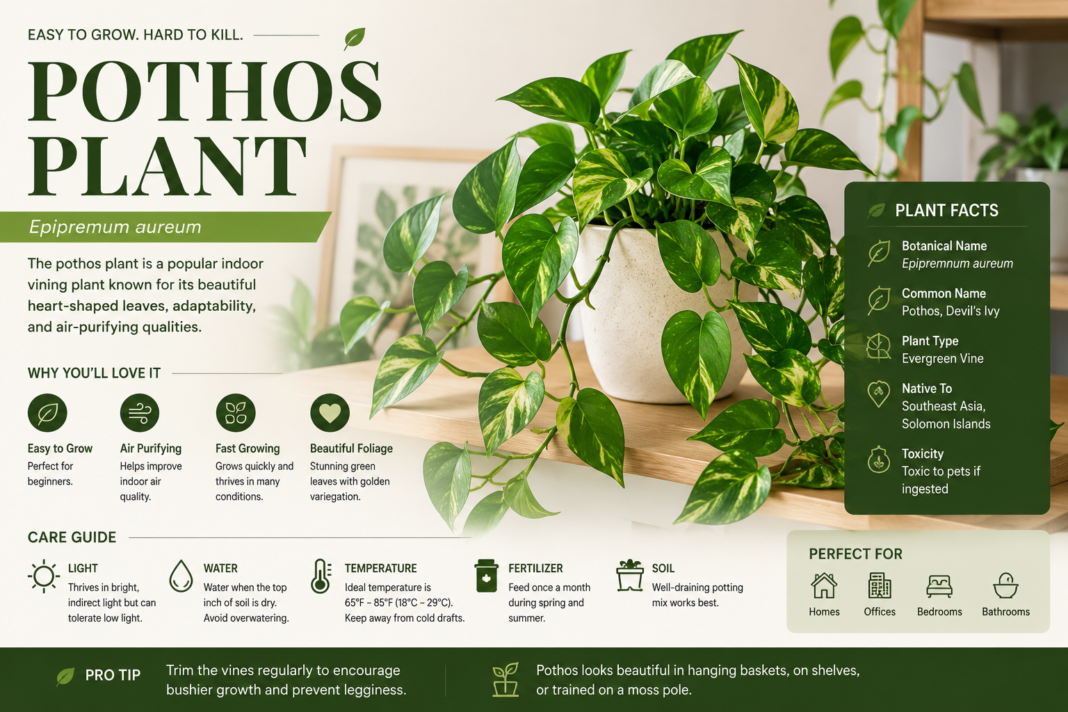

The popularity of indoor plants continues to grow, but few houseplants have achieved the universal appeal of the Pothos Plant. Known for its trailing vines, heart-shaped leaves, and remarkable adaptability, this beloved indoor plant has become a favorite among beginners and experienced gardeners alike.
Whether displayed on a bookshelf, hanging basket, office desk, or plant stand, Pothos Plant brings vibrant greenery into virtually any space. Its forgiving nature makes it one of the easiest houseplants to maintain, while its attractive foliage adds visual interest to homes, apartments, and workplaces.
Unlike many indoor plants that demand precise conditions, Pothos Plant thrives across a broad range of environments. This flexibility allows busy homeowners, students, and first-time plant owners to enjoy the benefits of indoor gardening without constant maintenance.
Pothos Plant From understanding its origins to mastering care techniques, this guide explores everything you need to know about growing healthy, thriving Pothos Plant indoors.
Understanding the Origins and Characteristics of Pothos
The pothos plant belongs to the Araceae family and is native to tropical regions of Southeast Asia and the Pacific Islands. In its natural habitat, it climbs trees and spreads across forest floors using aerial roots that help it anchor and absorb moisture.
Pothos Plant One reason for its popularity is its striking appearance. Depending on the variety, leaves may display combinations of green, yellow, cream, white, or even subtle shades of silver. The trailing vines can extend several feet indoors, creating dramatic cascading displays that elevate interior design.
Why Pothos Has Become One of the World’s Favorite Houseplants
Few houseplants combine beauty and resilience as effectively as Pothos Plant. It tolerates occasional neglect, adapts to varying light conditions, and grows quickly when provided with basic care.
Its versatility also contributes to its popularity. The plant looks equally attractive in modern apartments, traditional homes, minimalist offices, and commercial environments. This adaptability has helped Pothos Plant maintain its status as a staple indoor plant across generations.
Different Types of Pothos You Should Know
Plant enthusiasts are often surprised by the variety available within the Pothos Plant family. Each cultivar offers unique colors, patterns, and growth characteristics while maintaining similar care requirements.
Popular varieties include Golden Pothos Plant, Marble Queen, Neon Pothos, Jade Pothos Plant, Manjula Pothos, Pearls and Jade, and Cebu Blue. These options allow growers to build visually diverse collections while benefiting from the same beginner-friendly nature.
Comparing Popular Pothos Varieties
Pothos Plant Choosing the right variety depends on your design preferences, lighting conditions, and desired growth habits. Some types grow rapidly, while others develop more slowly due to increased variegation.
| Variety | Leaf Color | Growth Speed | Light Preference | Distinct Feature |
| Golden Pothos | Green with yellow variegation | Fast | Medium to bright indirect light | Most common variety |
| Marble Queen | Green and white marbling | Moderate | Bright indirect light | Highly decorative foliage |
| Neon Pothos | Bright lime-green leaves | Fast | Medium to bright light | Vibrant color |
| Jade Pothos | Solid green foliage | Fast | Low to medium light | Highly adaptable |
| Manjula Pothos | Green, cream, and white patterns | Moderate | Bright indirect light | Unique leaf shape |
| Pearls and Jade | Green with white variegation | Slow to moderate | Bright indirect light | Compact growth |
| Cebu Blue | Blue-green leaves | Moderate | Bright indirect light | Distinct metallic appearance |
Ideal Growing Conditions for Indoor Success
Creating suitable growing conditions is relatively straightforward. Pothos Plant naturally adapts to many indoor environments, making it an excellent choice for homes with varying temperatures and humidity levels.
Pothos Plant Although resilient, the plant performs best when conditions mimic its tropical origins. Consistent temperatures, moderate humidity, and indirect sunlight support stronger growth, larger leaves, and healthier vines.
Light Requirements for Healthy Growth
One of the most attractive features of Pothos Plant is its ability to tolerate lower light conditions. This flexibility makes it suitable for apartments, offices, hallways, and rooms that receive limited natural sunlight.
Pothos Plant Despite its tolerance for shade, brighter indirect light generally produces stronger growth and more pronounced leaf coloration. Variegated varieties especially benefit from increased brightness because it helps preserve their distinctive patterns.
Understanding the Effects of Too Much or Too Little Light
Pothos Plant Insufficient lighting often results in slower growth, smaller leaves, and reduced variegation. Plants may become leggy as vines stretch toward available light sources.
Pothos Plant Excessive direct sunlight can scorch leaves, causing brown patches or faded coloration. Positioning plants near east-facing windows or slightly back from south-facing windows often provides the ideal balance.
Watering Practices That Promote Healthy Roots
Watering is one of the most misunderstood aspects of houseplant care. While pothos tolerates occasional drought, consistently improper watering can eventually lead to stress and disease.
A practical approach involves allowing the top portion of soil to dry before watering thoroughly. This method supports healthy root development while minimizing risks associated with overwatering.
Recognizing Signs of Overwatering and Underwatering
Overwatered plants often develop yellow leaves, mushy stems, or unpleasant odors originating from the soil. These symptoms frequently indicate root problems that require prompt attention.
Underwatered plants may display drooping foliage, curling leaves, or slowed growth. Fortunately, pothos often recovers quickly when normal watering routines resume.
Soil Requirements for Strong Development
Healthy roots depend heavily on soil structure. Dense, compact soil retains excessive moisture and limits airflow, creating conditions that can harm root systems.
A well-draining potting mix containing peat moss, coco coir, perlite, and bark typically provides an ideal balance of moisture retention and aeration. This structure supports vigorous root growth while reducing the likelihood of root rot.
Choosing the Right Container
The container plays a significant role in overall plant health. Pots with drainage holes allow excess water to escape, preventing waterlogged soil conditions that commonly damage indoor plants.
Material choice can also influence care requirements. Terracotta containers dry faster, while plastic and ceramic pots tend to retain moisture for longer periods, affecting watering frequency.
Temperature Preferences for Consistent Growth
As a tropical species, pothos prefers warm temperatures throughout the year. Most indoor environments naturally fall within its preferred range, making climate management relatively simple.
Temperatures between 65°F and 85°F generally support optimal growth. Sudden temperature fluctuations, cold drafts, or prolonged exposure to chilly conditions may slow development and stress the plant.
Humidity and Its Impact on Foliage
Although pothos adapts to average indoor humidity levels, increased humidity often encourages more vigorous growth and healthier leaves. This benefit becomes especially noticeable during dry winter months.
Homes with naturally low humidity may benefit from occasional misting, grouping plants together, or using a humidifier. These adjustments can help recreate aspects of the plant’s tropical environment.
Fertilizing for Faster and Healthier Growth
Nutrients play an important role in maintaining vibrant foliage and encouraging new growth. While pothos is not particularly demanding, occasional feeding supports long-term vigor.
Most growers achieve excellent results by applying a balanced liquid houseplant fertilizer during active growing seasons. Regular but moderate feeding typically produces better outcomes than heavy applications.
Seasonal Growth Patterns
Like many indoor plants, pothos experiences periods of more active growth during spring and summer. Increased daylight and warmer temperatures naturally stimulate new leaf production and vine extension.
Growth often slows during autumn and winter. During these periods, reducing fertilizer use and adjusting watering routines helps align care practices with the plant’s changing needs.
The Remarkable Growth Habit of Pothos
One reason many plant lovers become attached to pothos is its impressive growth potential. Under favorable conditions, vines can extend several feet each year, creating dramatic displays over time.
This vigorous growth habit makes the plant ideal for shelves, hanging baskets, wall-mounted planters, and decorative trellises. As vines mature, they contribute movement and texture to interior spaces.
Training Pothos to Climb
In nature, pothos grows vertically by attaching itself to nearby structures. Indoor gardeners can replicate this habit using moss poles, trellises, or support stakes.
Climbing often produces larger leaves and more robust growth compared to trailing alone. The added vertical dimension also creates striking visual focal points within a room.
Decorative Uses in Interior Design
Interior designers frequently incorporate pothos into residential and commercial projects because it complements a wide range of styles. Its graceful vines soften architectural lines while introducing natural texture.
Whether used in contemporary, Scandinavian, industrial, bohemian, or traditional spaces, pothos contributes warmth and visual balance. Its adaptability makes it one of the most versatile decorative plants available.
Best Locations Inside the Home
Placement significantly influences both aesthetics and plant health. Strategic positioning allows homeowners to maximize visual impact while providing suitable growing conditions.
Popular locations include bookshelves, floating shelves, countertops, office desks, kitchen corners, and hanging planters near windows. These placements highlight the plant’s trailing nature while ensuring adequate light exposure.
Common Misconceptions About Pothos
Many people assume that because pothos is resilient, it thrives under any condition indefinitely. While adaptable, the plant still benefits from thoughtful care and proper environmental management.
Another common misconception is that all varieties grow identically. Differences in variegation, coloration, and genetics can influence growth rates, light requirements, and overall appearance.
What Makes Pothos Ideal for Beginners
The learning curve for indoor gardening can feel intimidating, especially when caring for more demanding species. Pothos offers an accessible entry point because it tolerates minor mistakes and recovers well from occasional neglect.
Its ability to provide visible growth and positive results helps build confidence among new plant owners. This rewarding experience often encourages further exploration into the world of houseplants.
The Psychological Appeal of Indoor Plants
Beyond aesthetics, indoor greenery contributes to a sense of comfort and connection with nature. Many homeowners appreciate the calming presence that living plants bring to their environments.
A healthy pothos can transform an ordinary room into a more inviting space. Watching new leaves emerge and vines expand creates an ongoing sense of accomplishment that many plant enthusiasts find deeply satisfying.
Expert Perspective on Long-Term Success
Experienced growers often emphasize consistency over perfection when caring for houseplants. Small, steady habits generally produce better results than dramatic interventions.
As horticulturists frequently note, “Healthy plants are usually the result of consistent observation rather than constant attention.” This principle applies particularly well to pothos, which rewards balanced care and thoughtful maintenance.
Propagating Pothos Successfully
One of the most rewarding aspects of growing pothos is how easily it can be propagated. Even gardeners with minimal experience can create new plants from a single healthy vine, making it an excellent species for expanding a collection or sharing with friends.
Propagation typically involves taking stem cuttings that contain at least one node. These nodes are the small points on the stem where roots and leaves emerge, and they serve as the foundation for new growth.
Water Propagation Methods
Water propagation remains one of the most popular techniques because it allows growers to observe root development. Fresh cuttings placed in clean water often begin producing roots within a few weeks under suitable conditions.
Regular water changes help maintain oxygen levels and reduce bacterial buildup. Once roots become several inches long, the cuttings can be transferred into a quality potting mix for continued development.
Soil Propagation Techniques
Some gardeners prefer propagating directly in soil because it eliminates the transition from water to potting mix. This approach encourages roots to adapt immediately to their permanent growing medium.
Moist but not saturated soil generally provides the best environment for root formation. Consistent humidity and warm temperatures can accelerate the process and improve success rates.
Pruning for Shape and Growth
Pruning serves multiple purposes beyond simple aesthetics. Strategic trimming encourages branching, creates fuller growth, and helps manage long vines that may become unruly over time.
Using clean scissors or pruning shears, gardeners can remove stems just above leaf nodes. This stimulates new growth points and often results in a denser, more attractive plant.
Managing Leggy Growth
Legginess occurs when vines become excessively long with sparse foliage. This condition often develops when the plant receives insufficient light or has not been pruned regularly.
Improving light exposure and trimming elongated stems can restore a fuller appearance. The removed cuttings can then be propagated to create additional plants.
Understanding Root Health
Healthy roots form the foundation of every thriving pothos. Strong root systems absorb water, nutrients, and oxygen efficiently while supporting vigorous foliage production.
Root problems frequently develop when soil remains consistently wet. Monitoring drainage and adjusting watering practices can prevent many common issues before they become serious.
When to Repot Your Plant
Eventually, most indoor plants outgrow their containers. Signs include roots emerging from drainage holes, slowed growth, rapid drying of soil, and reduced overall vigor.
Repotting into a container one or two inches larger than the current pot usually provides sufficient room for continued development without creating excessive moisture retention.
The Repotting Process Explained
Successful repotting begins with selecting a container that offers proper drainage. Fresh potting mix should provide a balance of moisture retention and airflow to support healthy roots.
After carefully removing the plant from its existing pot, loosen compacted roots gently before placing it into the new container. Watering afterward helps settle the soil around the root system.
Common Pests That Affect Indoor Plants
Although relatively resilient, pothos can occasionally attract common houseplant pests. Early detection significantly increases the likelihood of successful treatment and recovery.
Spider mites, mealybugs, scale insects, and fungus gnats are among the most frequently encountered pests. Routine inspections help identify infestations before they spread extensively.
Dealing With Spider Mites
Spider mites thrive in dry conditions and often appear as tiny moving dots accompanied by fine webbing. Their feeding activity can cause leaves to develop speckled discoloration.
Increasing humidity and cleaning foliage regularly can discourage infestations. Severe cases may require insecticidal soap or horticultural treatments designed for indoor use.
Identifying Mealybugs
Mealybugs appear as white, cotton-like clusters along stems and leaf joints. These insects feed on plant sap and can weaken growth when populations become established.
Prompt removal using cotton swabs and appropriate treatments helps prevent widespread infestation. Regular monitoring remains essential because mealybugs can hide in difficult-to-see areas.
Understanding Root Rot
Root rot is one of the most serious issues affecting indoor plants. It typically develops when roots remain saturated for extended periods, creating conditions that encourage fungal growth.
Symptoms often include yellow leaves, wilting despite wet soil, unpleasant odors, and blackened roots. Immediate intervention is necessary to improve the chances of recovery.
Recovering From Root Problems
Treatment generally involves removing affected roots and replacing old soil with a fresh, well-draining mix. Adjusting watering habits afterward is critical to preventing recurrence.
In severe situations, propagation from healthy stem cuttings may provide the best opportunity to preserve the plant while eliminating diseased root material.
Why Leaves Turn Yellow
Yellow leaves are among the most common concerns reported by plant owners. Fortunately, they often serve as early indicators of environmental stress rather than irreversible damage.
Overwatering, underwatering, inadequate lighting, nutrient deficiencies, temperature fluctuations, and natural aging can all contribute to yellowing foliage.
Addressing Brown Leaf Tips
Brown tips may develop when humidity levels are low, watering is inconsistent, or salts accumulate within the soil over time. Environmental stress frequently appears first at leaf edges.
Periodic flushing of soil and maintaining more stable growing conditions often reduces the occurrence of brown leaf margins and improves overall appearance.
Seasonal Care Adjustments
Indoor plant care benefits from seasonal awareness. Environmental conditions change throughout the year, influencing growth rates, water needs, and nutrient requirements.
During warmer months, increased growth may require more frequent watering and fertilization. Cooler seasons typically call for reduced inputs and closer observation of soil moisture.
Caring for Plants During Winter
Winter presents unique challenges because indoor heating systems often reduce humidity while daylight hours become shorter. Growth naturally slows as environmental conditions change.
Avoiding excessive watering during this period helps prevent root problems. Supplemental lighting may also benefit plants located in particularly dim areas.
Advanced Growing Techniques
As confidence grows, many enthusiasts explore techniques that encourage larger leaves and more dramatic growth. These methods replicate aspects of the plant’s natural climbing environment.
Providing vertical support, maintaining higher humidity, and optimizing lighting conditions often results in more mature foliage and stronger overall development.
Growing Larger Leaves
In nature, climbing specimens frequently produce leaves far larger than those seen on trailing indoor plants. This phenomenon occurs because vertical growth encourages maturity.
Using moss poles allows aerial roots to attach and absorb moisture, helping the plant develop characteristics more closely resembling its natural growth habit.
Creating Stunning Indoor Displays
The visual flexibility of pothos makes it ideal for creative indoor styling. Different display methods can dramatically alter the atmosphere of a room while showcasing the plant’s unique growth pattern.
Combining multiple varieties creates interesting contrasts in color, texture, and leaf shape. This approach allows homeowners to achieve a curated botanical aesthetic.
Hanging Basket Displays
Hanging baskets remain one of the most effective ways to showcase trailing vines. Elevated placement highlights cascading growth while conserving valuable floor and shelf space.
Positioning baskets near bright windows often encourages vigorous development and creates a striking focal point within living rooms, kitchens, or home offices.
Shelf and Bookcase Styling
Shelves provide opportunities to integrate greenery into existing décor. Trailing vines can soften rigid lines while drawing the eye vertically throughout a space.
Layering pothos with books, artwork, and decorative objects creates depth and visual interest without overwhelming the room’s overall design.
Combining Pothos With Other Houseplants
Mixed plant arrangements allow gardeners to create dynamic indoor landscapes. Pairing species with complementary textures and colors can elevate the appearance of an entire collection.
Popular companions include philodendrons, snake plants, peace lilies, and ZZ plants. These combinations offer visual diversity while maintaining relatively similar care requirements.
Pet Safety Considerations
Households with pets should understand that pothos contains insoluble calcium oxalate crystals. If chewed or ingested, these compounds can cause irritation in animals and humans.
Keeping plants out of reach and monitoring curious pets helps reduce risks. Pet owners concerned about safety should consult veterinarians regarding appropriate precautions.
Air Quality and Indoor Environments
For decades, indoor plants have been associated with improved living environments. While plants contribute beauty and psychological benefits, realistic expectations regarding air purification remain important.
The greatest value often comes from the atmosphere they create. Living greenery introduces color, texture, and a connection to nature that enhances indoor spaces in meaningful ways.
Trends Driving Continued Popularity
The indoor gardening movement has expanded significantly in recent years, fueled by interest in wellness, home improvement, and biophilic design principles.
Social media platforms have also introduced new audiences to plant collecting, with pothos frequently serving as an entry point due to its affordability and ease of care.
Building a Long-Term Relationship With Your Plant
Many houseplants come and go, but pothos often remains part of a collection for years. Its durability, adaptability, and ability to recover from mistakes contribute to its lasting appeal.
As vines mature and new leaves emerge, the plant evolves alongside its owner, becoming a living element of the home rather than merely a decorative accessory.
Conclusion
The pothos plant has earned its reputation as one of the world’s most dependable and attractive houseplants. Its combination of resilience, beauty, rapid growth, and adaptability makes it suitable for nearly every indoor gardening experience level.
Whether you are purchasing your first houseplant or expanding an established collection, the pothos plant offers lasting value. With proper lighting, sensible watering, occasional pruning, and routine observation, it can thrive for many years while bringing vibrant greenery into your living space.
Frequently Asked Questions
How often should I water a pothos plant?
The pothos plant should generally be watered when the top inch or two of soil feels dry. Frequency varies depending on light, temperature, humidity, and container size.
Can a pothos plant grow in low light?
Yes, a pothos plant can survive in low-light environments. However, brighter indirect light typically promotes faster growth and more vibrant foliage.
How fast does a pothos plant grow?
Under favorable conditions, a pothos plant grows relatively quickly and may produce several feet of vine growth annually, especially during spring and summer.
Is a pothos plant easy for beginners?
Absolutely. The pothos plant is widely considered one of the easiest houseplants to maintain because it tolerates occasional mistakes and adapts to various indoor conditions.
Why are the leaves on my pothos plant turning yellow?
Yellow leaves on a pothos plant often result from overwatering, insufficient light, nutrient imbalances, or natural leaf aging. Reviewing care conditions usually reveals the cause.
Can I propagate a pothos plant in water?
Yes. Water propagation is one of the easiest methods for multiplying a pothos plant. Stem cuttings with nodes typically develop roots within several weeks.
Does a pothos plant need fertilizer?
While not highly demanding, a pothos plant benefits from occasional fertilization during active growth periods. Balanced houseplant fertilizers generally work well when applied as directed.
You May Also Read Bogg Bag