

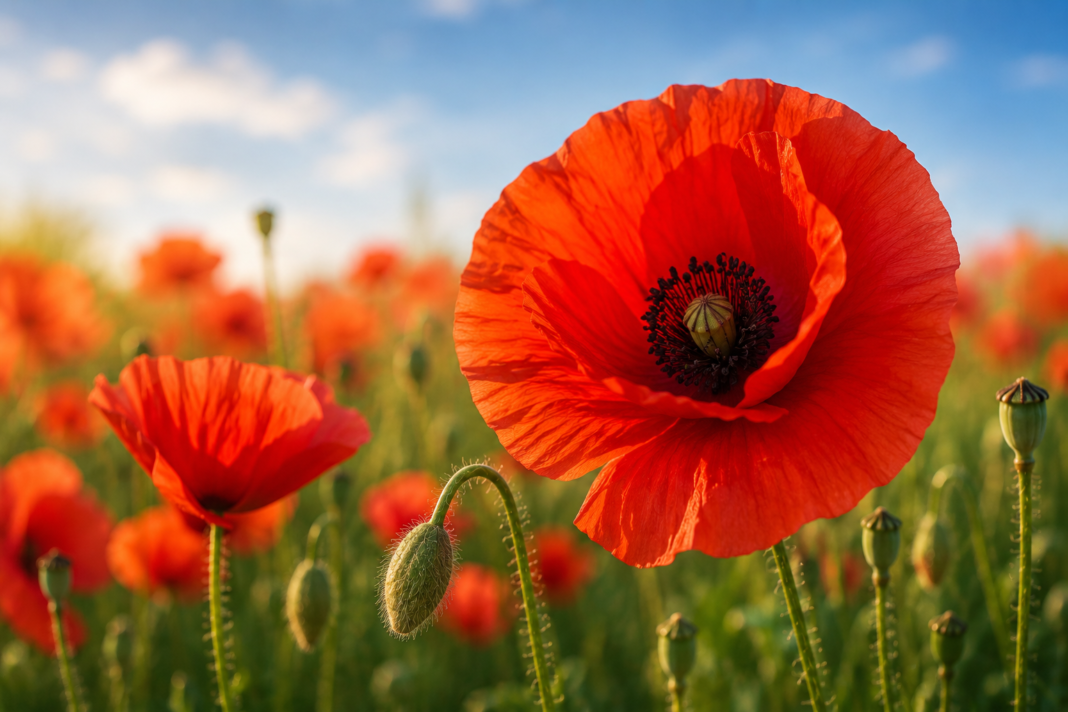

The Poppy Flower is one of the most recognizable blooms in the world, admired for its delicate petals, vivid colors, and rich cultural significance. Found in gardens, wild landscapes, memorial ceremonies, and artistic masterpieces, this remarkable flower has captivated people for centuries.
From the bright red blossoms associated with remembrance to the elegant oriental varieties that create stunning garden displays, poppies offer beauty, history, and versatility. Their paper-like petals dance gracefully in the wind, creating an appearance that feels both fragile and unforgettable.
Gardeners appreciate these flowers for their ability to thrive in diverse environments, while historians and artists value the stories attached to them. Whether growing them at home or simply admiring their beauty, understanding poppies reveals why they continue to hold such a special place in cultures around the world.
Understanding the Poppy Flower
The flower poppy belongs primarily to the Papaver genus, a group that includes dozens of species found across Europe, Asia, North America, and parts of Africa. These flowering plants are known for their silky petals, distinctive seed pods, and ability to adapt to a wide range of growing conditions.
Although many people immediately think of red poppies, the family includes flowers in shades of pink, orange, white, yellow, purple, and even bi-colored combinations. This diversity makes poppies valuable additions to both traditional and contemporary landscapes.
History and Origins of Poppies
The history of poppies stretches back thousands of years. Archaeological discoveries suggest that ancient civilizations cultivated certain species for ornamental, medicinal, and ceremonial purposes. References to poppies appear in Egyptian, Greek, Roman, and Mesopotamian records.
Over time, the flower became intertwined with folklore, mythology, and artistic expression. Different cultures assigned unique meanings to poppies, transforming them from simple wildflowers into enduring symbols of remembrance, peace, sleep, sacrifice, and beauty.
Botanical Characteristics of Poppy Plants
Poppies are generally herbaceous plants that produce solitary blooms atop slender stems. Their petals possess a delicate texture that resembles crumpled silk or tissue paper, creating a distinctive appearance unlike many other garden flowers.
Most species develop seed capsules after blooming. These pods contain numerous tiny seeds that can remain viable for extended periods, allowing poppies to reseed naturally and return year after year in favorable environments.
Popular Types of Poppy Flower
The diversity of poppies allows gardeners and flower enthusiasts to choose varieties suited to different climates, design preferences, and gardening goals. Each species offers unique characteristics while maintaining the charm that defines the poppy family.
Understanding the differences among popular varieties helps gardeners select flowers that align with their desired bloom periods, maintenance levels, and landscape styles.
| Variety | Typical Color | Height | Bloom Season | Key Feature |
| Flanders Poppy | Bright Red | 12–24 inches | Late Spring | Symbol of remembrance |
| Oriental Poppy | Red, Pink, Orange | 24–36 inches | Early Summer | Large dramatic blooms |
| Iceland Poppy | Yellow, Orange, White | 12–18 inches | Spring | Cool-climate favorite |
| California Poppy | Orange | 12–15 inches | Spring to Summer | Drought tolerant |
| Shirley Poppy | Mixed Colors | 18–30 inches | Summer | Elegant pastel blooms |
| Opium Poppy | Various Colors | 24–48 inches | Summer | Decorative seed pods |
Flanders Poppy and Its Global Recognition
Among all varieties, the Flanders poppy holds a particularly important place in modern history. Its bright red flowers became strongly associated with remembrance following World War I due to their appearance across battle-scarred fields in Europe.
Today, these blooms continue to symbolize honor and respect for military service members in many countries. Their striking color and emotional significance have transformed them into one of the most recognizable flowers worldwide.
Oriental Poppies in Landscape Design
Oriental poppies are known for producing some of the largest and most dramatic flowers in the poppy family. Their blooms often feature dark centers that create stunning visual contrast against vibrant petals.
Landscape designers frequently use these plants as focal points within perennial borders. Their bold appearance attracts attention and provides a memorable display during the blooming season.
California Poppies and Sustainable Gardening
California poppies have gained popularity among environmentally conscious gardeners due to their ability to tolerate drought and poor soils. These cheerful orange blooms thrive with relatively little intervention once established.
Because they require fewer resources than many ornamental flowers, they fit perfectly into water-wise landscaping strategies. Their resilience demonstrates how beauty and sustainability can successfully coexist in modern gardens.
Symbolism and Meaning of the Poppy Flower
The symbolic meaning of poppies varies significantly depending on culture, color, and historical context. While remembrance remains one of the most widely recognized associations, poppies also represent imagination, resilience, peace, dreams, and renewal.
This rich symbolism contributes to the flower’s lasting appeal. Few blooms possess such a broad range of emotional and cultural interpretations while maintaining universal visual appeal.
“Flowers are the music of the ground. From earth’s lips spoken without sound.”
The quote captures why poppies resonate so deeply with people. Their beauty communicates emotions and memories that often transcend words.
Red Poppies and Remembrance Traditions
Red poppies are commonly associated with remembrance ceremonies around the world. Their connection to military history has made them enduring symbols of sacrifice and respect.
Many commemorative events incorporate red poppies to honor those who served during times of conflict. This tradition continues to educate new generations about historical events while preserving collective memory.
White Poppies and Messages of Peace
White poppies often symbolize peace, reconciliation, and hope for a future free from conflict. Their clean, understated beauty conveys a sense of calm and reflection.
These flowers are frequently used in discussions surrounding humanitarian values and peaceful coexistence, demonstrating how floral symbolism can evolve over time while remaining meaningful.
Orange and Yellow Poppies in Modern Symbolism
Orange and yellow varieties are often linked to creativity, optimism, enthusiasm, and personal growth. Their bright appearance naturally evokes feelings of warmth and positivity.
Gardeners frequently choose these colorful blooms to create uplifting outdoor spaces that encourage relaxation, inspiration, and emotional well-being.
Growing Poppy Flower Successfully
Growing poppies can be highly rewarding when their basic requirements are understood. Despite their delicate appearance, many varieties are surprisingly resilient and capable of thriving in challenging conditions.
Success begins with proper site selection, soil preparation, and attention to seasonal planting schedules. These foundational factors greatly influence flowering performance and long-term plant health.
Climate and Sunlight Requirements
Most poppy species prefer locations that receive full sun throughout the day. Adequate sunlight encourages strong growth, healthy foliage, and abundant flower production.
Although specific requirements vary among species, many poppies perform best in regions that experience moderate temperatures and well-defined seasonal cycles. Excessive humidity can sometimes increase disease risks.
Soil Conditions for Healthy Growth
Well-drained soil remains one of the most important factors for successful cultivation. Excess moisture around roots can lead to rot and reduce plant vigor.
Sandy or loamy soils generally provide excellent growing conditions. Adding organic matter can improve structure while maintaining proper drainage, creating an environment where poppies can flourish.
Planting Poppy Flower Seeds and Methods
Planting flower poppy seeds is one of the most important steps in achieving a healthy and vibrant garden display. These seeds are extremely small and should be sown directly into the soil rather than started in containers, as transplanting can disturb their delicate root systems.
For best results, gardeners typically scatter seeds over prepared soil in early spring or fall, depending on the climate. Lightly pressing them into the surface without burying too deeply ensures proper germination since poppy seeds need light exposure to sprout successfully.
Watering and Fertilization Needs
The poppy flower prefers a balanced watering approach where soil remains lightly moist but never waterlogged. Overwatering is one of the most common mistakes, often leading to weak stems or root rot.
Fertilization should be minimal because poppies thrive in low-nutrient soils. Excess fertilizer can encourage leafy growth at the expense of blooms, reducing the overall visual impact of the plant in a garden setting.
Common Pests and Diseases Affecting Poppy Flower
Although generally hardy, the flower poppy can occasionally be affected by pests such as aphids and spider mites. These insects typically feed on sap, weakening plant vigor and affecting bloom quality.
Fungal diseases may also occur in overly damp conditions, especially in poorly drained soil. Proper spacing and good air circulation significantly reduce the risk of these issues developing in mature plants.
Propagation and Seed Collection Techniques
Propagating flower poppy plants is most commonly done through seed collection. Once the blooms fade, seed pods develop and eventually dry out, making them ready for harvesting.
Gardeners often collect seeds by gently shaking dried pods into containers. These seeds can be stored in cool, dry conditions and replanted in future seasons, ensuring continuous garden growth.
Companion Planting Strategies for Poppy Flower
Companion planting enhances the beauty and health of the flower poppy by pairing it with plants that share similar environmental needs. Good companions often include daisies, lavender, and ornamental grasses.
These combinations create visually appealing garden spaces while also supporting pollinators. Strategic planting improves airflow and reduces competition for nutrients, resulting in healthier overall growth.
Poppy Flower in Landscape Design
The flower poppy plays a powerful role in landscape design due to its bold colors and natural movement in the wind. Designers often use it to create focal points in meadow-style gardens or mixed borders.
Because poppies blend well with both structured and wild planting schemes, they offer flexibility in garden planning. Their seasonal bloom cycles also help create dynamic visual changes throughout the year.
Cultural Significance of Poppy Flower Around the World
Across many cultures, the flower poppy carries deep symbolic meaning tied to memory, peace, and transformation. In some regions, it represents sleep and dreams, while in others it signifies resilience and remembrance.
This wide cultural relevance makes poppies more than just ornamental plants. They serve as emotional and historical symbols that connect people across generations and geographic boundaries.
Myths and Folklore Surrounding Poppy Flower
The flower poppy has long been associated with myths involving sleep, dreams, and the afterlife. Ancient civilizations believed the flower held mystical properties capable of inducing rest and visions.
In folklore, poppies were often linked to spirits of the earth and cycles of renewal. These stories contributed to the flower’s reputation as both beautiful and slightly mysterious in nature.
Seasonal Behavior and Bloom Cycles of Poppy Flower
The flower poppy follows distinct seasonal patterns depending on its variety and climate. Many species bloom in spring or early summer, producing vibrant displays before entering dormancy.
Understanding these cycles helps gardeners plan more effective landscapes. By combining different varieties, it is possible to extend blooming periods and maintain visual interest for longer durations.
Soil Preparation Techniques for Optimal Growth
Proper soil preparation significantly influences the success of poppy flower cultivation. Loose, well-drained soil with minimal compaction creates ideal conditions for root development.
Gardeners often prepare planting areas by removing weeds and lightly raking the soil surface. This ensures that tiny seeds make proper contact with the ground, improving germination rates.
Water Conservation and Eco-Friendly Gardening with Poppy Flower
The poppy flower is an excellent choice for eco-friendly gardens due to its low water requirements once established. Many varieties naturally adapt to dry conditions, reducing the need for irrigation.
This makes poppies especially valuable in regions facing water scarcity. Their ability to thrive with minimal resources supports sustainable landscaping practices without sacrificing visual appeal.
Poppy Flower in Art and Literature
The poppy flower has inspired countless works of art and literature throughout history. Its delicate petals and symbolic depth make it a favorite subject for painters, poets, and writers.
From classical paintings to modern poetry, poppies often represent themes of beauty, memory, and impermanence. Their presence in creative works continues to reinforce their cultural significance.
Economic and Agricultural Importance of Poppy Flower
Beyond ornamental use, the poppy flower has agricultural importance in certain regions where specific varieties are cultivated under controlled conditions. These crops are managed for their seeds and oil content.
Poppy seeds are widely used in baking and culinary traditions around the world. Their economic value contributes to global agricultural markets while also supporting traditional food cultures.
Poppy Flower and Pollinators in the Ecosystem
The poppy flower plays a beneficial role in supporting pollinators such as bees and butterflies. Its open structure allows easy access to nectar and pollen resources.
By attracting pollinators, poppies contribute to the overall health of garden ecosystems. This interaction helps sustain biodiversity and improve the productivity of surrounding plants.
Misconceptions About Poppy Flower Cultivation
Many people believe that the poppy flower is difficult to grow, but this is often due to misunderstandings about its basic needs. In reality, most varieties require minimal care once properly established.
Another misconception is that poppies cannot thrive in home gardens. With appropriate soil, sunlight, and spacing, they can flourish in both small and large-scale landscapes.
Enduring Popularity of Poppy Flower in Modern Gardens
The poppy flower continues to be a favorite among gardeners due to its effortless beauty and symbolic depth. Its ability to thrive in diverse environments adds to its widespread appeal.
Modern garden trends increasingly incorporate poppies into naturalistic designs that emphasize biodiversity and low maintenance. This ensures their relevance in contemporary horticulture.
Poppy Flower in Medicinal and Historical Use
The poppy flower has a long and complex history in traditional medicine, dating back to ancient civilizations that explored its sedative and pain-relieving properties. Certain species were used in carefully controlled preparations to support sleep and reduce discomfort.
Over time, these uses became better understood and regulated, shaping modern approaches to medicinal research. Today, the poppy flower is studied mainly for its botanical and pharmacological significance rather than casual home use.
Ethical and Legal Context of Poppy Flower Cultivation
The poppy flower exists within a strict legal framework in many countries due to the compounds found in specific varieties. Regulations vary widely, and cultivation may be restricted depending on regional laws.
Gardeners are generally encouraged to grow ornamental varieties that are fully legal and intended for decorative purposes. Understanding local regulations ensures responsible and compliant gardening practices.
Poppy Flower in Memorial and Commemorative Events
The poppy flower holds a powerful emotional presence in memorial traditions across the world. It is widely used to honor lives lost in military conflicts and to symbolize remembrance and reflection.
During commemorative events, the flower serves as a visual reminder of sacrifice and resilience. Its presence helps communities connect emotionally with historical events in a respectful and meaningful way.
Psychological Symbolism of Poppy Flower
The poppy flower is often associated with themes of sleep, dreams, and emotional release. Psychologically, its soft petals and calming colors evoke feelings of peace and introspection.
These associations make it a common symbol in discussions about memory, healing, and emotional restoration. The flower’s visual softness contributes to its soothing psychological impact.
Table: Key Poppy Flower Varieties and Characteristics
| Variety | Growth Habit | Ideal Climate | Bloom Duration | Maintenance Level | Common Use |
| Flanders Poppy | Annual | Temperate | Short | Low | Memorial planting |
| Oriental Poppy | Perennial | Cool to moderate | Moderate | Medium | Ornamental gardens |
| Iceland Poppy | Biennial/Short-lived perennial | Cool climates | Moderate | Medium | Spring displays |
| California Poppy | Perennial/annual | Dry, warm | Long | Very low | Xeriscaping |
| Shirley Poppy | Annual | Temperate | Moderate | Low | Cottage gardens |
| Opium Poppy | Annual | Controlled climates | Moderate | High regulation | Seed production |
Poppy Flower in Modern Landscaping Trends
Modern landscaping increasingly favors naturalistic and wildlife-friendly designs, where the poppy flower plays a central role. Its informal growth habit complements meadow-style gardens and pollinator-friendly environments.
Designers often combine poppies with grasses and wildflowers to create flowing, seasonal landscapes. This approach enhances biodiversity while maintaining strong visual appeal.
Poppy Flower and Climate Adaptation
Different species of poppy flower show remarkable adaptability to varying climatic conditions. Some thrive in dry, arid regions, while others prefer cooler, moist environments.
This adaptability makes poppies valuable for gardeners working with changing climate patterns. Their resilience supports sustainable planting strategies across diverse geographic areas.
Poppy Flower Seed Dormancy and Germination Behavior
Poppy flower seeds often require specific conditions to germinate successfully, including exposure to light and cool soil temperatures. This natural dormancy mechanism helps ensure survival in wild environments.
Understanding these germination requirements improves success rates for gardeners. Proper timing and surface sowing techniques are key to achieving strong and healthy growth.
Poppy Flower in Cultural Artifacts and Symbolic Objects
The poppy flower appears frequently in jewelry, textiles, and decorative art due to its symbolic meaning and aesthetic appeal. Its image is often used to represent remembrance and beauty.
These cultural artifacts help preserve the flower’s significance across generations. They also demonstrate how botanical imagery can carry deep emotional resonance beyond natural settings.
Poppy Flower as a Source of Inspiration in Modern Design
Contemporary designers often draw inspiration from the poppy flower’s structure, color gradients, and organic form. These elements influence fashion, interior design, and digital artwork.
The flower’s simplicity combined with its visual impact makes it a versatile design reference. Its influence continues to expand in creative industries worldwide.
Poppy Flower and Biodiversity Conservation
The poppy flower contributes to biodiversity by supporting pollinators and enriching natural habitats. Its presence in wildflower meadows helps maintain ecological balance.
Conservation efforts often include poppies as part of seed mixes used to restore degraded landscapes. Their ability to thrive in challenging environments makes them valuable in ecological restoration projects.
Common Myths About Poppy Flower Growth
A common myth suggests that poppy flower plants require constant care and rich soil, but many varieties actually prefer poor to moderate soil conditions. Over-fertilization can reduce flowering performance.
Another misconception is that poppies are short-lived and not worth planting. In reality, many varieties reseed themselves and return annually under the right conditions.
Poppy Flower in Educational and Botanical Studies
The poppy flower is frequently studied in botanical education due to its distinctive reproductive structures and lifecycle. It provides an excellent example of plant adaptation and seed dispersal strategies.
Students often observe poppies to understand pollination mechanisms and plant ecology. Their clear structural features make them ideal teaching tools in biology.
Poppy Flower and Emotional Healing Associations
The poppy flower is sometimes used in therapeutic and symbolic contexts related to emotional healing and recovery. Its gentle appearance is associated with calmness and reflection.
While not a medical treatment, its symbolism can play a supportive role in mindfulness practices and emotional well-being discussions.
Poppy Flower in Global Horticultural Markets
The poppy flower has a strong presence in global horticulture due to its popularity in ornamental gardening. Seeds are widely traded, and many regions cultivate poppies for landscape use.
Demand remains steady because of their adaptability and aesthetic appeal. This ensures the flower’s continued relevance in international gardening markets.
Poppy Flower in Contemporary Cultural Identity
The poppy flower continues to hold a strong place in contemporary cultural identity across many regions of the world. It is frequently used in public memorials, awareness campaigns, and artistic expressions that reflect collective memory and shared history.
In modern societies, the poppy flower often bridges historical remembrance with present-day reflection. Its continued presence in cultural events reinforces its role as a symbol that evolves while remaining deeply meaningful.
Poppy Flower in Therapeutic Landscapes and Healing Gardens
Healing gardens often incorporate the poppy flower due to its calming visual qualities and gentle movement in the wind. These environments are designed to support mental well-being and emotional recovery through natural interaction.
The poppy flower contributes to these spaces by introducing softness, color variation, and seasonal rhythm. Its presence encourages mindfulness and quiet observation in therapeutic settings.
Poppy Flower in Climate-Smart Urban Planning
Urban planners increasingly integrate the poppy flower into climate-smart green infrastructure. Its adaptability to poor soils and low water requirements makes it ideal for sustainable city landscapes.
By using poppies in roadside plantings and public green spaces, cities can reduce maintenance demands while enhancing biodiversity and visual appeal. This aligns with broader environmental resilience goals.
Poppy Flower and Soil Microbial Relationships
The poppy flower interacts indirectly with soil microbial communities by influencing organic matter cycles and root zone conditions. Healthy soil ecosystems support stronger plant development and improved flowering performance.
Although not heavily dependent on nutrient-rich environments, poppies still benefit from balanced microbial activity that supports soil structure and moisture regulation.
Poppy Flower in Decorative Gardening Trends
Modern decorative gardening trends emphasize natural beauty and low-maintenance planting schemes, where the poppy flower plays a central role. Its informal growth pattern aligns with relaxed, nature-inspired aesthetics.
Gardeners often combine poppies with ornamental grasses and wildflowers to achieve a soft, flowing visual effect. This design approach has become increasingly popular in residential landscapes.
Poppy Flower and Seed Dispersal Mechanisms
The poppy flower uses a unique seed dispersal system where mature seed pods release tiny seeds through pores or openings. Wind and movement help scatter seeds across surrounding soil.
This natural dispersal strategy allows poppies to colonize new areas efficiently. It also contributes to their ability to reappear in gardens without direct replanting.
Poppy Flower in Educational Garden Programs
School gardens and educational programs often include the poppy flower to teach students about plant life cycles and ecological systems. Its rapid growth and visible seed development make it an effective learning tool.
Students can observe each stage of development, from germination to flowering and seed production. This hands-on experience strengthens understanding of botanical science.
Poppy Flower and Visual Symbolism in Media
The poppy flower frequently appears in films, photography, and digital media as a symbol of memory, peace, and natural beauty. Its striking visual form makes it highly recognizable on screen.
Media representation of poppies often reinforces emotional themes and enhances storytelling depth. Their symbolic associations help communicate complex ideas quickly and effectively.
Poppy Flower in Global Seed Trade Networks
The global seed trade includes a wide range of poppy flower varieties distributed across horticultural markets. These seeds are exchanged among growers, nurseries, and conservation groups.
This international trade supports biodiversity preservation and gardening innovation. It also ensures continued availability of diverse ornamental varieties for global cultivation.
Poppy Flower and Environmental Awareness Campaigns
Environmental campaigns often use the poppy flower as a visual symbol to promote awareness about sustainability, conservation, and ecological balance. Its natural beauty helps capture public attention.
By associating environmental messages with the poppy flower, organizations can communicate themes of renewal and responsibility in an accessible and emotionally resonant way.
Poppy Flower in Seasonal Color Planning
Landscape designers use the poppy flower strategically in seasonal color planning to create dynamic visual transitions throughout the year. Its bloom period adds vibrant bursts of color to spring and summer gardens.
Careful coordination with other flowering plants ensures continuous visual interest. Poppies often serve as transitional elements between early and late-season blooms.
Poppy Flower in Wildlife Habitat Enhancement
The poppy flower contributes to wildlife habitat enhancement by providing food sources for pollinators and supporting insect diversity. Its presence helps sustain balanced ecological networks.
Wildlife-friendly gardens often include poppies as part of broader habitat restoration efforts. These plantings encourage healthier ecosystems in both rural and urban environments.
Poppy Flower and Cultural Memory Preservation
The poppy flower plays a symbolic role in preserving cultural memory across generations. It serves as a living reminder of historical events and collective experiences.
This function ensures that important narratives remain visible in public consciousness. The flower’s continued use in ceremonies reinforces its role as a cultural anchor.
Poppy Flower in Digital and Graphic Design
Digital designers frequently use the poppy flower as a visual motif due to its simple yet expressive structure. Its bold color contrasts and organic shapes translate well into modern design systems.
The flower’s adaptability allows it to be used in branding, illustrations, and UI elements. Its symbolic richness enhances visual storytelling across platforms.
Poppy Flower in Climate-Resilient Seed Mixes
Climate-resilient seed mixes often include the poppy flower because of its adaptability and low resource requirements. These mixes are used in restoration projects and sustainable landscaping.
Poppies contribute both ecological value and visual appeal to these seed blends. Their inclusion helps establish resilient plant communities in changing environments.
Poppy Flower and Long-Term Garden Sustainability
The poppy flower supports long-term garden sustainability by requiring minimal inputs while delivering strong aesthetic impact. Its self-seeding behavior reduces the need for repeated planting.
This efficiency makes it a valuable component in sustainable gardening systems. It helps reduce maintenance while maintaining seasonal beauty.
Poppy Flower Conclusion
The poppy flower remains one of the most culturally significant, visually striking, and ecologically valuable plants in the natural world. Its ability to thrive in diverse environments while carrying deep symbolic meaning makes it uniquely versatile.
From gardens and landscapes to memorials and art, the poppy flower continues to connect people with nature, memory, and creativity in powerful and enduring ways.
Frequently Asked Questions About Poppy Flower
What is the poppy flower known for?
The poppy flower is known for its vibrant colors, delicate petals, and strong symbolic meanings related to remembrance, peace, and beauty in nature.
How do you grow a poppy flower successfully?
To grow a poppy flower successfully, sow seeds directly in well-drained soil with full sun exposure and avoid overwatering or excessive fertilization.
What does the poppy flower symbolize?
The poppy flower symbolizes remembrance, sleep, peace, and emotional reflection, depending on cultural and historical context.
Are poppy flowers easy to maintain?
Yes, the poppy flower is generally easy to maintain, requiring minimal care once established and thriving best in low-nutrient soil conditions.
Where do poppy flowers grow naturally?
The poppy flower grows naturally in temperate regions across Europe, Asia, North America, and parts of Africa, often in open fields and disturbed soils.
You May Also Read Why Is My Airbag Light On