

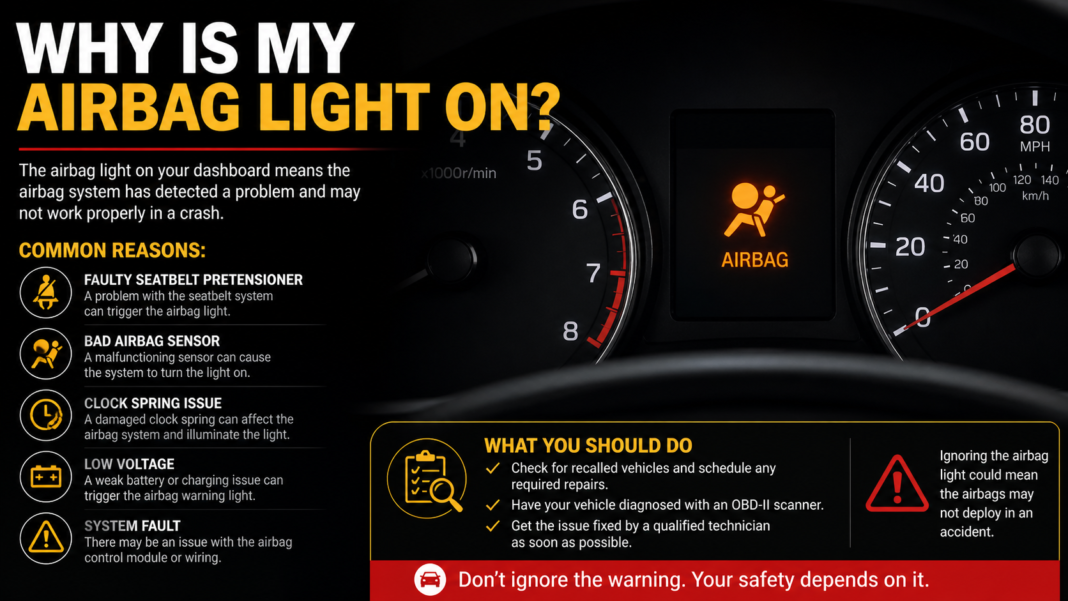

Seeing an illuminated airbag warning light on your dashboard can be unsettling. Many drivers immediately wonder, why is my airbag light on, and whether it’s safe to continue driving. The airbag system is one of the most important safety features in modern vehicles, designed to help protect occupants during collisions and reduce the severity of injuries.
When the airbag light stays on, flashes repeatedly, or appears unexpectedly, it usually indicates that the Supplemental Restraint System (SRS) has detected a fault. While the vehicle may still operate normally, the safety systems designed to protect you during an accident may not function as intended. Understanding the causes, symptoms, and solutions can help you address the issue quickly and avoid unnecessary risks.
Understanding What the Airbag Warning Light Means
The airbag warning light is part of your vehicle’s Supplemental Restraint System, often referred to as the SRS. This system includes airbags, crash sensors, seat belt pretensioners, wiring harnesses, and electronic control modules that work together during a collision.
When you start your vehicle, the SRS performs a self-diagnostic test. The light typically illuminates for a few seconds and then turns off. If it remains on, flashes, or returns while driving, the system has identified a fault that requires attention.
How the Airbag System Works
Modern airbag systems rely on a network of sensors and control units that constantly monitor vehicle conditions. These components communicate with each other and determine when airbags should deploy during a collision.
Within milliseconds of a serious impact, crash sensors send signals to the airbag control module. The module analyzes the data and activates specific airbags and seat belt pretensioners when necessary. Even a minor malfunction can disrupt this process, which is why the warning light should never be ignored.
Common Reasons Drivers Ask Why Is My Airbag Light On
One of the most common causes is a faulty seat belt sensor. Since seat belts and airbags are closely integrated within the SRS, sensor failures can trigger dashboard warnings even when the airbags themselves are functioning correctly.
Another frequent cause involves damaged wiring, loose electrical connections, or deteriorated connectors under the seats. Daily seat adjustments can gradually strain wiring harnesses and create intermittent communication problems within the system.
Faulty Seat Belt Components
Seat belt pretensioners tighten seat belts during a collision to improve occupant protection. If a pretensioner fails or reports abnormal data, the airbag light may activate as a precautionary measure.
Many vehicles also include seat belt buckle sensors that determine whether occupants are properly restrained. A damaged buckle switch or sensor can cause communication errors that illuminate the warning indicator.
Problems With Occupant Detection Sensors
Many newer vehicles use weight sensors embedded in passenger seats. These sensors determine whether a passenger is present and help control airbag deployment strategies during a crash.
If the sensor mat becomes damaged or calibration is lost, the system may incorrectly identify occupancy conditions. This often causes both passenger airbag warnings and the primary airbag light to illuminate simultaneously.
Damaged Wiring and Electrical Connections
Electrical issues are among the most common explanations when drivers wonder, why is my airbag light on. Airbag systems depend on precise electrical signals, making them highly sensitive to wiring problems.
Loose connectors, corrosion, moisture intrusion, damaged harnesses, or accidental disconnections can interrupt communication between critical components. Even minor electrical resistance changes may trigger diagnostic trouble codes and activate the warning light.
Airbag Clock Spring Failure
The clock spring is a coiled electrical connector located inside the steering column behind the steering wheel. It allows electrical signals to travel while the wheel rotates during driving.
When the clock spring wears out, it can interrupt communication with the driver’s airbag, steering wheel controls, or horn. This failure commonly triggers the airbag warning light and may be accompanied by other steering wheel-related electrical issues.
Airbag Module Problems
The airbag control module serves as the central computer for the SRS system. It continuously monitors sensors, stores diagnostic codes, and determines when deployment should occur.
Internal module failures are less common but can occur due to electrical damage, water intrusion, voltage spikes, or age-related electronic deterioration. When this happens, professional diagnostic equipment is usually required to identify the specific fault.
Battery and Charging System Issues
Low battery voltage can sometimes cause temporary airbag warning lights. Modern vehicles rely on stable electrical power for proper communication among numerous control modules.
A weak battery, failing alternator, or poor ground connection may generate system errors. In some cases, the warning light disappears after the battery is replaced and system codes are cleared.
Airbag Deployment History
If a vehicle has previously been involved in an accident, deployed airbags may be a contributing factor. Airbag systems often require extensive repairs and module resets after deployment events.
Improper repairs or incomplete replacement of deployed components can leave the system in a fault state. This is especially important to investigate when purchasing a used vehicle with an unknown accident history.
Water Damage and Moisture Intrusion
Water is one of the most damaging elements for automotive electronics. Moisture can corrode connectors, damage sensors, and create short circuits throughout the SRS network.
Vehicles affected by flooding, leaking sunroofs, clogged drain systems, or windshield seal failures may develop airbag warning lights due to hidden electrical damage that worsens over time.
Airbag Recall-Related Issues
Manufacturers occasionally issue recalls involving airbags, inflators, sensors, or related components. These recalls are designed to address safety defects that could affect occupant protection.
If your airbag light is illuminated, it is worth checking whether your vehicle has any open recalls. Addressing recall repairs promptly may resolve the issue while improving overall safety.
Diagnostic Trouble Codes and Their Importance
When the airbag light illuminates, the system typically stores a diagnostic trouble code. These codes provide valuable information about the source of the fault and significantly reduce diagnostic guesswork.
Professional scan tools designed for SRS systems can retrieve these codes and identify affected components. Generic code readers often cannot access airbag-specific diagnostic information, making specialized equipment necessary.
Airbag Light Symptoms and What They Mean
Different warning behaviors can provide clues about the underlying problem. A light that remains steadily illuminated often indicates a stored fault that has been detected and confirmed.
A flashing airbag light may suggest an active communication problem or a fault that requires immediate attention. Intermittent illumination can point toward loose wiring, unstable electrical connections, or sensors that are beginning to fail.
Can You Drive With the Airbag Light On?
Technically, most vehicles remain drivable when the airbag warning light is illuminated. The engine, transmission, steering, and braking systems generally continue operating normally.
However, the larger concern is safety. When the SRS detects a fault, airbags or seat belt pretensioners may not deploy correctly during an accident. Because occupant protection could be compromised, the issue should be diagnosed as soon as possible.
Potential Safety Risks of Ignoring the Warning
Ignoring the warning light can create uncertainty about how the airbag system will behave during a collision. In some cases, airbags may fail to deploy when needed.
In other situations, the system may disable certain components entirely to prevent unintended deployment. Either scenario increases the importance of timely diagnosis and repair.
Airbag Warning Light Causes at a Glance
| Potential Cause | Typical Symptoms | Difficulty of Repair | Estimated Cost Range |
| Loose wiring connection | Intermittent light | Low to Moderate | $50–$250 |
| Faulty seat belt sensor | Constant warning light | Moderate | $100–$400 |
| Occupancy sensor failure | Passenger airbag warning | Moderate to High | $150–$800 |
| Clock spring failure | Airbag light plus horn issues | Moderate | $150–$600 |
| Low battery voltage | Temporary warning light | Low | $100–$300 |
| Airbag module failure | Persistent SRS faults | High | $300–$1,500+ |
| Water damage | Multiple electrical faults | High | Varies widely |
| Previous accident repairs | Ongoing warning light | Moderate to High | Case-specific |
How Professionals Diagnose Airbag System Problems
A technician begins by connecting a diagnostic scanner capable of accessing SRS modules. The scanner retrieves stored codes and identifies affected components or communication pathways.
After reviewing the codes, technicians inspect wiring, connectors, sensors, voltage levels, and module data. This systematic approach helps isolate the root cause before any parts are replaced.
DIY Checks You Can Perform Safely
Drivers can perform a few basic inspections before visiting a repair facility. Checking battery condition, ensuring seat connectors are secure, and looking for obvious wiring damage may reveal simple causes.
It is important to avoid disconnecting airbag components or probing airbag wiring without proper procedures. Accidental deployment can cause serious injury and expensive damage.
Why Clearing the Light Isn’t Always a Solution
Many people assume that erasing diagnostic codes will permanently solve the problem. In reality, the light typically returns if the underlying fault remains unresolved.
Clearing codes should only occur after repairs are completed and system verification confirms proper operation. Otherwise, the warning simply masks the issue temporarily.
Differences Between Airbag Lights Across Vehicle Brands
Manufacturers use slightly different warning symbols and monitoring strategies. Some vehicles display an airbag icon, while others show “SRS,” “Airbag,” or a passenger restraint warning.
Despite these differences, the meaning remains largely the same. The system has detected a condition that could affect occupant protection and requires diagnostic attention.
Common Misconceptions About Airbag Warning Lights
One widespread misconception is that the light only appears after a collision. In reality, many electrical faults and sensor issues can trigger the warning without any accident occurring.
Another myth is that airbags will definitely deploy incorrectly if the light is on. While the risk increases, actual system behavior varies depending on the specific fault present.
The Growing Complexity of Modern Safety Systems
Today’s vehicles incorporate far more safety technology than older models. Advanced driver assistance systems, occupant classification sensors, and multiple airbags have increased system complexity significantly.
As these systems become more sophisticated, accurate diagnosis becomes increasingly important. What once required a simple repair may now involve software calibration, sensor programming, or module communication analysis.
When Immediate Service Is Recommended
If the airbag light appears immediately after a collision, flooding event, battery replacement, or electrical repair, scheduling a professional inspection should be a priority. These situations often indicate a direct connection to the warning.
Likewise, if multiple warning lights appear simultaneously or electrical systems begin malfunctioning, broader electrical issues may be affecting the vehicle and should be addressed promptly.
What Experts Say About Airbag System Maintenance
As many automotive safety professionals emphasize, “A warning light is the vehicle’s way of telling you a safety system may not be ready when you need it most.”
This perspective highlights why airbag warnings deserve attention even when the vehicle appears to drive normally. Safety systems are designed for emergencies, and their readiness cannot be verified without proper diagnostics.
Preventing Future Airbag System Problems
Routine vehicle maintenance can reduce the likelihood of airbag-related issues. Maintaining battery health, addressing water leaks quickly, and avoiding careless electrical modifications all contribute to system reliability.
Care should also be taken when moving seats, installing aftermarket electronics, or performing interior repairs. Protecting wiring harnesses and connectors helps prevent accidental damage that could trigger warning lights.
Conclusion
If you have ever asked yourself, why is my airbag light on, the answer typically involves a fault somewhere within the Supplemental Restraint System. Common causes include seat belt sensor problems, damaged wiring, occupancy sensor failures, clock spring issues, low battery voltage, or airbag control module faults.
While the vehicle may continue driving normally, the warning light indicates that critical safety components may not function as intended during an accident. Prompt diagnosis, proper repairs, and professional verification help ensure that your airbags and related safety systems remain ready when they are needed most. Treating the warning seriously protects not only your vehicle but also everyone riding inside it.
FAQ
Why is my airbag light on after replacing the battery?
The main keyword issue may occur because low voltage created a stored fault code. In many cases, the system simply needs diagnostics and code verification after battery replacement.
Why is my airbag light on but my car drives normally?
Your vehicle can often operate normally even when the airbag light is illuminated. However, the warning indicates a potential problem with the Supplemental Restraint System rather than the drivetrain.
Can a bad seat belt cause the airbag light to come on?
Yes. Seat belt sensors and pretensioners are connected to the SRS system, making them common reasons drivers ask, why is my airbag light on.
How much does it cost to fix an airbag warning light?
Costs vary widely depending on the cause. Simple wiring repairs may cost under $200, while module replacements or advanced sensor repairs can exceed $1,000.
Will airbags still work if the warning light is on?
It depends on the specific fault. Some airbags may be disabled, while others could continue functioning. Professional diagnosis is the only reliable way to determine system status.
Can I reset the airbag light myself?
Some warning lights can be cleared temporarily, but if the underlying issue remains, the light usually returns. Proper diagnosis and repair are the correct solutions.
Why is my airbag light on after moving the seat?
Moving a seat can strain or loosen electrical connectors underneath. This is a common cause of intermittent airbag warning lights in many vehicles.
Is an airbag warning light an emergency?
It is not usually an immediate driving emergency, but it is a safety concern. Because occupant protection may be compromised, the issue should be inspected as soon as practical.
You May Also Read: Mazda Airbag Recall