

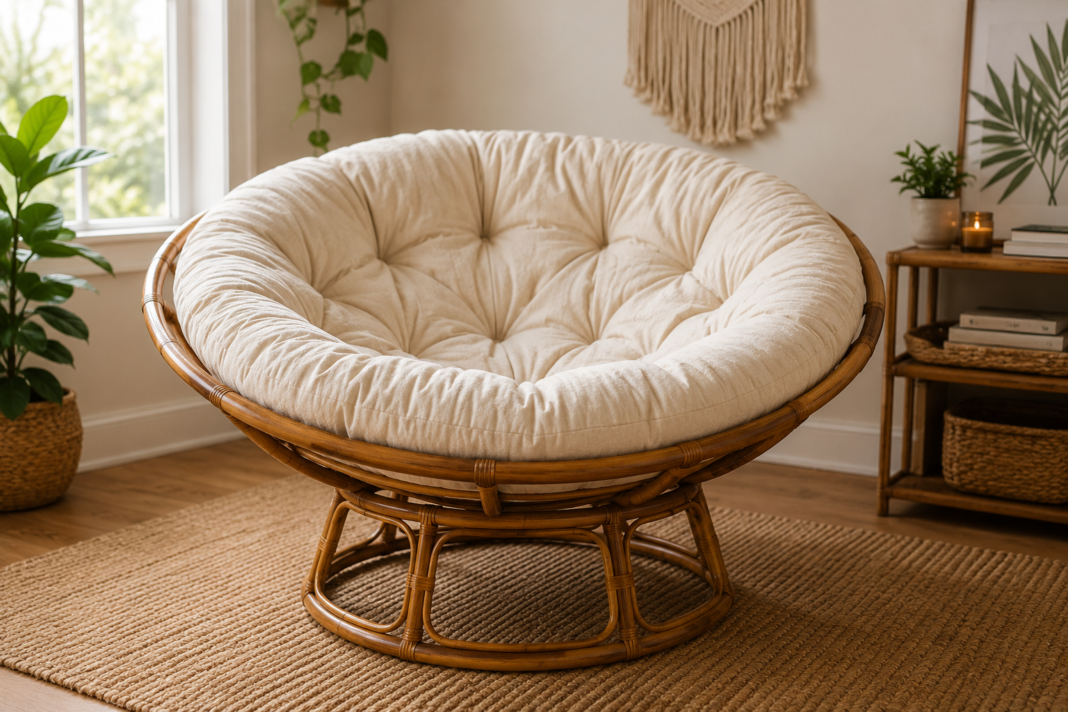

The Papasan Chair has evolved from a simple woven seat into one of the most recognizable comfort-focused furniture pieces in modern interior design. Known for its deep, bowl-shaped cushion and relaxed lounging posture, it blends casual comfort with aesthetic versatility.
Today, the bowl chair is a staple in bohemian interiors, minimalist apartments, and cozy reading corners. Whether used as a statement piece or a functional relaxation seat, it continues to attract homeowners seeking both comfort and visual warmth in their living spaces.
What Is a Papasan Chair and Why It Became a Design Icon
The papasan chair is a deep, round bowl-shaped chair traditionally made from rattan or wicker and paired with a thick, plush cushion. Its unique design allows users to sink comfortably into a semi-reclined position, making it ideal for relaxation, reading, or lounging for extended periods.
Its popularity comes from its simplicity and comfort-first design philosophy. Unlike rigid seating options, the bowl chair adapts to the body’s natural shape, creating a cocoon-like experience that feels both supportive and soothing in casual living environments.
The appeal of the bowl chair also lies in its visual softness. Its curved form breaks the monotony of straight-lined furniture, introducing organic balance into modern interiors while maintaining a laid-back aesthetic.
History and Cultural Origins of the Papasan Chair
The origins of the papasan chair can be traced back to Southeast Asia, where similar bowl-style seating designs were traditionally handcrafted using natural rattan. These early versions were designed for comfort in warm climates, allowing airflow and relaxed seating posture.
Over time, the design was introduced to Western markets during the mid-20th century, where it quickly became associated with bohemian and retro interior trends. Its lightweight structure and easy portability made it especially popular among younger homeowners and students.
As global design trends evolved, the papasan chair transitioned from a cultural artifact into a mainstream furniture piece. It maintained its handcrafted charm while adapting to modern materials, making it widely accessible across different markets.
Papasan Chair Design Features and Materials Explained
A typical papasan chair consists of two primary components: a sturdy frame and a thick, circular cushion. The frame is usually made from rattan, bamboo, or metal, while the cushion is filled with cotton, foam, or polyester blends for maximum comfort.
The bowl-shaped frame is designed to distribute weight evenly, allowing the chair to swivel slightly or remain stable depending on its base. This structure creates a relaxing seating angle that reduces pressure on the lower back.
Material selection plays a major role in durability and comfort. Natural rattan offers an earthy, handcrafted look, while synthetic materials provide greater weather resistance and long-term stability for indoor and outdoor use.
Papasan Chair Styles and Variations in Modern Interiors
Modern variations of the papasan chair have expanded far beyond its traditional design. Today, it is available in multiple styles that cater to different interior themes, from rustic boho aesthetics to sleek contemporary homes.
These variations often differ in frame shape, cushion thickness, swivel capability, and material finish. Designers have adapted the original concept to match evolving lifestyle needs, making it more versatile than ever.
| Style Type | Frame Material | Cushion Type | Ideal Setting |
| Classic Papasan | Rattan | Thick cotton cushion | Bohemian living rooms |
| Swivel Papasan | Metal base | Memory foam cushion | Modern apartments |
| Double Papasan | Reinforced rattan | Extra-wide cushion | Shared seating spaces |
| Outdoor Papasan | Synthetic resin | Weather-resistant fabric | Patios and balconies |
Each variation of the bowl chair serves a different lifestyle purpose, allowing users to select based on comfort preference and spatial needs.
The diversity in styles has helped the bowl chair remain relevant in contemporary design markets. It continues to bridge the gap between traditional craftsmanship and modern functionality.
Comfort and Ergonomics of a Papasan Chair
One of the defining features of the papasan chair is its exceptional comfort level. The deep cushion design allows users to sink into a relaxed position that supports both the back and hips naturally.
Unlike standard chairs, the bowl chair distributes body weight evenly across its curved surface. This reduces pressure points and promotes a more restful seating experience, especially during long periods of use.
“True comfort in furniture is not just about softness, but about how naturally the body is supported without effort.” This principle is clearly reflected in the enduring popularity of the papasan chair.
The ergonomic benefits of the bowl chair make it particularly appealing for reading corners, meditation spaces, and casual lounging areas where relaxation is the primary goal.
How to Style a Papasan Chair in Different Home Settings
A papasan chair can easily transform the atmosphere of a room when styled thoughtfully. In bohemian interiors, it pairs well with textured rugs, woven baskets, and warm lighting to create a cozy, layered environment.
In minimalist spaces, the bowl chair acts as a soft focal point that breaks the rigidity of clean lines and neutral tones. A monochrome cushion or neutral rattan frame helps maintain visual balance without overwhelming the space.
Its adaptability also makes it a great addition to bedrooms, sunrooms, and reading nooks. The chair naturally invites relaxation, making it a functional yet decorative element in personal spaces.
Buying Guide for the Perfect Papasan Chair
Choosing the right papasan chair depends on factors such as frame durability, cushion thickness, and intended usage. A well-built frame ensures long-term stability, especially if the chair will be used frequently.
Cushion quality is equally important. High-density foam or layered fiber filling provides better support and maintains shape over time, ensuring consistent comfort even with daily use.
The size and shape of the bowl chair should also match the available space. Larger models work well in spacious living rooms, while compact designs are ideal for apartments or smaller corners where space optimization is key.
Papasan Chair Comfort Science: Why It Feels So Relaxing
The comfort of a papasan chair is not accidental—it comes from a combination of geometry, cushioning, and body alignment principles. The deep bowl shape allows the body to settle into a naturally supported recline, reducing muscular tension during rest.
Unlike flat seating surfaces that concentrate pressure on the hips and thighs, the bowl chair distributes weight across a wider curved area. This creates a sensation often described as “floating comfort,” where the body feels partially suspended rather than firmly seated.
This type of seating is especially appealing for relaxation-focused environments like reading corners, meditation areas, and casual living rooms where long sitting sessions are common and comfort is a priority.
Materials, Build Quality, and Durability Considerations
A high-quality papasan chair relies heavily on the strength of its frame and the resilience of its cushion materials. Traditional frames are made from rattan or wicker, valued for their flexibility and natural aesthetic appeal.
Modern versions often incorporate metal bases or synthetic resin materials that improve durability and load-bearing capacity. These upgrades also make the chair more resistant to wear and environmental changes, especially in humid climates.
Cushions typically use cotton blends, microfiber covers, or foam filling. The density of the cushion determines long-term comfort, with higher-density fills maintaining shape better over time while offering more consistent support.
Papasan Chair vs Other Lounge Seating Options
Understanding how a papasan chair compares to other lounge seating helps clarify its unique value in home design. Unlike bean bags, lounge chairs, or recliners, the bowl chair focuses on a semi-structured but deeply cushioned seating experience.
Bean bags offer full flexibility but lack shape support, while recliners provide structured ergonomics but often feel rigid or segmented. The bowl chair sits between these extremes, balancing softness with gentle structural support.
Here is a structured comparison to highlight key differences:
| Feature | Papasan Chair | Bean Bag Chair | Recliner Chair | Lounge Armchair |
| Comfort Style | Cradled support | Fully adaptive | Structured support | Upright comfort |
| Posture Support | Moderate | Low | High | Moderate |
| Aesthetic Appeal | Boho / Retro | Casual | Traditional | Formal |
| Mobility | Lightweight | Very lightweight | Heavy | Moderate |
| Space Efficiency | Medium | Low structure | High space use | Medium |
The bowl chair stands out because it offers a unique “nesting” feeling that other seating types rarely replicate, making it a favorite for relaxation-focused interiors.
Design Psychology and Emotional Appeal of Papasan Chairs
The emotional comfort of a papasan chair is closely tied to design psychology. Rounded shapes are naturally perceived by the human brain as calming and non-threatening, which explains why curved furniture often feels more relaxing.
The chair’s cocoon-like structure also creates a subtle sense of enclosure, which can help reduce external distractions and promote mental relaxation. This is why many people instinctively associate the papasan chair with reading, resting, or quiet reflection.
The tactile softness of the cushion further enhances emotional comfort. Soft textures are known to trigger positive sensory responses, reinforcing the chair’s reputation as a relaxation-focused furniture piece.
Common Misconceptions About Papasan Chairs
One common misconception about the papasan chair is that it lacks proper support and is only suitable for short-term lounging. While early designs were indeed more casual, modern versions have significantly improved structural integrity and cushioning technology.
Another misunderstanding is that papasan chairs are only decorative. In reality, they are fully functional seating options that can be used daily, especially in relaxed home environments where comfort is prioritized over formal posture.
Some also assume bowl chairs are difficult to maintain. However, most modern cushions come with removable covers, and frames require minimal maintenance beyond occasional cleaning and tightening of joints.
Where Papasan Chairs Fit in Modern Interior Design Trends
The papasan chair has found a strong place in several contemporary interior design trends, particularly those that emphasize comfort, natural materials, and emotional warmth in living spaces.
In bohemian interiors, it complements layered textiles, natural wood tones, and artistic decor elements. In Scandinavian-inspired homes, it softens minimal layouts with its rounded form and cushioned presence.
It also appears frequently in “cozy corner” design trends, where homeowners create dedicated relaxation zones using soft lighting, plants, and comfortable seating like the bowl chair to enhance well-being at home.
Maintenance and Care for Long-Term Use
Proper maintenance ensures that a papasan chair remains comfortable and visually appealing for years. Regular cleaning of the frame helps prevent dust buildup, especially in rattan and wicker designs that have natural grooves.
Cushions should be fluffed and rotated periodically to maintain shape and prevent uneven wear. If the cushion has a removable cover, washing it according to fabric instructions helps preserve hygiene and softness.
For outdoor use, it is important to protect the bowl chair from prolonged exposure to direct sunlight or heavy rain. Using protective covers or storing it indoors during extreme weather can significantly extend its lifespan.
Papasan Chair Buying Mistakes to Avoid
When purchasing a papasan chair, one common mistake is focusing only on appearance without considering structural quality. A visually appealing chair may still be uncomfortable or unstable if the frame is poorly constructed.
Another mistake is underestimating cushion quality. Thin or low-density cushions may look similar initially but tend to flatten quickly, reducing comfort and requiring frequent replacement.
Buyers also sometimes ignore size compatibility with their space. A papasan chair that is too large can overwhelm a small room, while a too-small version may not deliver the intended lounging experience.
Papasan Chair in Lifestyle and Everyday Use
The papasan chair is often associated with slow living and intentional relaxation. It naturally encourages users to pause, unwind, and engage in low-stress activities such as reading, journaling, or listening to music.
In modern households, it often becomes a personal comfort zone—an individual retreat within shared living spaces. This emotional association is one of the reasons it remains popular across generations.
Its versatility also extends to casual social settings, where it serves as informal seating for guests or relaxed conversations, reinforcing its role as both functional and lifestyle-enhancing furniture.
Papasan Chair and Its Role in Modern Minimalist Living
The rise of minimalist interiors has actually strengthened the appeal of the papasan chair rather than reducing it. While minimalism often emphasizes clean lines and reduced clutter, it still values comfort-focused statement pieces that add emotional warmth to a space.
The papasan chair fits this philosophy perfectly because it delivers strong visual impact without requiring additional decorative complexity. Its rounded form naturally softens minimalist environments that can sometimes feel too rigid or sterile.
In many modern apartments, a single papasan chair becomes the “comfort anchor” of the room—offering both functional seating and a visual break from sharp architectural lines.
Sustainability and Eco-Friendly Aspects of Papasan Chairs
Sustainability has become an important consideration in furniture design, and the papasan chair has adapted well to this shift. Traditional models made from rattan or bamboo are naturally renewable and biodegradable materials, making them more environmentally conscious choices.
Many manufacturers now source rattan responsibly or use recycled synthetic fibers for cushions and frames. This reduces environmental impact while maintaining durability and aesthetic appeal.
The long lifespan of a well-made papasan chair also contributes to sustainability. Instead of frequently replacing seating furniture, users can maintain and refresh cushions, extending usability and reducing waste.
Papasan Chair Market Trends and Consumer Demand
The papasan chair has experienced consistent demand growth due to the global rise of home comfort culture. With more people working remotely, furniture that supports relaxation and multi-functional use has become highly desirable.
E-commerce platforms have further increased accessibility, allowing consumers to explore multiple variations, materials, and price points. This has broadened the chair’s appeal beyond niche interior design circles.
Design trends also show a shift toward hybrid furniture—pieces that blend comfort, aesthetics, and flexibility. The papasan chair aligns perfectly with this direction, keeping it relevant in evolving home décor markets.
Papasan Chair Customization Options and Personalization
One of the most appealing aspects of the papasan chair is its high level of customization. Users can choose from different cushion colors, patterns, and textures to match personal interior styles.
Frame customization is also common, with options ranging from natural wood finishes to painted metal bases. This allows homeowners to align the chair with specific themes such as coastal, rustic, or modern chic.
Some users even layer additional textiles like throws or decorative pillows to enhance comfort and visual appeal. This personalization helps transform the papasan chair from a simple seat into a personalized relaxation space.
Papasan Chair for Small Spaces and Urban Living
Urban living often comes with space constraints, and the papasan chair offers a practical solution for compact environments. Its circular footprint allows it to fit into corners or unused areas without requiring large floor space.
Despite its size, it provides a full lounging experience, making it more space-efficient compared to bulky sofas or recliners. This balance of comfort and efficiency makes it ideal for studio apartments and small living rooms.
Its lightweight design also allows for easy repositioning, enabling users to change room layouts without effort. This flexibility is particularly valuable in multifunctional living spaces.
Papasan Chair Comparison Table: Use Cases and Lifestyle Fit
Understanding how the papasan chair performs in different lifestyle scenarios helps clarify its versatility and limitations.
| Lifestyle Scenario | Suitability Level | Key Benefit | Limitation |
| Reading nook setup | Excellent | Deep relaxation and focus | Not ideal for desk work |
| TV lounge seating | Very good | Casual comfort for long viewing | Limited back support angle control |
| Small apartment living | Excellent | Space-saving comfort solution | May dominate visual space |
| Outdoor patio use | Good (weather-resistant models) | Relaxed outdoor lounging | Requires protection from weather |
| Formal living rooms | Moderate | Decorative accent piece | Less structured appearance |
This table highlights how the papasan chair performs best in relaxation-centered environments rather than task-oriented seating scenarios.
Expert Insight on Papasan Chair Longevity and Value
The long-term value of a papasan chair depends heavily on material quality and maintenance habits. Well-constructed frames can last many years, especially when paired with replaceable cushions.
Investing in a higher-quality cushion often provides better return value than purchasing a cheaper full set. Cushion replacement is typically easier and more cost-effective than replacing the entire chair.
From a design perspective, the papasan chair also maintains aesthetic longevity. Its timeless shape avoids trend dependency, meaning it does not easily look outdated in evolving interior styles.
Papasan Chair Cultural Influence and Global Popularity
The papasan chair has transcended its regional origins to become a globally recognized furniture icon. Its presence in films, lifestyle photography, and social media interiors has contributed significantly to its popularity.
It is often associated with relaxed, creative lifestyles, particularly in bohemian and artistic communities. This cultural branding has helped reinforce its identity as a comfort-first lifestyle piece.
As global design continues to blend cultural influences, the papasan chair stands as an example of how traditional craftsmanship can evolve into a modern design staple.
Papasan Chair Conclusion: Why It Remains a Timeless Comfort Icon
The enduring appeal of the papasan chair lies in its simplicity, comfort, and emotional resonance. It offers more than just seating—it creates a personal space for rest, reflection, and relaxation.
Its ability to adapt to different interior styles, from minimalist to bohemian, ensures that it remains relevant across changing design trends. Few furniture pieces achieve this balance of form, function, and emotional value.
Ultimately, the papasan chair continues to represent a lifestyle centered on comfort and ease, making it a timeless addition to both modern and traditional homes.
Frequently Asked Questions About Papasan Chair
What is a papasan chair used for?
A papasan chair is primarily used for relaxation, reading, and lounging, offering a deep cushioned seating experience ideal for comfort-focused spaces.
Is a papasan chair good for your back?
A papasan chair provides soft, supportive seating but is best for casual use rather than strict ergonomic posture correction or long working hours.
Can a papasan chair be used outdoors?
Yes, a papasan chair can be used outdoors if it is made from weather-resistant materials and protected from extreme sun or rain exposure.
How do you clean a papasan chair?
Most papasan chair cushions can be spot-cleaned or machine-washed if removable, while frames should be wiped down regularly to remove dust and dirt.
Why is the papasan chair so popular?
The papasan chair is popular because it combines unique design, deep comfort, and versatility, making it suitable for many interior styles and lifestyles.
You May Also Read Hibiscus Flower