

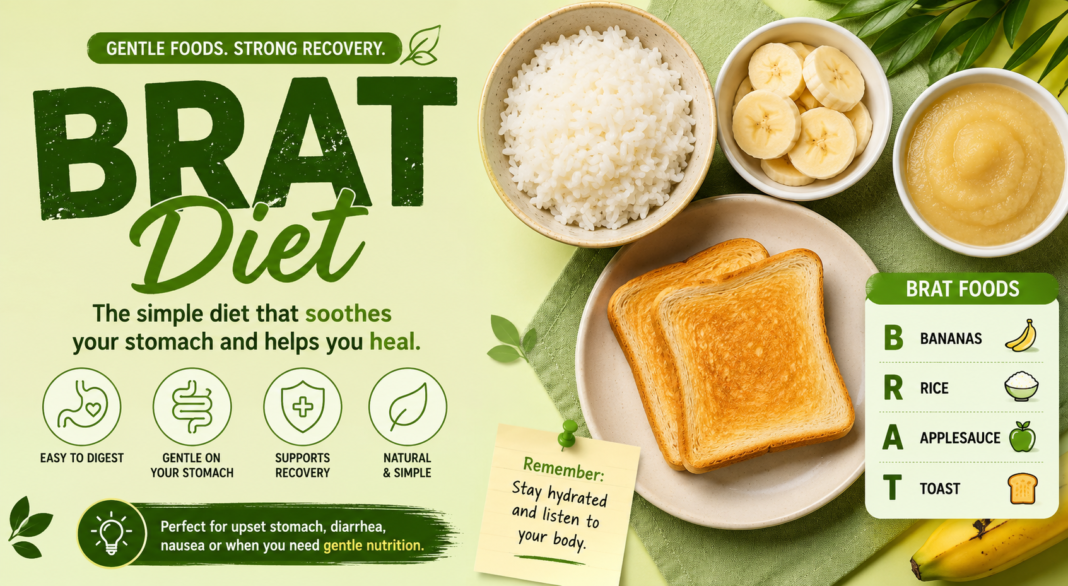

When stomach problems strike, many people look for simple foods that are gentle on the digestive system. The brat diet has long been recommended for temporary relief from diarrhea, nausea, vomiting, and upset stomach. Built around bland, low-fiber foods, this eating approach is designed to reduce digestive strain while helping people gradually return to their regular meals.
Although the brat diet remains widely recognized, modern medical guidance has evolved. Today, healthcare professionals often recommend using it only for a short period before transitioning to a more balanced eating pattern. Understanding when and how to use this diet correctly can support recovery while avoiding unnecessary nutritional deficiencies. Throughout this guide, you’ll discover expert insights, practical tips, common misconceptions, and evidence-based recommendations for digestive wellness.
What Is the BRAT Diet?
The brat diet is a temporary eating plan consisting of bananas, rice, applesauce, and toast. These foods are easy to digest, naturally low in fat, and gentle on an irritated stomach. Because they contain relatively little fiber, they may help produce firmer stools while reducing digestive discomfort. Digestive health and bland foods are central concepts when discussing this dietary approach.
For decades, parents and healthcare providers commonly recommended this diet for children and adults experiencing diarrhea or vomiting. While it can offer short-term comfort, experts now emphasize gradually introducing additional easy-to-digest foods and hydration therapy to ensure the body receives adequate nutrients during recovery.
Why the BRAT Diet Works
One reason the brat diet is effective is that its foods are unlikely to irritate the digestive tract. Bananas provide potassium, which helps replace electrolytes lost during diarrhea, while rice and toast offer simple carbohydrates that are easy to absorb. Electrolyte balance and stomach recovery play important roles in the healing process.
These foods also contain minimal fat and spices, both of which can slow digestion or worsen gastrointestinal symptoms in some people. By giving the digestive system a temporary break, the body can focus on recovery before reintroducing a wider variety of nutrient-rich foods and healthy carbohydrates.
Foods Included in the BRAT Diet
The traditional brat diet consists of four core foods that are widely available, inexpensive, and easy to prepare. Each provides a specific benefit during digestive recovery while minimizing stomach irritation. Simple carbohydrates and gut-friendly nutrition are key characteristics of these foods.
| Food | Primary Benefit | Why It’s Helpful |
|---|---|---|
| Bananas | Potassium replacement | Helps restore lost electrolytes |
| Rice | Easily digestible carbohydrate | Gentle on the stomach |
| Applesauce | Mild source of pectin | May help improve stool consistency |
| Toast | Bland energy source | Easy to digest with minimal fat |
Many healthcare professionals also recommend gradually adding plain crackers and boiled potatoes once symptoms begin improving to increase nutritional variety without overwhelming digestion.
Benefits of the BRAT Diet
The brat diet offers several advantages when used appropriately during short-term digestive illnesses. Its greatest strength lies in simplicity, allowing people with poor appetite to consume foods that rarely trigger additional stomach discomfort. Digestive recovery and stomach-friendly meals make it a practical temporary solution.
Another benefit is convenience. Most households already contain these staple foods, making the diet easy to begin immediately after symptoms develop. As recovery progresses, incorporating additional lean proteins and low-fat meals supports improved nutrition and faster healing.
“The goal during digestive illness is not simply to stop eating but to choose foods that the body can tolerate while maintaining hydration.”
Potential Risks and Limitations
Despite its popularity, the brat diet should not be followed for extended periods because it lacks adequate protein, healthy fats, vitamins, and minerals needed for complete nutrition. Long-term reliance may slow recovery rather than improve it. Balanced nutrition and dietary diversity remain essential after the initial illness subsides.
Medical experts now recommend returning to a normal, balanced eating pattern as soon as tolerated. Adding foods such as yogurt, oatmeal, lean chicken, and cooked vegetables provides important nutrients while continuing to protect intestinal health and digestive function.
Who Should Use the BRAT Diet?
The brat diet is generally appropriate for adults and children experiencing mild diarrhea, nausea, vomiting, or stomach upset caused by temporary viral illnesses. It may also be helpful after brief digestive irritation when appetite remains limited. Food tolerance and gastrointestinal symptoms help determine whether this eating plan is appropriate.
However, individuals experiencing severe dehydration, bloody diarrhea, persistent vomiting, high fever, or symptoms lasting several days should seek medical attention instead of relying solely on dietary changes. Proper medical evaluation and hydration management become increasingly important in these situations.
How Long Should You Follow the BRAT Diet?
Most healthcare providers recommend following the brat diet for only 24 to 48 hours before gradually expanding food choices. This limited duration provides digestive rest while minimizing nutritional deficiencies. Short-term nutrition and gradual food reintroduction support a safer recovery strategy.
As symptoms improve, additional foods should be introduced one at a time. Starting with oatmeal, plain pasta, cooked vegetables, eggs, and lean proteins allows the digestive system to adjust comfortably while restoring complete nutrition and healthy eating habits.
Hydration During Recovery
Hydration is just as important as food when recovering from digestive illness. The brat diet works best when paired with adequate fluid intake because diarrhea and vomiting can quickly lead to dehydration. Oral rehydration solutions and electrolyte replacement help restore essential minerals and fluids.
Water remains essential, but electrolyte beverages, clear broths, and oral rehydration solutions often provide additional benefits after significant fluid loss. Avoiding excessive caffeine, alcohol, and sugary drinks helps maintain fluid balance and digestive stability during recovery.
Common Mistakes to Avoid
A frequent mistake is staying on the brat diet for too many days. While these foods are gentle, they cannot provide everything the body needs for healing. Protein intake and vitamin-rich foods should gradually return once symptoms improve.
Another misconception is believing every digestive illness requires this diet. Some people recover well with a broader selection of mild foods, provided they avoid greasy, spicy, or highly processed meals. Listening to your body while maintaining healthy digestion and nutritional balance often produces better results.
Modern Alternatives to the BRAT Diet
Current dietary recommendations often encourage expanding beyond the traditional brat diet sooner than in the past. Foods like oatmeal, yogurt with probiotics, baked chicken, scrambled eggs, and cooked carrots offer additional nutrients without significantly increasing digestive stress. Probiotic foods and digestive support are increasingly recognized as valuable during recovery.
This modern approach reflects growing understanding that adequate nutrition supports healing. Rather than relying exclusively on four foods, individuals can create balanced, gentle meals that provide energy, protein, and vitamins while maintaining gut health and immune support.
Conclusion
The brat diet remains a useful short-term strategy for managing mild digestive discomfort, especially during episodes of diarrhea or vomiting. Its bland, easily digestible foods can provide temporary relief while giving the digestive system time to recover.
However, today’s medical guidance emphasizes using the brat diet only briefly before transitioning back to a nutritious, balanced eating pattern. Combining appropriate hydration, gradual food reintroduction, and attention to persistent symptoms helps support faster recovery and long-term digestive health.
Frequently Asked Questions
Is the BRAT diet good for diarrhea?
Yes, the brat diet may help manage mild diarrhea by providing bland foods that are easier to digest while supporting temporary digestive recovery.
Can adults follow the BRAT diet?
Absolutely. The brat diet can benefit adults experiencing temporary stomach illness, although it should generally be followed for only one to two days.
Is the BRAT diet safe for children?
The brat diet can be used briefly for children under medical guidance, but maintaining hydration and returning to balanced nutrition quickly is important.
Can I eat eggs on the BRAT diet?
Traditional brat diet guidelines do not include eggs, but many healthcare professionals recommend adding plain scrambled eggs during recovery as symptoms improve.
How long should I stay on the BRAT diet?
Most experts recommend following the brat diet for approximately 24 to 48 hours before gradually introducing more nutritious foods if symptoms are improving.